Precision mass transfer components, catalytic supports, and filtration structures manufactured to stringent petrochemical, chemical synthesis, and separation tolerances.
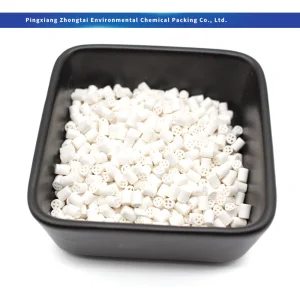
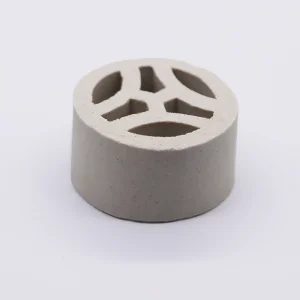
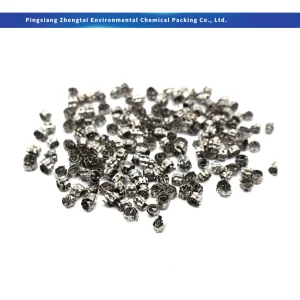
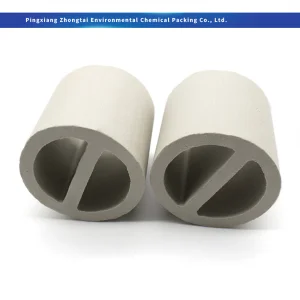
Modern petrochemical distillation, atmospheric and vacuum fractional distillation, offshore natural gas dehydration, and carbon capture infrastructure require ultra-low liquid holdup and exceptional mechanical integrity under extreme thermal loading.
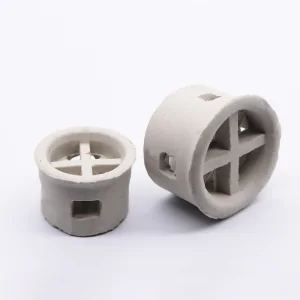
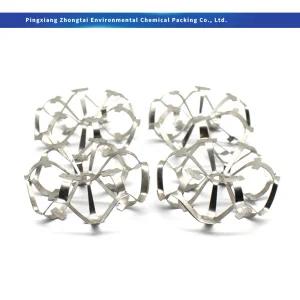
Historical solid-walled Raschig rings suffered from severe liquid channeling, low void fraction (approx. 60–75%), and intense gas bypassing. The evolutionary transition to second-generation perforated walls (Pall Rings) opened the interior cylinder volume via inward-bent tongues. Third-generation asymmetric saddles (Metal Intalox / IMTP style) eliminated nested packing pockets. Today, fourth-generation low-aspect annular matrices like Cascade Mini-Rings (CMR) and conjugate crowns maximize droplet formation and surface film renewal rates while reducing pressure drop across deep beds.
The primary objective of mass transfer design is minimizing the Height Equivalent to a Theoretical Plate (HETP) while maximizing the column capacity factor (C-Factor = Vg * sqrt(rhog / (rhol - rhog))). Our engineered metal random packings feature thin wall sections (0.3mm to 1.5mm) that yield void fractions exceeding 97%. This structural geometry ensures open cross-sectional vapor passages, minimizing localized eddy generation and preventing premature entrainment flooding at elevated vapor velocity regimes.
Under dynamic bed loading, sudden pressure surges, and cyclic thermal swings, low-quality packings deform, settle, and cause high pressure drops across the support plates. Zhongtai utilizes precision progressive stamping dies and engineered rim ribs that confer high crush strength. Even under bed heights exceeding 8 to 12 meters, our metal packing elements resist lateral compaction, maintaining uniform macro-porosity and consistent liquid irrigation throughout the multi-year operating campaign.
Procuring bulk mass transfer media for multi-million-dollar revamp or grassroots projects demands complete traceability, certified metallurgy, and unyielding delivery schedules.
Industrial buyers cannot tolerate scrap-grade or counterfeit alloys. Every single heat of sheet metal sourced by our Pingxiang factory is verified via Optical Emission Spectrometry (OES) and Positive Material Identification (PMI), accompanied by EN 10204 Type 3.1 inspection certificates guaranteeing chemical composition, tensile yield, and elongation compliance.
Refinery maintenance shutdowns (TARs) operate on hour-by-hour milestones. A delay of two days can cost over $500,000 USD in downstream downtime. With 30+ high-speed multi-stage punch lines running continuously, our factory can manufacture and stage over 800 cubic meters of metal packing per month, crated in moisture-sealed sea containers or reinforced jumbo sacks.
In hydrogen sulfide (H2S), amine scrubbing, and acid recovery environments, hydrogen-induced cracking (HIC) and sulfide stress cracking (SSC) are critical failure modes. We formulate, stamp, and anneal components strictly adhering to NACE MR0175 / ISO 15156 guidelines, with precise carbon control (≤ 0.03% for L-grades) and controlled hardness ratings.
Automated stamping produces clean cut edges free of heavy burrs, oil films, or particulate residue that could poison ultra-clean downstream catalytic reactors or contaminate high-purity pharmaceutical separation lines. Packings undergo proprietary vapor degreasing before final packaging.
From LNG acid gas removal units to heavy vacuum residue fractionation, our wholesale factory solutions solve real-world separation bottlenecks.
In atmospheric crude distillation units (CDUs) and deep vacuum distillation units (VDUs), operating pressure must remain as low as possible to suppress thermal degradation and coking of heavy petroleum fractions. By employing 50mm or 76mm Stainless Steel 410 / 316L Metal Saddles and Pall Rings, refiners achieve stable liquid distribution at minimal pressure drop, preventing heavy hydrocarbon cracking and improving diesel and gas oil extraction yields.
Post-combustion carbon capture facilities process tremendous volumes of low-pressure flue gas. The contactor columns, frequently exceeding 8 to 14 meters in diameter, demand random packings with ultra-high specific surface area (e.g., CMR #2 / #3 or 25mm Pall Rings) to guarantee contact efficiency with amine solvents (MEA, MDEA, piperazine) without causing prohibitive blower power consumption. Metal alloys withstand continuous degradation from oxygen-rich flue gas.
Offshore platform space and weight are strictly limited. Triethylene Glycol (TEG) contactors must operate under severe motion and tilt. Metal random packing provides exceptional wetting performance even under vessel motion dynamics, resisting foaming and packing displacement. For sour natural gas streams laden with CO2 and H2S, our factory supplies custom-formed Duplex 2205 or Inconel 625 random rings with complete NACE qualification.
| Alloy Classification | UNS / Standard | Specific Surface Area (m²/m³) | Void Fraction (%) | Max Operating Temp | Primary Industrial Application |
|---|---|---|---|---|---|
| SS304 / 304L Austenitic | UNS S30400 / S30403 | 110 – 350 | > 96.5% | 550 °C | Standard petrochemical distillation, air separation, non-sour absorption |
| SS316 / 316L Molybdenum | UNS S31600 / S31603 | 110 – 350 | > 97.0% | 650 °C | Fatty acid fractionation, organic acid recovery, moderate amine treaters |
| Duplex 2205 Austenitic-Ferritic | UNS S32205 / S31803 | 120 – 320 | > 96.0% | 300 °C | Chloride-induced stress cracking service, offshore seawater degassing |
| Titanium Gr. 2 Reactive | UNS R50400 | 130 – 310 | > 97.5% | 350 °C | Wet chlorine scrubbers, bleacher towers, seawater coolers, nitric acid |
| Hastelloy C-276 Superalloy | UNS N10276 | 110 – 340 | > 96.0% | 800 °C | Severely oxidizing/reducing mixed acids, waste incineration flue gas cleanup |
Zhongtai combines deep Chinese chemical packaging cluster cost advantages with international engineering governance, supporting worldwide plant owners from FEED to installation.
We facilitate third-party inspection agencies including SGS, Bureau Veritas (BV), TÜV Rheinland, and DNV. From sheet thickness caliper verification and crush-to-yield load tests to spectrometer spot-checks, every production run is fully documented prior to container dispatch.
Our logistics division prepares precision HS Code classification (e.g., 7326.90 for fabricated steel articles), Certificate of Origin (Form E, Form RCEP, CO), and compliant packaging under ISPM-15 heat-treated pallet regulations, eliminating harbor clearance friction across North America, Europe, the Middle East, and Southeast Asia.
Clients do not need to guess diameters or packing sizes. Send us your stream composition, flow rates (L/V), densities, viscosities, and surface tensions. Our chemical engineering team conducts hydraulic simulations to project precise flooding percentages, operating HETP, and overall tower pressure drops.
Located in Pingxiang, Jiangxi—the global capital of mass transfer media—Zhongtai benefits from a 50-year-old specialized supply chain ecosystem. Raw coil slitters, specialized stamping toolmakers, and chemical testing laboratories are centralized within minutes of our facility, yielding unmatched lead times and cost efficiency.
Mass transfer is entering a new paradigm driven by decarbonization targets, digital twin simulations, and micro-engineered interfacial surfaces.
Integrating laser-etched micro-grooving and chemical surface micro-texturing onto metal sheet surfaces. This enhances wettability in low-surface-tension organic hydrocarbon systems, ensuring uniform liquid film spread and stopping dry-patch formation at liquid loads below 2 m³/(m²·h).
Leveraging high-resolution Computational Fluid Dynamics (CFD) with volume-of-fluid (VOF) multiphase tracking to model individual droplet impacts, liquid film shearing, and gas vortex decay, creating asymmetrical packing geometries that resist wall flow channeling.
Developing supply lines for 100% green-hydrogen smelted stainless steel coils, enabling EPC contractors and multinational energy corporations to achieve verified Scope 3 embodied carbon reductions in grassroots mega-refineries and carbon capture installations.
Direct selective laser melting (SLM) additive manufacturing of periodic triply minimal surface (TPMS) random elements for extreme high-value pharmaceutical and fine chemical separations, merging the high volumetric throughput of random dump beds with structured micro-channels.
Clear, engineering-backed answers addressing hydraulics, material selection, packing sizing, and manufacturing quality controls.
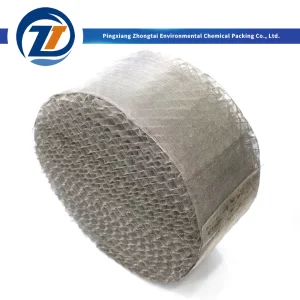
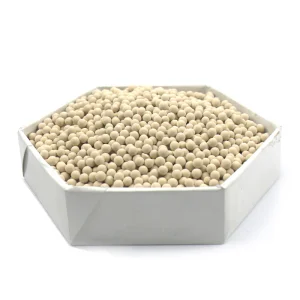
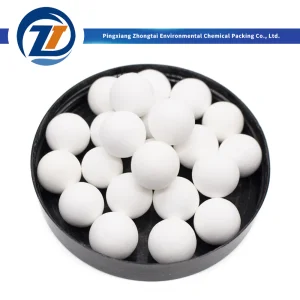
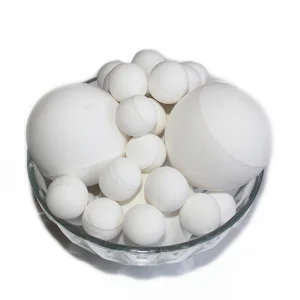
Complete your column design with certified tower packing internals, wire gauze structured matrices, high-purity inert balls, and industrial zeolites.