Explore our export-certified biological media, industrial porous ceramics, and chemical tower packings manufactured under strict ISO9001:2015 continuous thermal controls.
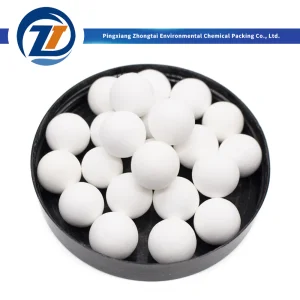
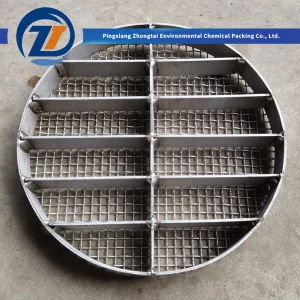
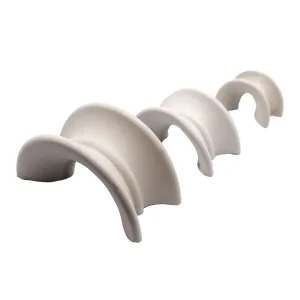
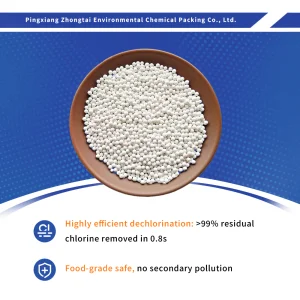
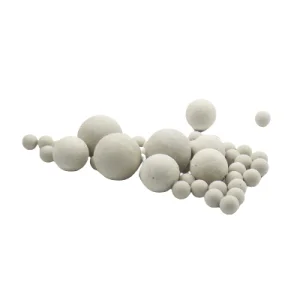
In high-density closed-loop aquatic environments, biological filtration is governed entirely by kinetic surface interaction, fluid micro-channeling, and specialized pore distribution. At Pingxiang Zhongtai Environmental Chemical Packing Co., Ltd., we combine over two decades of mass transfer ceramic engineering with specialized pore-forming sintering technology to manufacture high-efficiency aquarium ceramic balls that solve toxic nitrogen cycling at industrial scale.
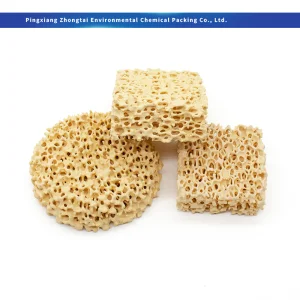
Unlike standard extruded clay media which exhibits closed, isolated pore structures, our proprietary foaming thermal synthesis generates 10–100 μm open continuous micropore channels. This delivers continuous hydraulic capillary pull, preventing internal core anoxia while optimizing biological contact time (EBCT).
The exterior dynamic boundary layer hosts obligate aerobic autotrophs (Nitrosomonas europaea and Nitrobacter winogradskyi) to convert toxic ammonia ($NH_3$) and nitrite ($NO_2^-$). Concurrently, controlled sub-surface diffusion gradients create anoxic micro-niches where facultative anaerobes reduce stubborn nitrates ($NO_3^-$) to harmless dinitrogen gas ($N_2$).
Calcined in computer-controlled tunnel kilns at temperatures ranging from 1180°C to 1280°C, the silicate-alumina glass matrix achieves full chemical vitrification. The finished media does not leach calcium, magnesium carbonate, arsenic, or heavy metals, ensuring zero drift in electrical conductivity (EC), GH, KH, or pH.
Low-grade ceramic balls manufactured without precision calcination frequently experience rapid structural disintegration (powdering), clogging sump impellers and causing severe respiratory gill damage in sensitive aquatic livestock. Zhongtai's controlled thermal soaking schedule guarantees high mechanical shear resistance during long-term hydrodynamic washing and pressurized canister backwashing cycles.
A rigorous breakdown of physical parameters that distinguish high-yield industrial aquarium ceramic spheres from generic volcanic stones and standard plastic media.
The biological carrying capacity of any biofilter medium is fundamentally defined by its Physically Accessible Specific Surface Area (PASSA) rather than theoretical BET gas adsorption alone. Many sintered materials boast high theoretical surface areas (>2,000 m²/g), yet their internal pore throats are under 0.1 μm, making them physically inaccessible to nitrifying bacteria whose cell diameter typically spans 0.5 to 2.0 μm.
Zhongtai engineers the pore diameter distribution using high-purity volatile organic sacrificial templates during spray drying. This results in a multi-modal pore hierarchy:
A rigorous comparative analysis showing biological capacity, water chemistry impacts, and operational lifecycle across dominant commercial filtration media.
| Performance Metrics | Zhongtai Sintered Bio-Ceramic Ball | Sintered Quartz Glass Ring | Natural Volcanic Lava Rock | Plastic MBBR Biomedia | Crushed Coral Skeleton |
|---|---|---|---|---|---|
| Effective Bio-Surface Area | 1,100 – 1,350 m²/L | 650 – 850 m²/L | 120 – 250 m²/L | 500 – 800 m²/m³ | 80 – 160 m²/L |
| Hydraulic Open Porosity | 78.4% (Interconnected) | 58.0% (Partially Blind) | 22.0% (Clogged vesicles) | N/A (Surface-only) | 35.0% (Irregular) |
| Simultaneous Denitrification | Yes (Deep-core anoxia) | Minimal (Shallow depth) | No (Poor depth gradient) | Requires separate stage | No |
| Impact on Water pH & TDS | Completely Neutral (0.00 ΔpH) | Neutral | Moderate mineral leaching | Neutral | High pH/GH Alkaline buffer |
| Crush & Abrasion Resistance | High (>1,650 N) | Brittle (High chipping) | Extremely abrasive | Flexible | Soft / Dissolves over time |
| Operational Service Life | 8 – 10+ Years | 3 – 5 Years | 1 – 2 Years (Pore fouling) | 10+ Years | 6 – 12 Months (Dissolution) |
Pingxiang City in Jiangxi Province represents over 70% of China's industrial ceramics export volume. Discover how our geographic consolidation drives massive cost efficiencies, rapid prototyping, and unmatched global supply resilience.
Pingxiang sits on extensive deposits of high-grade kaolin clay, feldspar, and silica. Having raw mineral reserves within a 30-kilometer hauling perimeter eliminates inter-provincial freight surcharges, lowering raw material baseline procurement costs by 22% compared to coastal facilities.
Our facility runs high-capacity, continuous automated natural-gas tunnel kilns spanning over 120 meters. Continuous firing achieves optimal thermal equilibrium with zero temperature variances (±3°C), guaranteeing 100% batch-to-batch consistency and eliminating un-sintered structural defects.
Leveraging direct bonded rail freight networks linked to Ningbo, Shanghai, and Shenzhen container terminals, our dispatch hub loads 20GP, 40GP, and 40HQ ocean containers daily. We offer standardized palletization with moisture-proof heat-shrink wrapping to endure high-humidity equatorial ocean voyages.
From private-label customized retail color boxes, UV-treated woven sacks, and laser-engraved mesh filter bags to bulk 500kg heavy-duty super sacks, our packaging division delivers complete market-ready SKUs tailored to your brand's regional compliance mandates.
Commercial aquatic livestock, coral propagation systems, and municipal water purification operations cannot tolerate toxic chemical migration. Zhongtai enforces batch-level certification against the world's most stringent chemical safety frameworks.
Full compliance with EU Regulation (EC) No 1907/2006 concerning the Registration, Evaluation, Authorisation, and Restriction of Chemicals (REACH). Zero presence of 235+ Substances of Very High Concern (SVHC).
Acidic and neutral extraction assays using inductively coupled plasma mass spectrometry (ICP-MS). Verification of non-detectable levels for Cadmium ($Cd$), Lead ($Pb$), Mercury ($Hg$), and Hexavalent Chromium ($Cr^{6+}$).
Our entire manufacturing infrastructure in Pingxiang Hi-Tech Industry Park operates under strict Bureau Veritas / SGS audited quality and environmental management protocols with traceable batch retention samples for every export shipment.
From industrial-scale seafood cultivation to sensitive reef habitats, our ceramic media addresses demanding volumetric space and biological nitrification criteria.
Utilized in moving, packed, and submerged bio-reactors for high-stocking-density recirculating aquaculture systems rearing Salmon, Seabass, and Whiteleg Shrimp ($Litopenaeus\ vannamei$). Accelerates TAN conversion at high feed loading rates.
Installed inside million-liter life support systems (LSS) serving apex marine species, sharks, and pelagic exhibits. High specific volume reduces footprint and structural dead-load requirements within compact below-deck filtration rooms.
The standard media choice for Japanese-style Bakki Showers and high-flow trickle towers. High mechanical strength withstands violent, pressurized water cascading while delivering unparalleled water aeration and gas stripping.
Applied in tertiary nitrification contact beds and bio-retention cells where stringent biological nitrogen limits (Total Nitrogen < 3 mg/L) must be met before environmental water discharge into protected freshwater basins.
Analyzing key technological transitions reshaping international procurement, ecological mandates, and functional media designs over the coming decade.
Advanced sintering formulas now integrate nanoscale mineral donors such as tourmaline, germanium, and volcanic basalt into the matrix. These minerals emit far-infrared wavelengths (8–14 μm) that reduce water cluster size ($H_2O$ oligomers), stimulating metabolic activity and immune resistance in aquatic organisms.
Global brand buyers demand rigorous Carbon Border Adjustment Mechanism (CBAM) accounting. Zhongtai is leading this transition by commissioning automated green-electric kilns powered by provincial hydroelectric and solar arrays, slashing product embodied carbon by 58%.
Next-generation ceramic spheres will incorporate dormant spore-forming lyophilized nitrifying consortia embedded within a biodegradable nutrient matrix on the outer media boundary, reducing biological tank cycling timelines from 30 days down to under 72 hours.
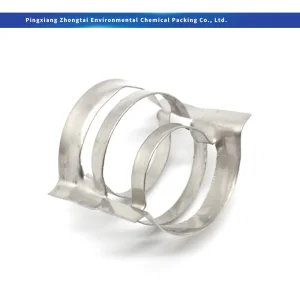
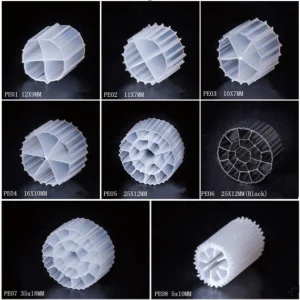
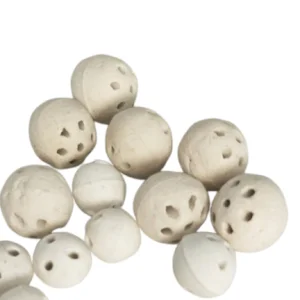
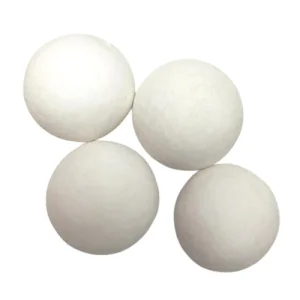
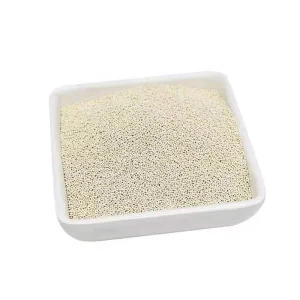
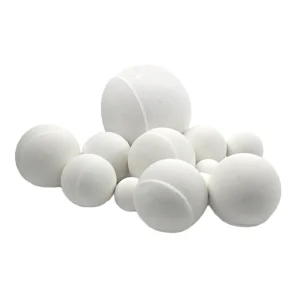
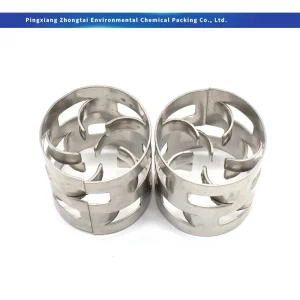
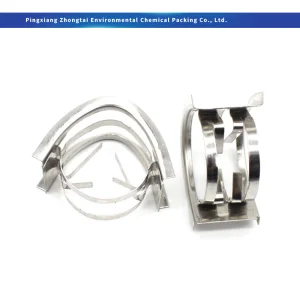
Explore our extended series of chemical-resistant tower packings, molecular sieves, and industrial ceramic support spheres engineered for demanding plant conditions.
Authoritative technical and logistical answers regarding manufacturing tolerances, chemical leaching parameters, OEM private labeling, and port delivery schedules.
Eliminate intermediary trading margins. Request comprehensive physical test reports, factory-direct volume tier pricing, or schedule a formal factory audit in Pingxiang Hi-Tech Industry Park.
