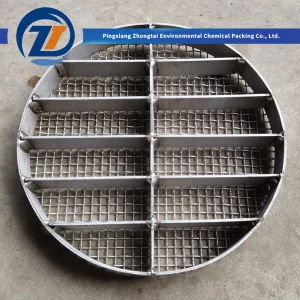
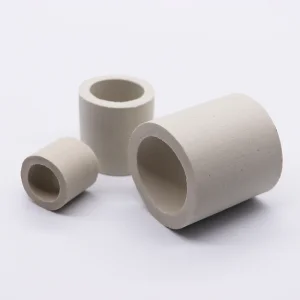
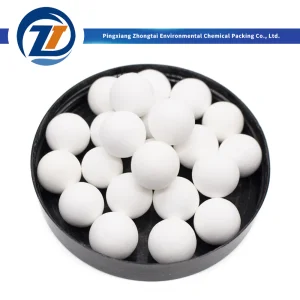
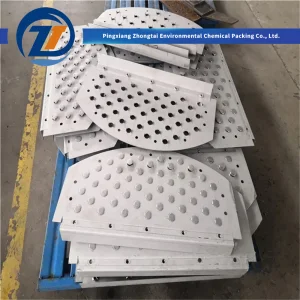
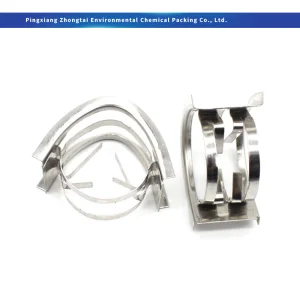
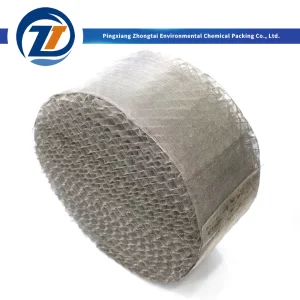
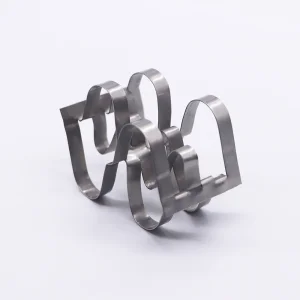
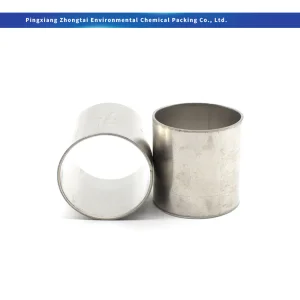
Direct factory supply of high-purity alumina ceramic media, structured packings, and engineered chemical tower internals.
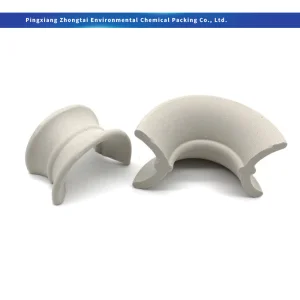
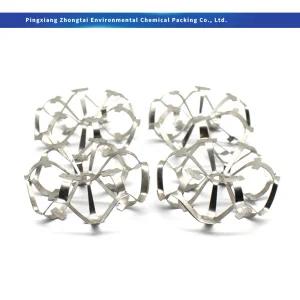
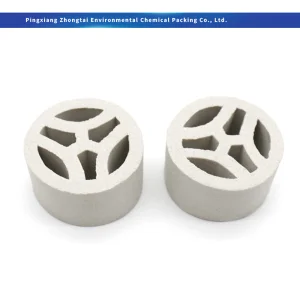
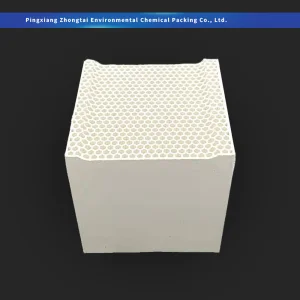
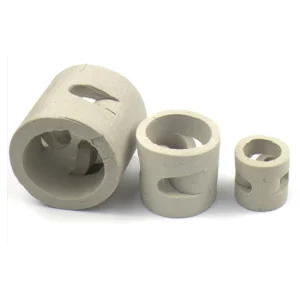
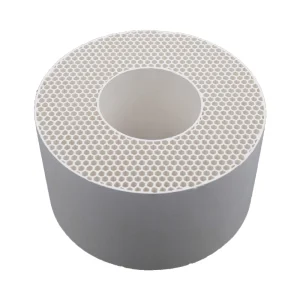
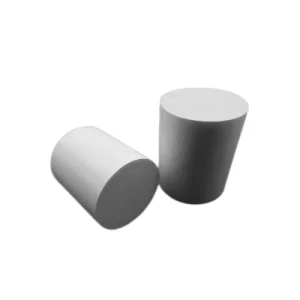
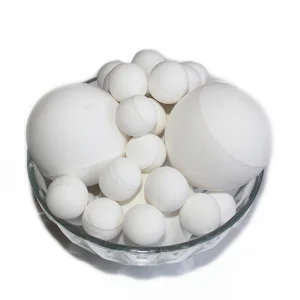
In modern industrial wet and dry fine-grinding systems—such as ball mills, vertical stirred mills, pin mills, and attrition mills—the performance of the grinding media directly impacts operational efficiency, power consumption, and product purity. Industrial Alumina Grinding Media (primarily composed of alpha-alumina, α-Al₂O₃) has superseded traditional steel balls and silica pebbles across mining, ceramic, chemical, and energy storage sectors.
The superior wear resistance of high-alumina media originates from its microstructural density and phase stability. Through high-pressure cold isostatic pressing (CIP) or advanced rolling techniques followed by high-temperature sintering (1550°C to 1680°C), the raw calcined alumina powder undergoes complete phase transformation. The resulting micro-crystalline structure features tight grain boundaries with minimal inter-granular porosity, delivering exceptional resistance to impact degradation, compressive stress, and chemical erosion.
| Media Grade | Al₂O₃ Content (%) | Bulk Density (g/cm³) | Mohs Hardness | Self-Wear Loss Rate | Primary Application |
|---|---|---|---|---|---|
| Medium-High Alumina | 75% - 85% | ≥ 3.20 | 8.0 - 8.5 | ≤ 0.015% | Ceramic tile body milling, glaze preparation |
| High Alumina (Standard) | 92% | ≥ 3.60 | 9.0 | ≤ 0.008% | Mineral beneficiation, cement, quartz processing |
| High Purity Alumina | 95% - 99% | ≥ 3.70 - 3.85 | 9.0+ | ≤ 0.005% | Lithium battery materials, electronic ceramics |
| ZTA (Zirconia Toughened) | Composite | ≥ 4.00 - 4.50 | 9.0+ | ≤ 0.002% | Ultrafine gold/copper ore grinding, high-viscosity slurries |
Grinding efficiency in ball mills operates on the mechanics of impact kinetic energy transfer and shear attrition. The rate of particle size reduction is governed by the mill power draft equation:
P = k · ρ_m · L · D^2.5 · f(φ)
Where ρ_m represents the charge density of the grinding media. By upgrading from low-density siliceous media (density ~2.4 g/cm³) to 92% Al₂O₃ grinding balls (density ≥ 3.60 g/cm³), plant engineers can increase the effective charge mass without increasing mill volume. This yields up to a 35% reduction in specific energy consumption (kWh/ton) while simultaneously scaling throughput capacity.
Furthermore, self-wear contamination is a critical parameter for high-value chemical processing. In lithium-ion battery precursor processing (such as LFP or NCM cathode materials), iron and metallic contamination can cause cell short-circuits. High-purity alumina grinding media eliminates metallic contamination entirely, while its low wear rate (≤0.008%) ensures chemical stability in aggressive slurry environments.
Next-generation ceramics engineering driven by nanotechnology, decarbonized sintering, and smart process controls.
Development of sub-micron grain sizing (<0.5 μm) using rare-earth dopants (Yttria, Titania) to double fracture toughness (K1c) and extend media service life under high-speed vertical stirrer impact.
Transitioning industrial tunnel kilns from natural gas combustion to hydrogen-blended fuels and high-temperature electric microwave-assisted sintering, cutting scope 1 manufacturing carbon emissions by 45%.
AI-driven predictive wear algorithms paired with acoustic sensing to monitor ball charge degradation in real time, enabling optimized automated media re-charging schedules for continuous mill operation.
Tailored grinding media formulations and bed support configurations for demanding process environments.
For platinum, gold, copper, and iron ore processing, high-density 92% Al₂O₃ and ZTA grinding media deliver massive cost savings by resisting severe hydrodynamic wear and corrosion in wet slurry environments, preserving ball sphericity over extended campaign life.
High-purity 95%-99% alumina ceramic balls prevent iron contamination during the fine grinding of LFP (Lithium Iron Phosphate), NCM, and synthetic graphite anodes. They ensure sub-micron particle distribution necessary for optimal battery cell energy density.
In addition to grinding media, inert alumina ceramic balls are deployed in hydrocracking, gas drying, and catalytic reforming units. Serving as reactor bed supports, they withstand extreme thermal shock (up to 1500°C) and corrosive chemical streams without thermal spalling.
Leveraging Pingxiang's chemical packing cluster advantage to deliver world-class batch consistency and rapid production scaling.
Utilizing fully automated 300-ton Cold Isostatic Pressing (CIP) systems ensuring equal pressure distribution from all directions, yielding uniform green compact density and zero internal micro-cracks prior to firing.
Computer-controlled 100-meter continuous tunnel kilns maintain tight temperature curves (±3°C tolerance) across 48 heating zones, guaranteeing complete sintering and repeatable batch-to-batch physical density.
Located in Pingxiang, Jiangxi—China's industrial ceramic hub—we maintain strategic raw material stockpiles and direct port links to Ningbo and Shanghai, providing guaranteed lead times even during global supply chain disruptions.
A structured strategic buyer's evaluation model for evaluating wholesale alumina media suppliers.
Procurement teams often look strictly at FOB price per metric ton. However, operational evaluation demonstrates that media performance is governed by Total Cost of Ownership (TCO). High-wear, lower-cost media leads to frequent mill shutdowns, labor-intensive re-charging cycles, contamination risks, and excessive energy consumption.
| Evaluation Metric | Standard Commercial Grade | Zhongtai High-Performance Grade | Operational TCO Impact |
|---|---|---|---|
| Crush Strength (Ø30mm) | ~ 18 kN / ball | ≥ 25 - 30 kN / ball | Prevents ball breakage & screen clogging in vertical mills |
| Self-Wear Rate (24h) | 0.020% - 0.035% | ≤ 0.005% - 0.008% | 4x lower media replenishment cost per annum |
| Specific Gravity | 3.45 g/cm³ | ≥ 3.65 - 3.80 g/cm³ | 20% faster grinding cycles, lower electricity draw |
| Water Absorption | < 0.05% | ≤ 0.01% | Zero chemical leaching in aggressive acid/alkali media |
To ensure zero degradation during ocean transit, our alumina grinding media and tower packings are prepared using export-grade heavy-duty packaging systems:
Meeting international quality management and environmental compliance standards for global process safety.
Every batch of alumina media undergoes rigorous Quality Assurance checking, including X-Ray Fluorescence (XRF) elemental chemical composition mapping, laser particle size analysis, water absorption testing, and compressive crush strength testing.
Our industrial ceramic products fully comply with European REACH regulations (Registration, Evaluation, Authorisation and Restriction of Chemicals) and RoHS standards, guaranteeing zero SVHC (Substances of Very High Concern) content.
Our application engineers provide worldwide technical consultation, mill charge loading optimization calculations, packing tower hydraulic design, and site assistance during reactor turnaround and re-bedding schedules.
Expert engineering answers for procurement officers and process engineering teams.
Get comprehensive pricing specs, lab test data, and technical consultation within 24 hours from our engineering team.
Contact Engineering SalesComplete mass transfer solutions engineered for optimal distillation, absorption, and fine chemical scrubbing.