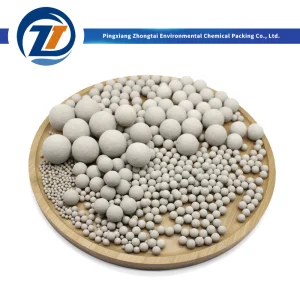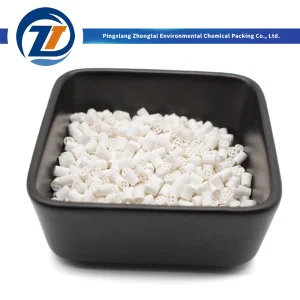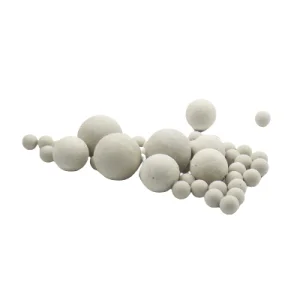
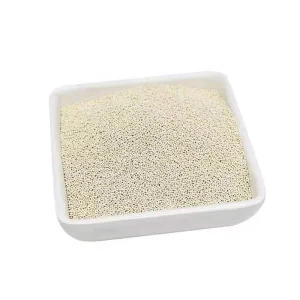
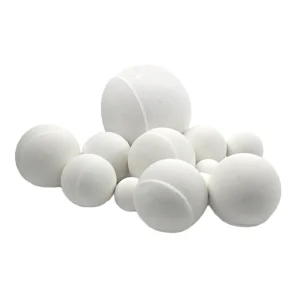
In modern industrial ultra-fine grinding, dispersing, and nano-milling applications, the selection of grinding media directly dictates the operational efficiency, energy consumption, and final particle size distribution ($d_{50}$ and $d_{90}$) of slurries. Over the past two decades, global manufacturing industries have undergone a rapid structural transition. Process engineers are increasingly phasing out conventional low-density media—such as natural silica sand, glass beads, and standard forged steel balls—in favor of engineered advanced ceramic media, primarily zirconium beads ($ZrO_2$).
China has solidified its position as the world's primary manufacturing powerhouse for high-purity zirconia beads. Driven by massive domestic reserves of zircon sand, advanced powder synthesis technologies (including chemical co-precipitation and hydrothermal synthesis), and vertical integration within industrial ceramic clusters such as Pingxiang, Chinese manufacturers now supply over 65% of the global market demand for micro-milling zirconia spheres. Procurement executives and chemical engineers seeking competitive China zirconium beads price structures must evaluate not only nominal per-kilogram costs, but also the underlying microstructural physics, stabilizer chemistry, and total cost of ownership (TCO) over thousands of operational hours.
When evaluating quotes for China zirconium beads price from manufacturers, buyers frequently encounter wide price variances ranging from $5.50 USD/kg for standard Zirconium Silicate spheres up to $45.00+ USD/kg for ultra-fine Yttria-Stabilized Micro-Beads ($0.05\text{ mm}$). This cost spectrum is dictated by four core chemical and metallurgical parameters:
SEO Information Gain Insight: The price of zirconia media is non-linear relative to bead diameter. Below 0.3mm, forming yield drops exponentially due to surface tension mechanics during titration molding, driving labor, yield loss, and quality inspection costs upward.
| Zirconia Media Type | Chemical Composition | Specific Density (g/cm³) | Typical Size Range (mm) | Est. Price Range (FOB China USD/kg) | Primary Industrial Application |
|---|---|---|---|---|---|
| Yttria-Stabilized Zirconia (YSZ) | 95% $ZrO_2$, 5% $Y_2O_3$ | ≥ 6.00 | 0.05 - 0.3 mm (Micro) | $28.00 - $48.00 | MLCC, Battery Cathode, Pharma Nanomilling |
| Yttria-Stabilized Zirconia (YSZ) | 95% $ZrO_2$, 5% $Y_2O_3$ | ≥ 6.00 | 0.4 - 2.0 mm (Standard) | $18.00 - $26.00 | Automotive Paints, Inks, $TiO_2$, Agrochemicals |
| Cerium-Stabilized Zirconia (Ce-TZP) | 80% $ZrO_2$, 20% $CeO_2$ | ≥ 6.20 | 0.6 - 3.0 mm | $12.00 - $18.00 | High-viscosity Paints, Minerals, Calcium Carbonate |
| Zirconium Silicate ($ZrSiO_4$) | 65% $ZrO_2$, 33% $SiO_2$ | ≥ 4.00 | 0.8 - 5.0 mm | $5.50 - $9.50 | Pesticides, Paper Coating, Standard Minerals |
| Toughened Zirconia Composite (ZTA) | 70% $Al_2O_3$, 30% $ZrO_2$ | ≥ 4.50 | 1.0 - 10.0 mm | $4.00 - $7.50 | Metallic Ores, Gold/Copper Mining, Ceramic Glaze |
1. Raw Material Grade & Rare-Earth Stabilizers: High-purity Yttria-Stabilized Micro Beads utilize chemical-grade zirconium oxychloride ($ZrOCl_2$) co-precipitated with rare-earth Yttrium Oxide ($Y_2O_3$). Fluctuations in international rare-earth pricing directly impact raw batch material costs. Lower-tier beads utilize electro-fused zirconia, which retains micro-cracks and higher hafnium/iron impurity content.
2. Forming Technology (Titration vs. Rolling): Premium YSZ beads are produced via the titration method (also known as the drip method or sol-gel liquid drop process), creating near-perfect spherical beads with uniform grain boundaries. Standard large-diameter beads are manufactured via mechanical rolling or dry pressing, which offers higher volumetric throughput at lower production costs but wider dimensional tolerances.
3. Sintering Thermal Profiles: High-density YSZ media requires high-temperature sintering ($1450^\circ\text{C} - 1550^\circ\text{C}$) in continuous tunnel kilns. Achieving tetragonal zirconia crystal phase balance ($t\rightarrow m$ phase transformation resistance) demands strict temperature profile control to prevent grain growth beyond $0.5\ \mu\text{m}$.
4. Precision Screening & Internal Porosity Checks: Micro beads undergo rigorous ultrasonic screening to guarantee narrow diameter distributions ($d_{\max}/d_{\min} < 1.15$). Statistical density checks via Archimedes principle ensure zero internal voiding.
| Physical Property | YSZ (95% ZrO₂) | Ce-TZP (80% ZrO₂) | ZrSiO₄ (65% ZrO₂) | Testing Standard / Method |
|---|---|---|---|---|
| Bulk Density (g/cm³) | 3.70 - 3.85 | 3.80 - 3.95 | 2.50 - 2.65 | ASTM C373 Packing Method |
| Specific Density (g/cm³) | ≥ 6.00 | ≥ 6.20 | ≥ 4.00 | Pycnometer / Displacement |
| Mohs Hardness | 9.0 | 8.5 | 7.5 | Mohs Scratch Scale |
| Vickers Hardness (HV10) | ≥ 1250 GPa | ≥ 1150 GPa | ≥ 900 GPa | ASTM E384 Microindentation |
| Fracture Toughness (K₁C) | 8.0 - 10.0 $\text{MPa}\cdot\text{m}^{1/2}$ | 9.0 - 12.0 $\text{MPa}\cdot\text{m}^{1/2}$ | 4.5 - 5.5 $\text{MPa}\cdot\text{m}^{1/2}$ | Single-Edge Pre-cracked Beam |
| Sphericity (%) | ≥ 98% | ≥ 95% | ≥ 90% | Optical Image Analysis |
| Wear Rate (ppm / hour) | < 10 ppm/h | < 15 ppm/h | < 80 ppm/h | Accelerated Wet Milling Test |
In lithium-ion battery manufacturing, $LiFePO_4$ cathode materials must be wet-milled from an initial $d_{50}$ of $10\ \mu\text{m}$ down to $150\text{ nm} - 300\text{ nm}$. Micro-cracking during fast charging occurs if particle size distribution is un-uniform.
Recommended Media: 0.3mm to 0.6mm YSZ beads ($95\% ZrO_2$). Ensures rapid kinetic transfer in pin-type agitator mills while maintaining zero iron pickup.
Organic pigments and premium metallic flakes require high shear dispersion without fracturing delicate pigment crystal structures. Oversized media causes dulling of gloss levels.
Recommended Media: 0.1mm - 0.4mm Titration YSZ beads. Yields high color strength, extreme gloss (>95 GU), and eliminates nozzle clogging in digital printing heads.
Pesticide active ingredients formulated as Suspension Concentrates (SC) require stable particle dispersion to prevent crystal growth (Ostwald ripening) during long shelf storage.
Recommended Media: 0.8mm to 1.4mm Zirconium Silicate ($ZrSiO_4$) or Ce-TZP media. Delivers ideal cost-to-performance efficiency for large-scale agricultural chemical processing.
Procurement teams often fall into the trap of evaluating China zirconium beads price strictly on an initial unit purchase cost ($/kg). However, in high-energy horizontal agitator mills operating at tip speeds of $12 - 16\text{ m/s}$, media wear rate, electrical energy draw, and product batch yield dictate over 80% of total lifetime milling expenses.
Total Milling Operational Cost Formula:
\text{TCO} = C_{\text{media\_purchase}} \times \left(1 + \text{Wear\_Rate} \times t\right) + \left(P_{\text{electrical}} \times t \times R_{\text{kWh}}\right) + C_{\text{downtime}} + C_{\text{liner\_wear}}
| Evaluation Parameter (5,000 Operating Hours) | Option A: Low-Grade Composite Bead ($5.00/kg) | Option B: High-Purity Premium YSZ ($22.00/kg) | Operational Impact & Value Delivered |
|---|---|---|---|
| Initial Media Charge (1,000 kg Mill) | $5,000 | $22,000 | Option A initial cap-ex is $17,000 lower |
| Media Replenishment due to Wear | 350 kg/year (Wear rate: 0.07%/h) | 25 kg/year (Wear rate: 0.005%/h) | YSZ cuts media loss by 92.8% |
| Annual Media Loss Expense | $1,750 | $550 | YSZ saves $1,200 annually in top-ups |
| Mill Kinetic Efficiency & Time per Batch | 14 Hours / Batch (Lower Density 4.0 g/cm³) | 8.5 Hours / Batch (High Density 6.0 g/cm³) | YSZ increases factory throughput by 39.2% |
| Electricity Consumption (75 kW Motor) | 52,500 kWh ($5,250 @ $0.10/kWh) | 31,875 kWh ($3,187 @ $0.10/kWh) | YSZ saves $2,063/year in power consumption |
| Separation Screen Clogging & Downtime | High (Bead breakage creates fragments) | Zero (Near zero breakage, uniform spheres) | Prevents unscheduled plant shutdowns |
| Net 2-Year Total Cost Comparison | $17,000 (Operating + Wear + Power) | $28,924 (Including initial cap-ex) | By Year 3, YSZ delivers total net savings exceeding $18,500 per mill unit! |
To guarantee that exported zirconium grinding media meets strict international engineering standards (ISO 9001:2015, ASTM C373, and REACH compliance), reliable Chinese manufacturers execute rigorous batch testing across four key analytical checkpoints: