Integrated chemical process components certified for low pressure drop and long run-life across extreme operational profiles.
The transition toward decarbonized hydrogen fuel systems, higher-spec petrochemical feedstock, and clean energy processing has placed synthetic 5A molecular sieves at the core of critical selective separations.
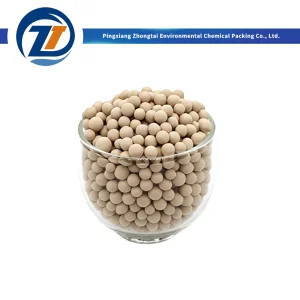
Global blue and green hydrogen initiatives rely heavily on Pressure Swing Adsorption (PSA). Zeolite 5A provides critical selectivity, trapping carbon monoxide (CO), carbon dioxide (CO2), nitrogen (N2), and methane (CH4) while enabling pure H2 recovery exceeding 99.999% efficiency.
In refining complexes, Type 5A sieves execute decisive normal-paraffin extraction from branched and cyclic hydrocarbons. This continuous molecular sieving boosts gasoline octane ratings and yields pure feedstocks for downstream linear alkylbenzene (LAB) synthesis.
Operating upstream of cryogenic natural gas liquefaction trains, 5A sieves co-adsorb water vapor, hydrogen sulfide (H2S), and mercaptans without coking or degrading active aluminosilicate structures during thermal swings.
Centering production in Pingxiang, Jiangxi allows us to leverage an integrated supply radius spanning kaolin mining, automated synthesis reactors, and high-temperature rotary kilns.
Controlled calcium cation (Ca2+) replacement over standard sodium (Na+) matrices achieves uniform 5-angstrom pore apertures with minimal lattice distortion.
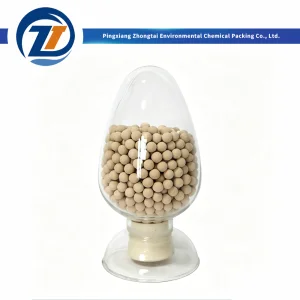
Proprietary attapulgite and bentonite binder matrix formulations yield radial crushing strength exceeding 85 Newtons, suppressing dusting in deep adsorption beds.
Continuous tunnel kilns maintain tight temperature uniformity, yielding an attrition coefficient under 0.05% for reliable temperature swing adsorption (TSA) cycling.
Direct supply-chain coordination cuts intermediate logistical costs, yielding pricing that is 20% to 35% more cost-effective than Western-synthesized alternatives without sacrificing purity.
Verified physical and chemical characteristics adhering to international testing benchmarks (ASTM / HG/T standards).
| Product Grade | Shape & Size Range | Bulk Density (g/ml) | Static H2O Capacity (wt%) | Crush Strength | Estimated Export Price (FOB) |
|---|---|---|---|---|---|
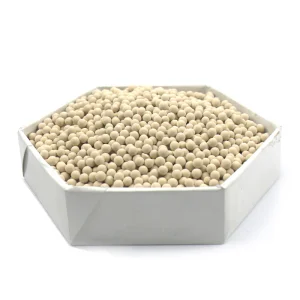
| Zeolite 5A-HP (PSA Grade) | Spherical (1.6 - 2.5 mm) | 0.68 - 0.74 | ≥ 21.5% | ≥ 85 N/bead | $1,750 – $2,300 / Metric Ton |
| Zeolite 5A-STD (Desiccant) | Spherical (3.0 - 5.0 mm) | 0.66 - 0.72 | ≥ 21.0% | ≥ 110 N/bead | $1,400 – $1,850 / Metric Ton |
| Zeolite 5A-EXT (Petrochem) | Pellet (1/16", 1/8") | 0.64 - 0.70 | ≥ 20.5% | ≥ 35 N/cm | $1,550 – $2,050 / Metric Ton |
| Zeolite 5A-Gas Deodorant | Custom Pellets / Beads | 0.68 - 0.75 | ≥ 20.0% | ≥ 75 N/bead | $1,350 – $1,700 / Metric Ton |
*Final pricing varies based on raw material fluctuations, packaging requirements (airtight steel drums vs. big bags), and order volume.
Specific operational configurations where precision microporous calcium aluminosilicate media drives commercial yields.
Recovers high-purity hydrogen from catalytic cracker and hydrotreater purge streams. Zeolite 5A isolates high volumes of CH4 and unreacted light alkanes, preserving membrane integrity downstream.
While 13X is standard, customized 5A configurations are deployed in specialty dual-bed units requiring selective kinetic sieving where small moisture spikes would otherwise poison nitrogen-adsorptive beds.
Integrated prior to cryogenic liquefaction exchangers, our 5A media scrub trace carbon dioxide and alkane gases down to sub-ppm levels, completely eliminating downstream dry-ice blockages in refrigeration loops.
Critical metrics international chemical plant procurement managers, EPC engineers, and process operators track when auditing Zeolite 5A manufacturers.
Ensure certification reports indicate a minimum of 21.0% to 22.0% dynamic capacity at 25°C and 60% relative humidity. Deficiencies indicate improper calcination or saturated storage conditions prior to distribution.
Under tight PSA cycles, non-uniform bead distributions prompt fluidization channeling, localized wear, and differential pressure spikes. Insist on a minimum 98% on-spec sizing mesh window.
Zeolite 5A demands structured thermal desorption cycles between 200°C and 300°C. Factory-certified low-binder variants resist structural hydrothermal collapse across thousands of thermal reactivation cycles.
Comprehensive engineering clarifications addressing operational specifications, bed maintenance, and international procurement standards.
Type 3A (potassium form) has an aperture of ~3Å and Type 4A (sodium form) has ~4Å, both predominantly used for moisture dehydration. Type 5A is chemically modified via calcium exchange to open its uniform crystalline pore to 5.0Å. This allows molecules with kinetic diameters below 5Å—such as n-alkanes, CO, CO2, and CH4—to enter the cage while excluding branched molecules.
By using inert, high-purity inorganic clay binders and computer-monitored high-temperature rotary kilns, Chinese manufacturers attain high radial crushing strengths (≥85 N for 1.6-2.5mm beads). This keeps the structural attrition rate under 0.05%, preventing bed settling and downstream valve fouling.
Because Type 5A is hygroscopic and avidly adsorbs atmospheric moisture and VOCs, material is sealed immediately after calcination into airtight 55-gallon carbon steel drums (130–150 kg net weight) with internal heavy-duty polyethylene liners, or in nitrogen-flushed super sacks on fumigated pallets.
Yes. Zeolite Type 5A can be fully regenerated by raising the thermal bed temperature to 200°C–300°C under an inert purge gas stream (such as dry N2), or by lowering system pressure in a PSA process cycle. Avoid temperatures above 600°C to prevent permanent structural collapse of the aluminosilicate crystal framework.
Comprehensive plant consumables engineered by Pingxiang Zhongtai for robust chemical refining and environmental control.