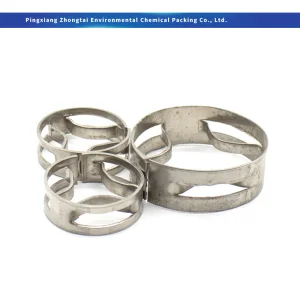
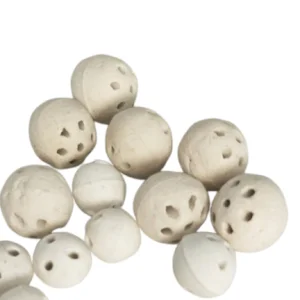
Factory-direct mass transfer components engineered for optimal column hydraulics
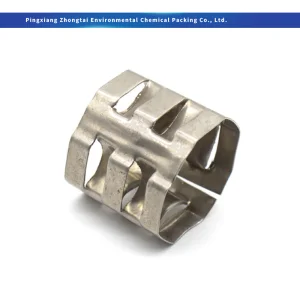
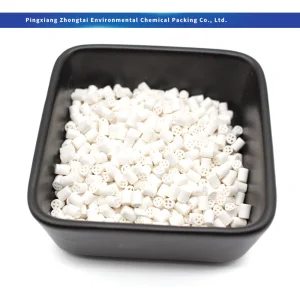
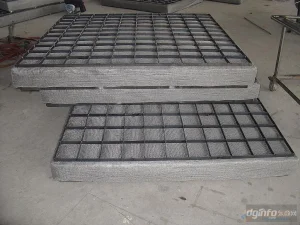
Understanding the shift from traditional commodity filling to high-efficiency, precision-engineered mass transfer internals.
Random packing remains the operational backbone of global chemical processing columns, gas absorption towers, and distillation systems. In modern process engineering, random dump packings—ranging from classical Pall Rings and Intalox Saddles to advanced 4th and 5th generation geometries like Very Special Packings (VSP) and Super Mini Rings (SMR)—are selected for their balance of high hydraulic capacity, operational flexibility, low pressure drop, and cost efficiency. As chemical manufacturing enterprises worldwide seek to reduce carbon intensity and optimize operational expenditure (OPEX), the demand for high-performance tower internals sourced from robust manufacturing hubs has expanded exponentially.
China has solidified its position as the global epicentre for the production and export of random packings in ceramic, metallic, and polymeric materials. Driven by industrial clusters in Jiangxi (Pingxiang) and Zhejiang, Chinese manufacturers integrate raw material procurement, advanced toolmaking, automated high-speed stamping, ceramic extrusion, and continuous sintering kilns within localized industrial ecosystems. This integration provides international EPC (Engineering, Procurement, and Construction) firms and global plant operators with unmatched economies of scale, stringent metallurgical quality control, and competitive direct factory quotes.
Mathematical parameters governing gas-liquid contact efficiency, liquid holdup, and column hydrodynamic limits.
The performance of any packed column relies on the liquid-gas contacting area per unit volume and the void space available for fluid passage without causing liquid entrainment or column flooding. Random packings create a complex, tortuous pathway where descending liquid forms thin films over the packing surface while ascending gas interacts dynamically across these liquid-gas interfaces.
The hydrodynamic state of a packed column is characterized by key parameters that determine its operational limits:
Selecting the optimal alloy, ceramic formulation, or thermoplastic polymer depends directly on chemical resistance, operating temperatures, and mechanical strength requirements:
| Packing Type | Material Classes | Bulk Density Range ($kg/m^3$) | Void Fraction ($\varepsilon$) | Specific Surface Area ($m^2/m^3$) | Primary Industrial Duty |
|---|---|---|---|---|---|
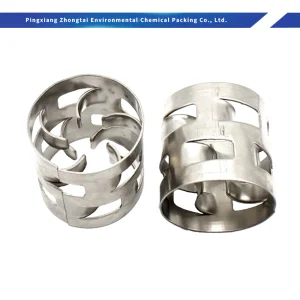
| Metal Pall Ring | SS304, SS316L, Carbon Steel | 220 - 450 | 94% - 96% | 110 - 240 | Refinery Distillation, Amine Scrubbing |
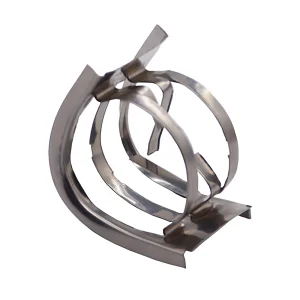
| Metal VSP / Mellaring | SS304, SS316L, Special Alloys | 180 - 350 | 96% - 98% | 130 - 270 | High-Flux Chemical Absorption, Vacuum Columns |
| Ceramic Super Intalox Saddle | Acid Porcelain, Alumina | 520 - 680 | 72% - 78% | 120 - 220 | Sulfuric Acid Drying & Absorption Towers |
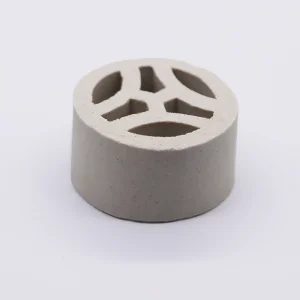
| Ceramic 3Y / Tri-Y Ring | Acid Porcelain, High Alumina | 480 - 620 | 75% - 82% | 140 - 250 | Corrosive Gas Scrubbing, Heat Transfer |
| Metal Super Mini Ring (SMR) | SS304, SS316L, Alloy 20 | 250 - 410 | 95% - 97% | 180 - 320 | Deep Vacuum Distillation, High-Efficiency Columns |
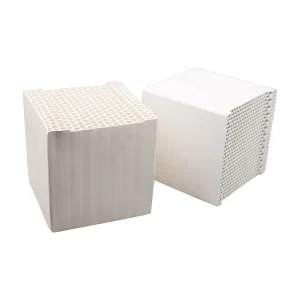
| Honeycomb Ceramic Proppant | 90% - 99% Al₂O₃, Cordierite | 850 - 1200 | 45% - 60% | 400 - 800 | Catalyst Bed Support, Hydrotreating Units |
How continuous automation, micro-grain metallurgy, and ceramic sintering technology deliver unmatched cost and quality advantages.
The international market for chemical packing has undergone a structural transformation. Historical procurement challenges related to Chinese exports—such as batch consistency concerns or delayed lead times—have been resolved through widespread adoption of Industry 4.0 manufacturing methodologies across major industrial zones like Pingxiang, Jiangxi.
Automated high-speed progressive dies produce consistent ring geometries with sub-millimeter tolerances on wall windows and internal fingers.
Computer-controlled continuous tunnel kilns firing up to 1650°C ensure complete ceramic phase conversion and zero structural micro-cracks.
Optical Emission Spectrometry (OES) verifies metal chemical compositions (304/316L alloy accuracy) for every production coil batch.
Robotic bagging, heat-sealed ocean-grade plastic linings, and reinforced fumigated pallets guarantee zero transit damage during sea freight.
Pingxiang City, known worldwide as China’s capital for chemical packing and industrial ceramics, offers a complete industrial ecosystem. High-purity kaolin clay reserves, chemical reagent suppliers, specialized mold design shops, and dedicated logistics hubs are co-located within a 30-kilometer radius. This cluster reduces logistics overhead, raw material lead times, and energy consumption per unit output.
By bypassing regional trading intermediaries and sourcing directly from ISO-certified Chinese manufacturers, international buyers reduce procurement costs by 25% to 45%. Sourcing directly from factory engineering departments enables custom internal modifications, tailored material certifications (MTRs to EN 10204 3.1), and rapid prototype fabrication for specialty process columns.
Decarbonization, CCUS, green hydrogen production, and energy efficiency revamps driving random packing innovations.
Global energy transitions and strict environmental regulations have redefined chemical engineering priorities. Modern industrial buyers look beyond simple hydraulic capacities; they require tower packing solutions optimized for extreme chemical environments and high operational energy efficiency.
Carbon Capture, Utilization, and Storage (CCUS) projects require massive absorption columns processing high gas flow rates at minimal pressure drop. High-flux metallic VSP rings and targeted structured packings enable lower reboiler heat requirements in solvent regeneration systems.
Steam methane reforming (SMR) and biomass synthesis gas purification demand high-purity ceramic catalyst bed support media (90% to 99% $Al_2O_3$). These inert alumina spheres protect active catalysts against thermal shock and silica poisoning under extreme pressure and steam environments.
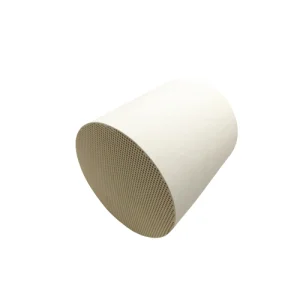
Regenerative Thermal Oxidizer (RTO) installations in chemical manufacturing rely on honeycomb ceramics (cordierite/mullite) with high thermal heat capacity. These structured ceramic monoliths deliver recovery efficiencies exceeding 95% while reducing plant auxiliary fuel demands.
Matching specialized media types to aggressive process environments, corrosivity conditions, and column duties.
Concentrated sulfuric acid drying towers and $SO_3$ absorption columns operate under aggressive thermal and chemical stress. Standard metallic packing corrodes rapidly in concentrated $H_2SO_4$ at elevated temperatures ($120^\circ\text{C} - 200^\circ\text{C}$).
Atmospheric distillation, crude fractionators, and vacuum column revamps require high gas throughput, precise cut points, and minimal pressure drop per theoretical stage to prevent product thermal degradation.
Fixed-bed reactors in hydrodesulfurization (HDS) and hydrocracking require durable catalyst support beds that prevent fine particles from migrating and plugging reactor outlet strainers.
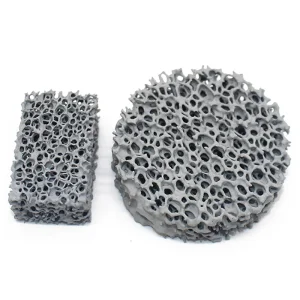
Automotive aluminum casting, ductile iron foundries, and steel manufacturing require high-temperature filtration media to remove slag inclusions, oxide dross, and non-metallic impurities before mold solidifying.
Verification checklists, standard certifications, and factory inspection protocols for EPC buyers.
To ensure reliable supply performance, industrial buyers and procurement officers must enforce strict quality control standards during supplier evaluation. Certified Chinese manufacturing facilities adhere to international testing frameworks:
Specialized ceramic saddles, honeycomb blocks, mini rings, and support spheres
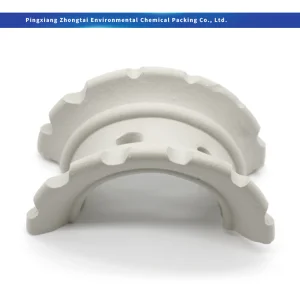
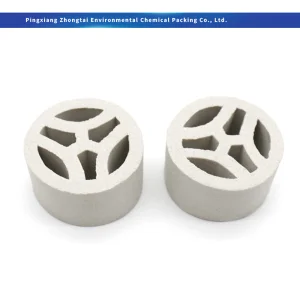
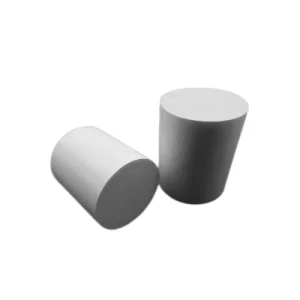
Detailed answers to technical queries regarding random tower packing selection, factory quotes, lead times, and engineering specifications.
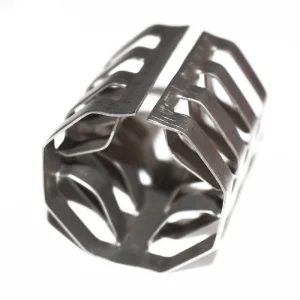
The Metal VSP (Very Special Packing) Ring, also known as the Mellaring, features an open-work structure with high spatial symmetry and superior void fractions ($> 97\%$). Compared to standard Metal Pall Rings of identical nominal diameter, VSP rings provide a 15% to 25% lower pressure drop and up to 30% greater hydraulic capacity. This open geometric framework promotes uniform liquid film renewal, reduces wall flow tendencies, and significantly improves separation efficiency (lowering HETP values) in vacuum and high-throughput distillation service.
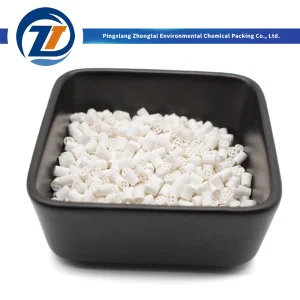
For standard hydrotreating, hydrodesulfurization (HDS), and industrial refinery gas dryers operating at moderate temperatures, 17% to 23% $Al_2O_3$ inert ceramic balls provide optimal crush strength and cost efficiency. However, in high-temperature steam reformers, secondary reformers, or ammonia synthesis units operating above $800^\circ\text{C}$, 90% to 99% high-purity alumina support media or specialized ceramic proppant filters are essential. High-purity alumina eliminates silica leaching ($SiO_2 < 0.2\%$), which would otherwise react with high-pressure steam and poison downstream noble metal catalysts.
Factory quotes are calculated based on three key parameters: material alloy mass (e.g., metric ton prices for SS304/SS316L coils or high-purity kaolin/alumina powders), geometric complexity (stamping/extrusion cycles per cubic meter), and total volume ($m^3$ or metric tons). Pricing tiers generally apply for standard FCL (Full Container Load) shipments. Direct quotes usually include FOB (Free On Board) Ningbo/Shanghai/Shenzhen or CIF (Cost, Insurance, and Freight) terms to international destination ports, along with full material test certification (EN 10204 3.1).
Classic Ceramic Raschig Rings tend to interlock, break, and align horizontally, leading to severe liquid channeling, high pressure drop, and premature column flooding. Ceramic Super Intalox Saddles feature smooth scalloped edges and dual-curved surfaces that prevent interlocking and nesting. They maintain a consistent bed voidage ($75\% - 78\%$), lower gas resistance, and maximize liquid film exposure to gas streams in $H_2SO_4$ drying and absorption towers, yielding a service life up to 3 times longer than classical rings.
Standard high-flux random packings (such as SS304 Pall Rings or Ceramic Intalox Saddles in standard sizes) are regularly produced in continuous automated batches. Lead times for standard volume orders ($200\text{ m}^3 - 500\text{ m}^3$) are typically 10 to 18 working days. Custom alloy stampings (e.g., Titanium, Monel, Duplex 2205) or custom ceramic shapes require 25 to 35 days to accommodate specialized tooling and raw material metallurgical verification.
SiC Ceramic Foam Filters undergo rigorous batch quality checks: Pore Density Verification (PPI) via optical microscopy, Dimensional Tolerance & Edge Cleanliness Checks, and Thermal Shock Resistance Testing (withstanding rapid heat cycles up to $1500^\circ\text{C}$). Cold Modulus of Rupture (MOR) testing ensures that filter plates withstand the physical head pressure of poured molten iron or bronze alloys without structural degradation or inclusion creation.
From custom hydraulic design and HETP calculations to direct mill-price quotes and certified export logistics, Pingxiang Zhongtai Environmental Chemical Packing provides the process engineering support required for modern plant optimization.