Explore our high-performance random packings, honeycomb ceramics, and specialized column internals manufactured to rigid international engineering standards.
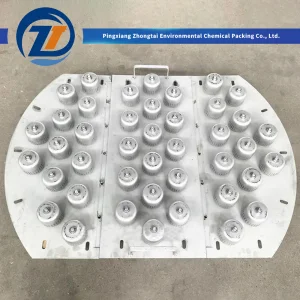
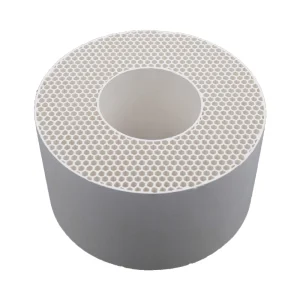
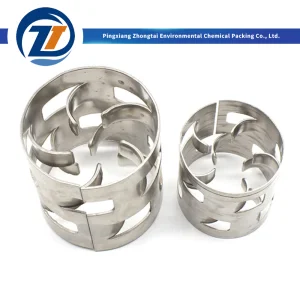
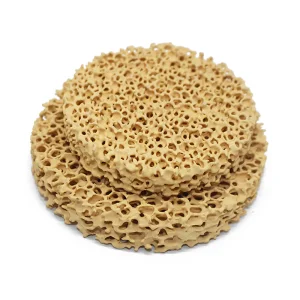
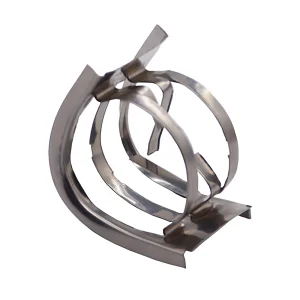
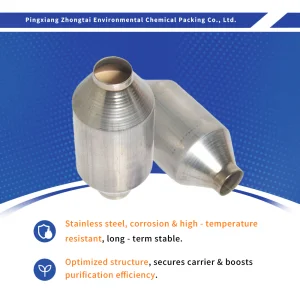
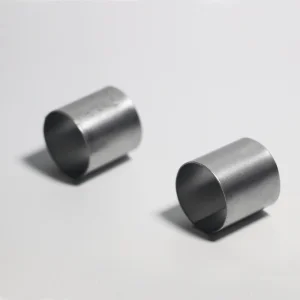
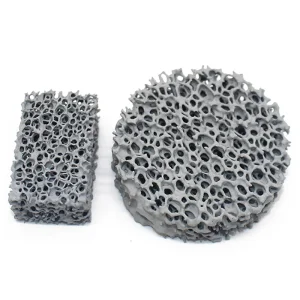
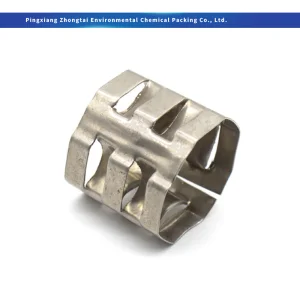
In modern chemical process engineering, mass transfer efficiency within separation towers directly dictates plant profitability, operational carbon intensity, and product purity. The Pall Ring random tower packing represents one of the most significant evolutionary jumps from traditional, solid-walled Raschig rings. By introducing die-punched internal vanes or "tongues" that curve inward into the ring cylinder, the Pall Ring completely transforms fluid dynamic behavior inside packed beds.
By opening up the cylindrical walls with windowed slots, vapor and liquid flow seamlessly across both inner and outer surfaces, dramatically increasing gas processing capacity before reaching flooding limits.
The high void fraction (typically 90% to 96%) minimizes flow resistance, allowing reboilers and blowers to operate at lower energy levels while maintaining optimal liquid-gas contact.
Internal vanes act as active liquid droplets splitters, constantly redistributing liquid toward the bed center and preventing premature liquid channeling along column walls.
Engineering Insight: As leading China Pall Rings Manufacturers, manufacturing precision is paramount. Minor errors in internal vane punch geometry or metal deburring can cause packing interlocking, non-uniform packing voidage, and localized channeling—negating up to 25% of theoretical HETP gains. Our automated stamping and degreasing facilities ensure strict dimensional fidelity per batch.
The global demand for mass transfer components is heavily anchored by giant refinery debottlenecking, green hydrogen gas purification, decarbonization retrofits, and massive expansions in fertilizer and olefin production across North America, Europe, the Middle East, and Asia-Pacific.
China’s industrial ceramic and metallurgy hubs, such as Pingxiang in Jiangxi Province, combine raw material refinement, automated high-speed stamping presses, ceramic kilns, and comprehensive testing labs within a tightly integrated 50-kilometer supply radius. This structural synergy allows Chinese OEM partners to deliver custom metallurgies (e.g., SS304, SS316L, Titanium, Hastelloy) and advanced polymers (PVDF, RPP) at unmatched scale and competitive lead times.
Engineering Procurement and Construction (EPC) contractors historically faced premium price markups from Western legacy OEMs. Modern direct-from-factory procurement models backed by rigorous third-party audits (SGS, TÜV, Intertek) reduce capital expenditure (CAPEX) for tower packing replacement projects by 30% to 45% without compromising ASTM material specifications or hydraulic design performance.
Below is the empirical hydraulic and physical reference standard for Metal Pall Rings across standard industrial sizing ranges (16mm to 76mm).
| Nominal Size (mm) | Dimensions D×H×T (mm) | Specific Surface Area ($m^2/m^3$) | Free Volume / Void Fraction (%) | Bulk Density ($kg/m^3$, SS304) | Packing Factor ($m^{-1}$) | Primary Industrial Service |
|---|---|---|---|---|---|---|
| 16 mm (5/8") | 16 × 16 × 0.4 | 341 | 93.1 % | 545 | 360 | High purity laboratory columns, fine chemical distillation |
| 25 mm (1") | 25 × 25 × 0.6 | 228 | 94.8 % | 390 | 220 | Refinery atmospheric towers, acid absorption, CO2 capture |
| 38 mm (1.5") | 38 × 38 × 0.8 | 145 | 95.6 % | 320 | 140 | Large diameter gas strippers, vacuum distillation, cooling towers |
| 50 mm (2") | 50 × 50 × 1.0 | 112 | 96.2 % | 280 | 110 | High liquid rate scrubbers, flue gas desulfurization (FGD) |
| 76 mm (3") | 76 × 76 × 1.2 | 74 | 97.0 % | 220 | 75 | Massive environmental abatement scrubbers, high-throughput quench towers |
* Note: Values shown reflect standard metal wall thicknesses. Plastic Pall Rings (Polypropylene, PVDF) and Ceramic Pall Rings exhibit altered bulk weights and surface area characteristics due to material density variations. Custom wall thicknesses can be fabricated upon client request.
In crude oil refining, depropanizers, and demethanizers, high thermal stability and corrosion resistance are mandatory. SS316L Metal Pall Rings replace legacy trays in debottlenecking revamps, yielding up to a 35% throughput increase without expanding shell footprints. They maintain operational stability under variable turndown ratios (turndown up to 4:1).
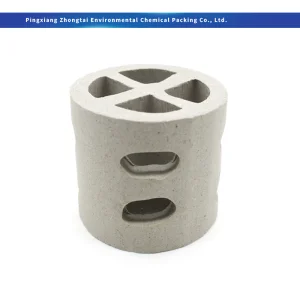
For chlorine gas treatment and sulfuric acid concentration units, metallic materials suffer rapid oxidation. Chemical-grade Ceramic Pall Rings and pure PVDF polymer packings resist aggressive halogen gases and concentrated hot acids, retaining structural integrity at elevated operating temperatures up to 150°C (PVDF) and 1000°C (Ceramic).
Post-combustion carbon capture systems utilizing Monoethanolamine (MEA) or MDEA solvents require ultra-low pressure drop across massive columns to minimize fan power consumption. Stainless Steel Pall Rings provide superior liquid wetting rates, maximizing CO2 mass transfer rates into amine solvents.
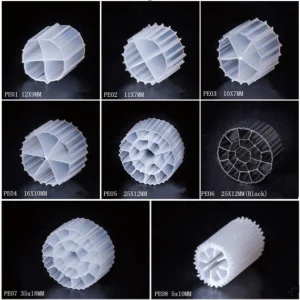
Polypropylene (PP) and Bio-Pall Rings are deployed in municipal wastewater air strippers and Moving Bed Biofilm Reactors (MBBR). Their open lattice structure promotes robust biofilm colonization while resisting biomass fouling and sludge clogging.
Every batch of Pall Rings manufactured in our China facilities undergoes rigorous physical and metallurgical testing prior to dispatch.
Using portable and laboratory Optical Emission Spectrometry (OES) and X-ray Fluorescence (XRF), we verify Nickel, Chromium, Molybdenum, and Carbon content to ensure zero material cross-contamination between SS304, SS316L, and specialty alloys.
Random packing beds must withstand deep liquid loads and heavy bed weights without permanent plastic deformation. We perform crush-strength compression testing to guarantee bed integrity up to 15-meter packed bed heights.
Metal stampings are thoroughly degreased in automated ultrasonic bath lines to remove residual punching oils. Passivation treatments ensure immediate oxide film formation for maximum anti-corrosion life in hostile chemical environments.
As chemical refining shifts toward zero-carbon objectives and localized micro-refineries, random packing design is undergoing a transformation driven by Computational Fluid Dynamics (CFD) optimization and advanced material engineering.
Using high-resolution multiphase 3D CFD modeling, our engineers are refining internal vane curvature angles to reduce micro-turbulent drag forces, yielding another projected 8% reduction in irrigated pressure drop.
Development of glass-filled polymers and ceramic-coated metals bridges the gap between mechanical ductility and extreme acid/alkali resistance, extending packing service life in harsh scrubbing duties.
Implementation of certified 100% post-industrial recycled Polypropylene (RPP) formulations enables chemical producers to lower scope 3 embodied carbon footprints without sacrificing mechanical tensile strength.
Detailed responses to technical inquiries regarding standard selection, installation practices, and performance limits of Pall Rings.
Raschig rings feature solid cylindrical walls, which restrict vapor movement and encourage liquid to flow primarily along the exterior surface. Pall rings feature opened slots and internal curved vanes die-punched from the cylinder wall. This structural modification exposes the interior cylinder area to both gas and liquid flow, increasing hydraulic capacity by approximately 40% and lowering pressure drop by up to 50% for equivalent packing dimensions.
Metal (SS304, SS316L, CS): Best suited for high-temperature distillation, high-pressure fractionators, and non-corrosive or mildly corrosive organic streams.
Plastic (PP, PVDF, RPP): Ideal for aqueous gas scrubbing, water treatment, air stripping, and corrosive halogen acids at lower operating temperatures (<100°C for PP, <150°C for PVDF).
Ceramic: Essential for concentrated hot acids (e.g., sulfuric acid drying and absorption towers), high-temperature thermal stress environments, and organic solvent duty where polymers melt and metals oxidize.
To prevent severe liquid wall channeling, the ratio of column diameter to packing nominal size ($D/d$) should ideally be greater than 10:1, and preferably above 15:1. For example, in a 500mm ID column, a 25mm or 38mm Pall ring is recommended. If $D/d$ is too small, liquid flows predominantly along the smooth column shell, bypassing the interior packed bed.
Pall Rings are typically wet-dumped (filling the column with water first to cushion the drop) or dry-dumped carefully using drop-chutes/socks to limit free-fall distance. Intermediate packing support grids and bed limiters should be installed at bed height intervals of 3 to 6 meters depending on the material's mechanical crush rating.
Standard export documentation includes Mill Test Certificates compliant with EN 10204 3.1, Chemical Analysis Reports (XRF), Batch Crush Strength Certificates, Certificate of Origin (Form E, CO, etc.), Packing Lists, and Bill of Lading. Third-party pre-shipment inspection (SGS/TÜV) can be arranged upon request.
Explore our comprehensive portfolio of ceramic support media, bio-reactors, and specialty absorption rings.