Direct supply lines from Pingxiang manufacturing facilities. Fully traceable batch testing, certified mechanical crush strength, and ASTM/DIN metallographic compliances.
Modern packed tower mass transfer efficiency relies intrinsically on precision metallurgy, uniform geometrical tolerance, and interfacial wetting dynamics. Over the past two decades, Pingxiang, Jiangxi has consolidated over 70% of global industrial tower packing manufacturing. This industrial cluster provides international EPC engineering firms with unmatched economies of scale, rigorous chemical purity control, and rapid custom tooling cycles.
Direct access to prime stainless steel coils (TISCO, BAOSTEEL) and medical-grade virgin polymers (Sinopec PP, Solvay PVDF) ensures baseline metallurgy integrity without third-party scrap blending. High-speed progressive stamping presses achieve zero edge-burr precision.
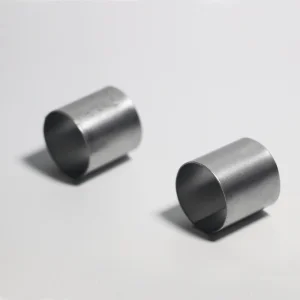
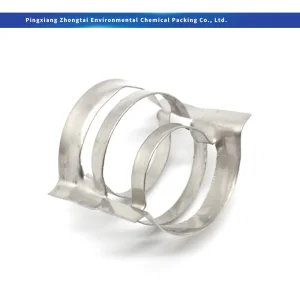
Unlike legacy Raschig rings, our high-speed Pall Ring production molds bend alternating cylindrical wall tongues inward while piercing continuous outward windows. This boosts dynamic vapor-liquid interfacial area by 35% and delays hydraulic flooding.
Every export lot undergoes comprehensive wall thickness micrometer inspection, bulk density evaluation, and hand-held Niton XRF positive material identification (PMI) to guarantee strict compliance with client MTR specifications.
By opening up the cylindrical sidewalls with diametrically opposed radial inward tabs, the Pall ring converts dead stagnation volumes inside the ring core into active mass transfer surfaces. The resulting structure minimizes local gas recirculation eddies, slashing dry and irrigated pressure drops by 40% to 60% compared to traditional Raschig packing while increasing effective capacity by up to 30%.
Engineering constants measured under ambient air-water test columns at 20°C and 101.3 kPa standard atmospheric baseline.
| Nominal Size (D×H×T) | Specific Surface Area (m²/m³) | Void Fraction (%) | Piece Count (pcs/m³) | Bulk Density (kg/m³) | Dry Packing Factor Fp (m⁻¹) |
|---|---|---|---|---|---|
| 16 × 16 × 0.4 mm | 356 | 93.1 | 215,000 | 385 | 310 |
| 25 × 25 × 0.5 mm | 228 | 94.8 | 53,500 | 295 | 175 |
| 38 × 38 × 0.6 mm | 142 | 96.2 | 14,800 | 240 | 110 |
| 50 × 50 × 0.8 mm | 112 | 97.0 | 6,500 | 210 | 75 |
| 76 × 76 × 1.0 mm | 74 | 98.1 | 1,950 | 180 | 52 |
As global decarbonization mandates and volatile chemical separation requirements accelerate, traditional mass transfer media is undergoing a material-science revolution driven by simulation and hybrid fabrication.
Expansion beyond classical SS304/SS316L into Monel 400, Hastelloy C-276, Inconel 625, and Grade 2 Titanium. These specialty metallurgy Pall rings endure high-chloride, acidic gas streams in geothermal energy plants and wet hydrogen halide scrubbers.
Carbon capture utilization and storage (CCUS) relies heavily on solvent absorption (MEA, MDEA, AMP blends). Pall rings deployed in megawatt-scale direct air capture (DAC) and amine strippers are calibrated for minimum film thickness and rapid liquid turnover.
For corrosive chlorine dioxide and sulfuric acid stripping where metallic packings fail, advanced fluoropolymer extrusion (PVDF, PTFE, ETFE) and carbon-filled Polypropylene (CPVC) maintain continuous dimensional stability up to 150°C under severe chemical attack.
Modern Chinese manufacturers integrate real-scale 3D Computational Fluid Dynamics (CFD) with empirical column experiments, calculating localized rivulet formation, wall maldistribution effects, and droplet entrainment to optimize packing bed heights.
Pall rings serve as the computational benchmark for random packings. Below are the macro chemical environments where our factory-engineered configurations prevent column bottlenecking and fouling.
Installed inside atmospheric distillation towers, de-ethanizers, and debutanizer columns. Metal Pall rings (25mm, 38mm, 50mm in SS304/SS316L) maintain low HETP (Height Equivalent to a Theoretical Plate) during deep hydrocarbon boiling cycles, mitigating coking tendencies.
In coal-fired power utilities and metallurgy smelting facilities, heavy limestone slurries and SO₂ gases pass through wet scrubbers. Reinforced Polypropylene (RPP) Pall rings prevent solids scaling and slurry clogging, optimizing clean gas throughput.
Demanding 98% concentrated sulfuric acid drying towers and wet chlorine quenching systems mandate PVDF or Ceramic Pall rings. These resist aggressive halogen oxidation and exothermic acid dehydration without matrix brittleness or catastrophic degradation.
Procuring mass transfer components from China requires strict inspection checkpoints. Below is the QA protocol enforced across our production facilities to ensure frictionless project commissioning.
Require EN 10204 3.1 Mill Test Certificates (MTC) proving authentic chemistry: SS316L must register Nickel ≥ 10.0%, Chromium ≥ 16.0%, and Molybdenum ≥ 2.0%. Ensure low carbon limits (C ≤ 0.03%) to inhibit intergranular corrosion in weld-heat zones.
A compromised die produces uneven internal tabs that nest within one another, triggering tower bed settling and localized vapor maldistribution. Our automated punching runs within ±0.03mm thickness variance and zero tab-twist deviation.
Random packings cannot be crushed during sea transport. We package in UV-stabilized heavy woven super sacks (1 m³ jumbo bags) or heavy 5-ply export corrugated cartons strapped onto ISPM 15 heat-treated fumigation-free hardwood pallets.
Direct engineering answers regarding hydraulics, material suitability, packing factors, and logistics from our technical mass transfer department.
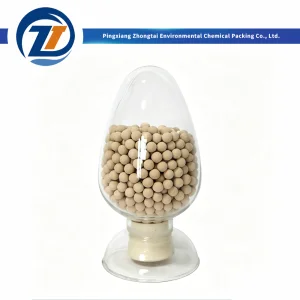
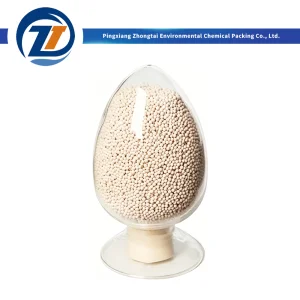
Engineered for deep-bed filtration, gas dehydration, cryogenic fractionation, and pressure swing adsorption plants worldwide.