Factory-direct supply tested under stringent static water adsorption, equilibrium crush strength, and dynamic breakthrough benchmarks for worldwide process plants.
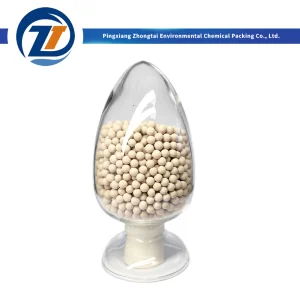
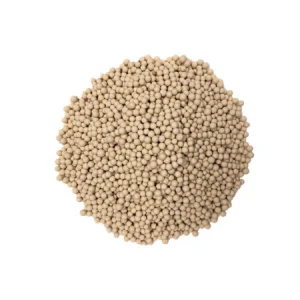
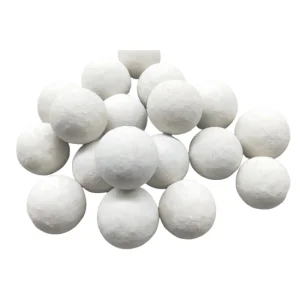
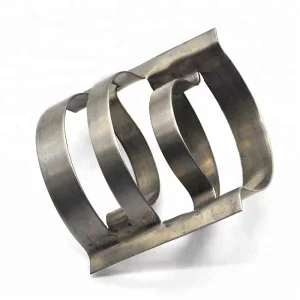
Understanding framework topology, cation displacement, and dynamic mass-transfer zones (MTZ) is critical for achieving effluent moisture levels below 0.1 ppmv (−100°C dew point).
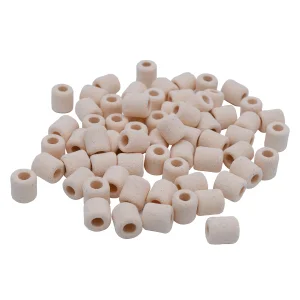
Synthetic zeolite molecular sieves are crystalline aluminosilicates structured by interconnected tetrahedral [SiO4] and [AlO4]− units. The presence of trivalent aluminum induces an overall negative framework lattice charge, balanced by exchangeable extra-framework cations (potassium, sodium, or calcium). The Linde Type A (LTA) structure yields pore dimensions from 3Å to 5Å, while the Faujasite (FAU/Type X) framework provides a broader 10Å (13X) three-dimensional cavity system.
Unlike standard silica gels or activated aluminas that rely predominantly on physical capillary condensation, molecular sieves exhibit intense localized electrostatic fields inside their uniform crystalline cavities. Water possesses a permanent dipole moment (1.85 Debye), creating exceptional physical affinity even at parts-per-billion feed concentrations and operating temperatures exceeding 100°C, preventing premature capillary condensation revaporization.
In fixed-bed adsorption towers, desiccant beds exhibit three operational zones: the saturated equilibrium zone, the active Mass Transfer Zone (MTZ), and the unused bed layer. Our manufacturing process refines the intra-particle macropore and mesopore diffusion channels through specialized clay-binder optimization, producing steep breakthrough curves that minimize MTZ height and maximize bed saturation efficiency before regeneration initiation.
| Zeolite Type | Nominal Pore Aperture | Cation Matrix | Bulk Density (g/ml) | Crush Strength (≥ N/bead 1/8") | Static H₂O Adsorption (≥ wt%) | Primary Industrial Utility |
|---|---|---|---|---|---|---|
| Type 3A | ~3 Å (0.3 nm) | Potassium (K⁺) | 0.68 – 0.74 | 60 – 80 N | 21.5% | Cracked gas, ethylene, ethanol dehydration; zero co-adsorption of hydrocarbons |
| Type 4A | ~4 Å (0.4 nm) | Sodium (Na⁺) | 0.66 – 0.72 | 50 – 75 N | 22.0% | Compressed air drying, closed refrigeration systems, inert blanketing gas |
| Type 5A | ~5 Å (0.5 nm) | Calcium (Ca²⁺) | 0.68 – 0.73 | 65 – 85 N | 21.5% | Normal-paraffin separation, hydrogen PSA purification, sweetening desulfurization |
| Type 13X APG | ~10 Å (1.0 nm) | Sodium (Na⁺ - FAU) | 0.62 – 0.68 | 40 – 65 N | 24.5% | Cryogenic air pre-purification (simultaneous CO₂/H₂O removal), medical oxygen VPSA |
Pingxiang City in Jiangxi Province represents China's foundational industrial ceramics and chemical mass-transfer manufacturing cluster, combining integrated raw silicate access with cutting-edge rotary kilns.
Our facility directly oversees the hydrothermal synthesis from premium sodium silicate and aluminum hydroxide. Controlling the crystallization kinetics at the liquid-gel phase allows strict control over the framework Si/Al ratio, eliminating non-selective micro-amorphous phases that cause early active site poisoning and premature hydrodynamic attrition.
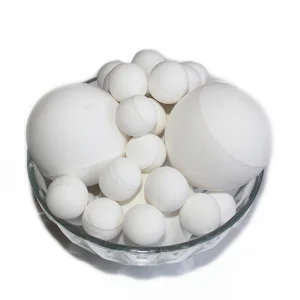
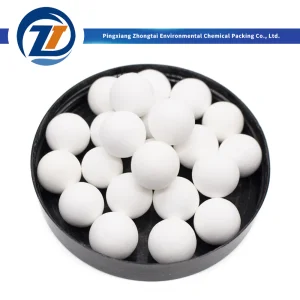
Utilizing high-torque multi-zone rotary calcination kilns equipped with digital thermocouple feedback loops, our desiccant spheres achieve uniform 550°C–620°C thermal activation. This removes residual lattice water without inducing framework dealumination or hydrothermal micro-fractures, ensuring our desiccants achieve high radial crush strength (≥70 N per 1/8" bead).
Every single metric ton dispatched from our Pingxiang factory is cataloged with traceable laboratory certificates covering X-ray Diffraction (XRD) phase purity, Brunauer-Emmett-Teller (BET) surface area metrics, equilibrium water uptake, and ASTM D4058 attrition rates, simplifying engineering sign-off for tier-one EPC contractors.
Bridging chemical mass transfer, gas separation, and ultra-dry industrial processing across mission-critical hydrocarbon, cryogenic, and life-science units.
In cryogenic air separation systems, incoming ambient air must have both moisture (H₂O) and carbon dioxide (CO₂) scrubbed down to sub-ppm levels to prevent solid ice and dry-ice freezing across down-stream cryogenic heat exchangers. Our specialized 13X APG (Air Pre-Purification Grade) is synthetically engineered with optimized crystalline pore mouths to offer a dynamic CO₂ adsorption capacity ≥18 ml/g, preventing cold-box flow restriction and extending turnaround intervals up to 8 years.
Prior to liquefied natural gas (LNG) liquefaction at −162°C, feedstocks undergo stringent dehydration using 4A Molecular Sieve fixed beds to reach water concentrations below 0.1 ppmv. Concurrently, Type 5A and 13X beds act as selective multi-adsorbents, scrubbing volatile mercaptans, H₂S, and trace mercury vapors, protecting aluminum plate-fin heat exchangers from catastrophic liquid metal embrittlement (LME).
Ethanol-water azeotropes (95.6% ethanol) cannot be separated by standard distillation. Our high-crystallinity Type 3A Zeolite excludes the ethanol molecule (~4.4 Å) while readily adsorbing water (2.8 Å), producing 99.8% fuel-grade anhydrous ethanol. In cracked gas ethylene and propylene drying, our tailored 3A formulation prevents catalytic green oil polymerization and bed coking through precise potassium ion exchange balancing.
Modern clinical oxygen concentrators and on-site industrial oxygen generators rely on 13X and Lithium-doped molecular sieves. Operating on rapid Pressure Swing Adsorption (PSA) or Vacuum Pressure Swing Adsorption (VPSA) cycles, our zeolites selectively capture atmospheric nitrogen via the quadrupolar interaction of N₂ with framework charge sites, allowing 93%±3% high-purity medical grade O₂ to pass through continuously.
The molecular sieve desiccant industry is evolving rapidly toward zero-binder crystalline matrix engineering, carbon capture integration, and low-enthalpy thermal regeneration.
Conventional zeolites contain 15%–20% non-adsorptive inert clay binder (such as attapulgite or sepiolite) to provide mechanical strength, which reduces active volumetric capacity. Our next-generation binderless technology converts the clay binder into crystalline zeolite phase via secondary in-situ hydrothermal crystallization, boosting working dynamic capacity by 20% to 25% without sacrificing mechanical crush resistance.
Addressing global Net-Zero initiatives, we are expanding surface amine-functionalized 13X frameworks. Tailored basic sites enhance CO₂ chemisorption kinetics during post-combustion carbon capture from coal and natural gas flue exhausts, maintaining high selectivity over nitrogen and moisture at regeneration temperatures under 120°C.
Alkaline and PEM water electrolyzers generate saturated hydrogen containing trace moisture and entrained electrolytes. Our low-regeneration-enthalpy molecular sieve formulations achieve complete dehydration under reduced purge gas ratios, lowering operational energy demands across green hydrogen storage and transportation pipelines.
Ensure fixed-bed operational reliability by evaluating core physical and hydrodynamic properties before placing purchase orders.
| Evaluation Parameter | Test Standard (ASTM/GB) | Engineering Acceptance Threshold | Operational Risk of Non-Compliance |
|---|---|---|---|
| Radial Crush Strength | ASTM D4179 / GB 6672 | ≥ 60 N/bead (1/8"), ≥ 35 N/bead (1/16") | Pellet fracturing under cyclic thermal/pressure stresses; bed compaction |
| Attrition Loss Rate | ASTM D4058 / GB 10505 | ≤ 0.05 wt% to 0.10 wt% | Downstream particulate migration; differential pressure spikes; filter blinding |
| Static Water Capacity | GB/T 6287 (RH 60%, 25°C) | ≥ 21.0% – 24.5% wt% depending on type | Under-designed bed volume; early moisture breakthrough; shortened cycle times |
| Packed Bulk Density | ASTM D4164 | Verified within ± 0.02 g/ml of target spec | Incorrect bed loading tonnage; improper flow distribution; fluidization risks |
| Lattice Crystallinity Index | XRD Peak Analysis | ≥ 90% Relative Crystallinity | Accelerated hydrothermal aging; structural collapse during thermal regeneration |
Detailed answers addressing thermal regeneration parameters, bed loading practices, and desiccant selection considerations.
Engineered to integrate smoothly with molecular sieve dehydration vessels, distillation columns, and thermal oxidizers across the world's leading processing industries.
Connect with our chemical engineers in Pingxiang for adsorption breakthrough curve modeling, bed pressure drop calculations, and custom factory-direct quotations for your upcoming planned turnaround or new project build.
