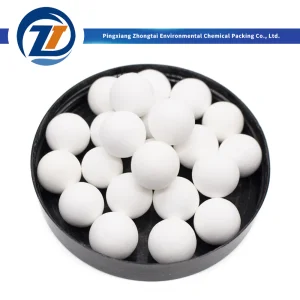
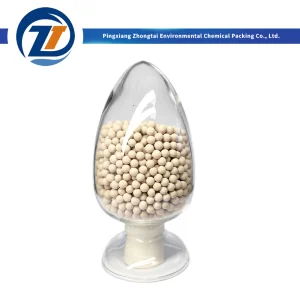
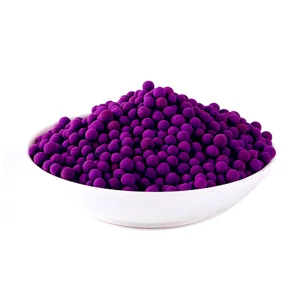
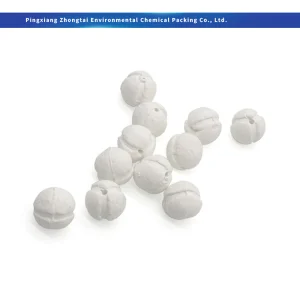
Type 3A molecular sieve is an alkali metal aluminosilicate synthesized through the controlled potassium ion exchange of the Type 4A (Sodium LTA) crystal framework. Its structural formula is approximately x K₂O · (1-x) Na₂O · Al₂O₃ · 2 SiO₂ · w H₂O, where the replacement of sodium ions ($Na^+$) by larger potassium ions ($K^+$) restricts the effective pore aperture precisely to 3 Angstroms ($0.3\text{ nm}$).
The fundamental operating principle of 3A sieves relies on strict kinetic diameter exclusion. Water molecules ($2.65\text{ Å}$) and ammonia ($2.60\text{ Å}$) pass readily into the internal crystalline cavities, whereas unsaturated hydrocarbons like ethylene ($3.9\text{ Å}$), propylene ($4.0\text{ Å}$), and ethanol ($4.5\text{ Å}$) are completely excluded from entering the internal pore volume.
The degree of $K^+$ exchange directly defines the operational performance of 3A sieves. Premium China 3A sieve suppliers maintain an exchange level between 40% and 60%. Over-exchange impairs hydrothermal stability, while under-exchange allows co-adsorption of hydrocarbons, leading to coking and bed fouling in ethylene cracked gas dryers.
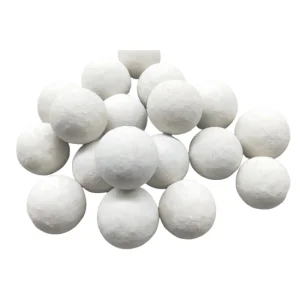
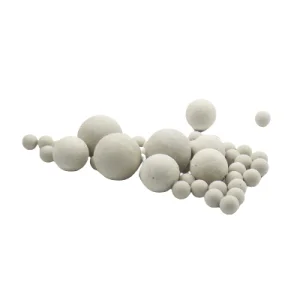
The sharp adsorption isotherm of 3A zeolites yields a narrow Mass Transfer Zone (MTZ) during dynamic gas drying. Efficient spherical geometry combined with uniform pore diameter ensures minimal pressure drop across deep industrial beds, optimizing column run times prior to thermal breakthrough.
Procurement directors and process engineering teams evaluating prospective 3A molecular sieve quotes from Chinese suppliers must look beyond basic FOB pricing. The long-term Total Cost of Ownership (TCO) is governed by physical and chemical metrics that prevent bed dusting, pressure drop spikes, and premature hydrothermal degradation.
| Physical / Chemical Parameter | Standard Commercial Grade | High-Purity Premium Grade (Zhongtai Standard) | Impact on Industrial Plant Operations |
|---|---|---|---|
| Potassium Ion Exchange Rate | 35% - 45% | 50% - 60% | Prevents co-adsorption of ethylene/propylene and bed coking. |
| Bulk Density (g/ml) | 0.68 - 0.72 | 0.72 - 0.76 | Higher density packs more adsorbent mass per cubic meter of column. |
| Crush Strength (N/bead, 1.6-2.5mm) | ≥ 35 N | ≥ 45 - 60 N | Prevents structural bead crushing under thermal swing stress and column weight. |
| Attrition Rate (wt %) | ≤ 0.20% | ≤ 0.05% - 0.10% | Minimizes downstream filter clogging and dust carryover into compressors. |
| Static Water Capacity (25°C, RH 75%) | 20.0% - 21.0% | ≥ 21.5% - 22.5% | Extends cycle times between thermal regeneration steps, saving steam/energy. |
| Package Moisture Content (As Shipped) | ≤ 1.5% | ≤ 0.8% - 1.0% | Ensures maximum working capacity straight out of the drum without pre-baking. |
Molecular sieve 3A is extremely hygroscopic. Global buyers should demand heavy-duty steel drums (150kg net) with double inner PE bags or vacuum-sealed aluminum foil lining. For mega-projects, nitrogen-purged 750kg or 1000kg flexible intermediate bulk containers (FIBCs) with moisture-proof barriers are required to safeguard adsorption capacity during oceanic transit.
Top China suppliers maintain ISO 9001 quality frameworks with full lot-level testing. Certificates of Analysis (COA) supplied with each shipment must verify X-ray fluorescence (XRF) chemical composition, heat of adsorption, particle size distribution via laser diffraction, and automated crush strength statistics according to ASTM standards.
3A molecular sieves serve as vital operational guardrails across energy processing, petrochemical refinement, renewable bio-fuels, and architectural glass manufacturing.
In steam cracking naphtha facilities, water in the olefin stream causes cryogenic freeze-outs in cold boxes and forms hydrocarbon hydrates. 3A sieves dry cracked gas down to < 0.1 ppm water without co-adsorbing light olefins ($C_2H_4, C_3H_6$), preventing green oil polymer polymerization and catalyst poisoning.
Distillation cannot breach the bio-ethanol/water azeotrope (95.6% ethanol). Thermal Swing Adsorption (TSA) units utilizing 3A zeolite beads selectively extract residual water from ethanol vapor streams, yielding pure 99.9% anhydrous fuel-grade ethanol for modern bio-fuel blending operations.
3A sieve matrix integrated inside spacer bars adsorbs moisture trapped inside sealed double/triple glazing units during fabrication. Because 3A rejects nitrogen and argon gas, it prevents window distortion caused by gas absorption during extreme atmospheric temperature changes.
Used extensive in closed-loop refrigeration systems (R-134a, R-600a) and industrial gas purification (LNG, CNG, hydrogen), 3A sieves prevent moisture-induced ice formation in expansion valves and inhibit acidic hydrolysis of compressor lubricant oils.
The industrial molecular sieve landscape is shifting toward decarbonized manufacturing, low-regeneration-temperature formulations, and binderless crystalline structures to maximize volumetric adsorption capacity.
Standard molecular sieves contain 15%-20% inert clay binder (kaolin/attapulgite) to form structural beads. Next-generation Chinese manufacturing converts clay binders directly into active Zeolite A through hydrothermal caustic treatment, yielding 15-20% higher dynamic adsorption capacity per unit column volume.
Traditional TSA regeneration requires purge gas temperatures reaching 230°C–260°C. Advanced 3A formulations optimize the internal crystal pore surface to release polar water molecules at 160°C–180°C, drastically cutting natural gas combustion overheads in mega-scale gas processing plants.
Computational Fluid Dynamics (CFD) combined with molecular dynamics modeling allows manufacturers to customize bead surface micro-grooves. This mitigates wall-channeling effects inside massive 5-meter diameter industrial dehydrator vessels.
| Adsorbent Type | Nominal Pore Size | Molecules Adsorbed | Molecules Excluded | Primary Industrial Application |
|---|---|---|---|---|
| Molecular Sieve 3A | ~3.0 Å | H₂O, NH₃, He | C₂H₄, C₂H₆, C₃H₆, Ethanol | Olefin Drying, Fuel Ethanol, IG Glass |
| Molecular Sieve 4A | ~4.0 Å | H₂O, CO₂, SO₂, H₂S, C₂H₄ | C₃H₈, Aromatics, C₄+ | Closed-System Gas/Liquid Drying, Refrigerants |
| Molecular Sieve 5A | ~5.0 Å | n-Paraffins (C₄-C₁₄), H₂S, CO₂ | iso-Paraffins, Cyclics, Aromatics | PSA Oxygen Generation, Paraffin Separation |
| Molecular Sieve 13X | ~10.0 Å | Aromatics, Mercaptans, H₂O, CO₂ | Large Complex Polymers | Air Separation Units (ASU), Gas Sweetening |
| Silica Gel / Activated Alumina | 20 - 50 Å (Broad) | Bulk Water Vapor | Low selectivity based on size | Pre-drying, Instrument Air Dryers |
China produces over 60% of the world's synthetic zeolites. Navigating China 3A sieve quotes requires understanding raw material index pricing, calcination energy costs, ion-exchange depth, and batch-level testing premiums.
When requesting quotes for enterprise volumes (e.g., 20 MT to 500+ MT), procurement departments should expect transparent cost itemization:
Seamless chemical plant integration extends beyond material shipping. Tier-1 China 3A sieve suppliers provide complete lifecycle engineering support, including vessel loading calculations, dense-phase loading supervision, pre-commissioning dry-outs, and exhausted bed disposal consulting.
Full registration compliance for European market entry, guaranteeing zero Substances of Very High Concern (SVHC) in synthetic aluminosilicate formulations.
Batch test verification standardizing ASTM D3802 (ball-pan hardness), ASTM D2854 (apparent density), and water adsorption isotherms.
Seamless freight coordination with hazard-free MSDS/SDS documentation, customs clearance assistance, and just-in-time site staging.
Technical guidance on Sock Loading vs Dense Loading methods (e.g., Petroval/Monomer equipment) to maximize bed packing uniformity.
Expert technical answers regarding selection, operational life, regeneration procedures, and supplier validation for 3A molecular sieves.