Direct wholesale export specifications fabricated under stringent ISO quality management protocols at Pingxiang Zhongtai Environmental Chemical Packing Co., Ltd.
Evaluating macro-scale supply chain logistics, metallurgy tolerances, and continuous-run requirements across tier-one petrochemical refineries, chemical complexes, and industrial minerals processing plants.
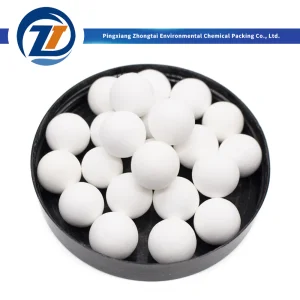
In modern hydrocracking, catalytic reforming, and desulfurization reactors, operating pressures frequently exceed 15 MPa while temperatures top 450°C. Large ceramic spheres (specifically diameters ranging from 38mm (1.5"), 50mm (2"), up to 75mm (3")) serve as critical bottom support matrices and top hold-down blankets.
Failure of large ceramic balls under crushing loads causes catastrophic bed compaction, pressure-drop spikes (ΔP runaway), and premature plant shutdowns that cost plant operators millions of dollars per idle day.
Pingxiang, located in Jiangxi Province, China, holds a commanding position producing over 65% of the world's structural ceramic packing and inert catalyst support media. Pingxiang Zhongtai Environmental Chemical Packing Co., Ltd. (operating continuously since 2003) leverages local microcrystalline kaolin reserves, integrated calcination kilns, and multi-axis hydraulic forming machinery.
This regional concentration yields exceptional raw material stability, eliminating supplier intermediaries and maintaining strict chemical composition tolerances across bulk 500-metric-ton orders.
Procurement teams require verifiable conformance to international standards, primarily ASTM C515 (Standard Specification for Chemical-Resistant Ceramic Tower Packings) and China Chemical Industry Standard HG/T 3683.1-2014. Quality parameters prioritize low water absorption (<1.0%), zero friability, high bulk density (>1.35–1.45 g/cm³ for inert grades), and leachable free silica below 0.1% for high-temperature synthesis gas loops.
Producing ceramic spheres exceeding 50mm in diameter introduces profound thermal conduction and mechanical stress challenges not present in sub-13mm beads. Uniform densification dictates operational reliability.
| Alumina Grade | Al₂O₃ (%) | SiO₂ (%) | Fe₂O₃ (%) | Crush Strength (50mm Sphere) | Max Temp Limit | Dominant Industrial Use-Case |
|---|---|---|---|---|---|---|
| Standard Chemical Porcelain | 23 – 30% | 65 – 72% | < 1.0% | > 9.5 kN / ball | 1100 °C | Refining / Drying Sulfuric acid towers, feed gas pre-treaters |
| Medium-High Alumina | 50 – 70% | 25 – 45% | < 0.5% | > 14.0 kN / ball | 1350 °C | Hydroprocessing Moderate hydrotreaters, Claus sulfur recovery |
| High Alumina (Wear/Inert) | 90 – 92% | 6 – 8% | < 0.2% | > 18.0 kN / ball | 1550 °C | High Severity Deep hydrocrackers, large tumbling ball mills |
| Ultra-Pure Low Silica | ≥ 99.5% | ≤ 0.1% | < 0.1% | > 22.0 kN / ball | 1750 °C | Hydrogen / Syngas Steam methane reformers, ammonia secondary reformers |
Traditional rolling agglomeration struggles with large diameters (50–100mm), often yielding internal micro-voids and density delamination. Zhongtai utilizes multi-cavity isostatic cold pressing for high-specification large balls, ensuring uniform green body compaction across the entire volumetric radius.
Large ceramic bodies require computerized firing ramps in high-temperature tunnel kilns. Ramp rates must not exceed 15°C/hr across the dehydroxylation zone (450–650°C) to prevent trapped steam vapor pressure from initiating interior micro-fractures, which fatally degrade structural crush strength.
In high-pressure steam reforming units, steam reacts with silica content (SiO₂ + 2H₂O ⇌ Si(OH)₄) at temperatures above 900°C. Volatilized gaseous silicic acid migrates downstream, precipitating and poisoning fine-pore catalysts and fouling waste heat boilers. Our >99% α-alumina large balls contain <0.1% SiO₂, totally mitigating this failure mechanism.
Large ceramic balls withstand sudden process upsets, rapid depressurization, and hot emergency restarts. Formulations enriched with mullite and corundum phases exhibit minimal thermal expansion coefficients ((4.5–6.0) × 10⁻⁶ /°C), retaining structural integrity after repetitive quench cycles from 850°C into cold liquid.
Across regional petrochemical zones, fertilizer hubs, and mining basins, process engineers rely on custom-specified large ceramic packing to resolve specific physical and fluid dynamics challenges.
Location Focus: Al-Jubail (Saudi Arabia), Ruwais (UAE), Ras Laffan (Qatar).
Operating Service: Vacuum gas oil (VGO) and residue hydrodesulfurization (HDS).
Implementation: Large 50mm and 75mm 99% alumina balls positioned on Johnson screens directly above reactor dump nozzles. They support hundreds of metric tons of active cobalt-molybdenum catalyst without screen deformation, providing uniform hydrogen/hydrocarbon vapor distribution across cross-sectional diameters up to 6.5 meters.
Location Focus: US Gulf Coast (Texas/Louisiana), Alberta (Canada).
Operating Service: Secondary autothermal reformers (ATR) and ammonia synthesis reactors.
Implementation: 50mm high-purity inert balls are installed as top hold-down layers. They prevent turbulent incoming steam/methane gas jets (traveling at speeds exceeding 25 m/s) from fluidizing the active nickel catalyst pellets, completely eliminating attrition dust that otherwise plugs downstream synthesis loops.
Location Focus: Western Australia (Pilbara iron/lithium), Chile (Antofagasta copper).
Operating Service: Heavy abrasive wet grinding and micronization.
Implementation: Large 60mm, 70mm, and 90mm 92% Al₂O₃ grinding balls displace forged steel balls. Steel media discharges iron contamination into battery-grade spodumene or copper concentrates. Large high-density alumina balls deliver high impact energy, withstand intense continuous impact cycles, and reduce total energy consumption per ton of ground slurry.
A poorly designed support bed causes uneven velocity distribution, catalyst bed migration, and channel weeping. Leading plant design houses engineer graduated bed layers based on the Ergun pressure-drop equation.
To prevent catalyst grains from migrating downward into bottom collection headers, layers must follow geometric interlocking. Standard industry best practice specifies that the diameter of adjacent ceramic ball layers must not exceed a 1:2 ratio.
A classic reactor base configuration consists of: Bottom Layer: 50mm (2") or 75mm (3") large balls; Transition 1: 25mm (1"); Transition 2: 13mm (1/2"); Transition 3: 6mm (1/4"); Topping: 3mm (1/8") resting directly beneath the extruded catalyst.
Large ceramic balls introduce higher void fractions (~40–44%) at the bottom outlet zone where fluid velocities converge. By using carefully calibrated large spherical media rather than random saddles or crushed refractory rock, plant operators decrease exit pressure losses across the vessel by up to 22%.
This allows compressors to run at lower horsepower, directly trimming electrical operating expenditure while preventing liquid holdup and localized coke accumulation.
Feed inlets experience massive momentum flux (ρv²), frequently exceeding 5000 Pa. If light or small ceramic media are installed at the top of the bed, the incoming vapor-liquid mixture will dislodge the spheres, leading to undulating bed dunes and uneven residence times.
Heavy large ceramic balls (50mm–75mm with high individual mass) anchor the bed in place, diffusing the momentum across a broad horizontal plane before the process stream contacts the active catalyst.
Driven by decarbonization targets, hydrogen scale-up, and automated production requirements, ceramic media production is evolving toward zero-defect, automated precision operations.
Transitioning from manual roller-grading to 360-degree high-speed optical inspection. Systems detect micro-surface cracks, ovality deviations (>1.5mm), and internal density variances via high-frequency acoustic echo resonance before packaging.
Deploying hybrid electric and green hydrogen firing kilns across the Pingxiang manufacturing base. This shifts production away from conventional natural gas, slashing Scope 1 carbon intensity by up to 45% for export shipments bound for EU markets adhering to CBAM carbon border mechanisms.
Development of engineered porous ceramic spheres providing dual functionality: serving as structural bed support while presenting passivated catalytic surface chemistry to trap fugitive heavy metal poisons (Vanadium, Nickel, Iron) before they contact expensive downstream noble catalyst beds.
Comprehensive technical answers compiled by senior chemical engineers to assist project managers, buyers, and technical leads during media qualification.
Under high temperature (>350°C) and partial hydrogen pressure, silica (SiO₂) in cheap porcelain media can be reduced or leached by steam into volatile silane/silicic acid compounds. When these gases cool slightly downstream, silica deposits inside catalyst pore throats, irreversibly poisoning catalytic activity and fouling heat exchanger tubes. High-pressure hydroprocessing always demands ≥99% pure low-silica alumina balls.
Crush testing follows ASTM C515 and HG/T 3683 procedures. A single sphere is placed between two hardened steel compression platens of a calibrated hydraulic testing machine. Force is applied smoothly at a rate of 1 to 2 kN/second until catastrophic fracture. For a 50mm (2") 99% alumina ball, the individual crushing force must consistently exceed 20 to 22 kN (over 2 metric tons of point load per sphere).
Wholesale shipments are packaged in heavy-duty, moisture-resistant 1000kg (1 Metric Ton) or 1200kg woven polypropylene Super Sacks (Jumbo Bags) with inner PE liners, or 25kg multi-wall paper bags palletized on fumigated heat-treated wooden/composite pallets. Bags feature heavy-duty lifting loops and are shrink-wrapped in UV-inhibited poly film to withstand rough ocean handling and outdoor yard staging without moisture uptake.
Yes. While standard catalog sizes are 25mm (1"), 38mm (1.5"), 50mm (2"), and 75mm (3"), Zhongtai operates precision tooling workshops that fabricate custom isostatic pressing molds. Custom formulations and specific diameters up to 100mm or specialized perforated macro-spheres can be sampled and produced within 3 to 4 weeks from technical drawing validation.
Chemical porcelain and high-alumina inert ceramic balls show acid resistance ratings >99.6% per ASTM C279 and HG/T testing. They are entirely inert to concentrated H₂SO₄, HCl, and HNO₃ up to boiling points. The only exceptions are hydrofluoric acid (HF), which dissolves aluminosilicate networks, and hot concentrated sodium hydroxide (NaOH) solutions above 80°C.
Bulk density determines the total weight of media required for a given vessel volume. Standard inert chemical porcelain has a bulk density of approximately 1.35–1.42 g/cm³ (1350–1420 kg/m³). High-alumina (92–99%) balls exhibit higher material density, yielding bulk densities of 1.90–2.10 g/cm³ (1900–2100 kg/m³). Vessel mechanical design engineers must account for this weight differential during foundation and support grid stress calculations.
Yes. We regularly host third-party inspection agencies at our Pingxiang factory. Audits routinely verify dimensional tolerances via Vernier calipers, chemical composition via X-Ray Fluorescence (XRF), water absorption via boiling saturation, and random crushing strength sampling directly from production lots prior to container sealing.
Standard inventory for routine sizes (25mm, 38mm, 50mm inert porcelain) is maintained up to 1000 metric tons at our central warehouse. For large-scale custom orders or 99% pure alumina media, our continuous tunnel kilns process 200 metric tons within 15–20 working days, with immediate rail dispatch to Shanghai, Ningbo, or Shenzhen export docks.
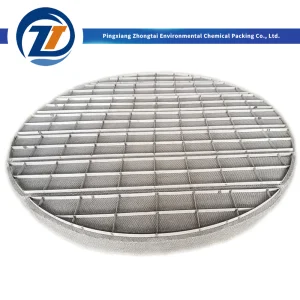
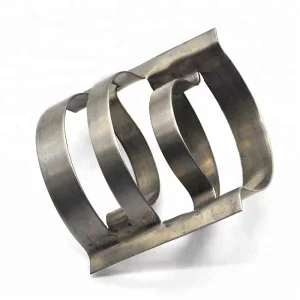
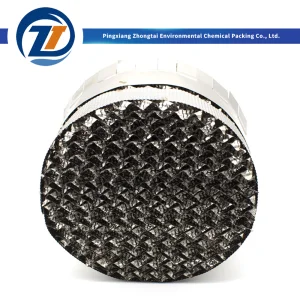
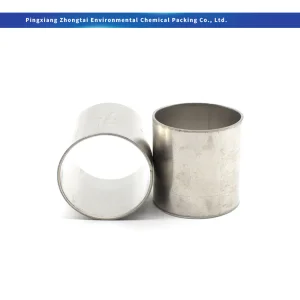
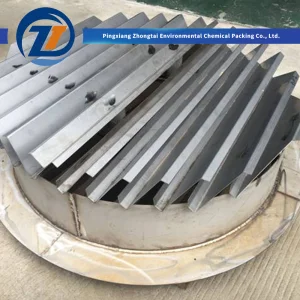
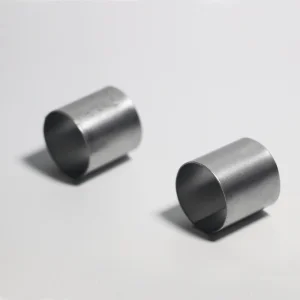
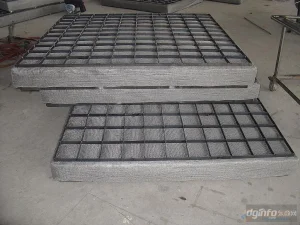
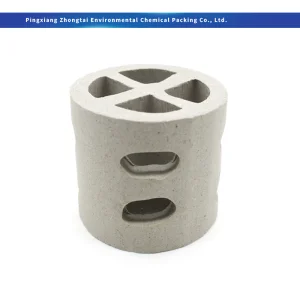
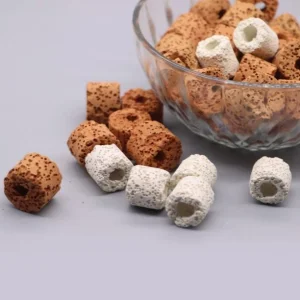
Engineered hardware and random packing lines designed to integrate directly alongside catalyst bed support installations inside multi-stage processing columns.
Request physical testing samples, custom sizing quotes, and complete lot inspection certificates (CoA) directly from Pingxiang Zhongtai Environmental Chemical Packing Co., Ltd. Technical sales engineers respond within 12 hours.
