Explore our core mass-transfer internals engineered for severe industrial scrubbing, fine chemical distillation, and catalyst bed containment.
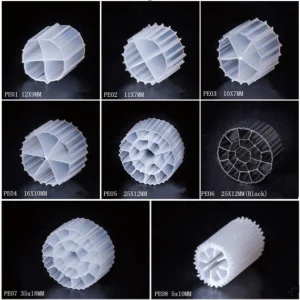
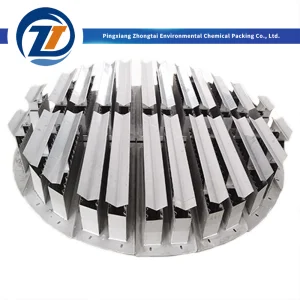
A comprehensive examination of why advanced mass transfer systems are abandoning unstable polymer packing and high-cost exotic metals in favor of vitrified chemical stoneware.
Modern industrial scrubbing processes—particularly in flue gas desulfurization (FGD), tail gas treatment units (TGTU), and VOC oxidation systems—operate under severe thermal cycling. Polypropylene (PP), polyvinylidene fluoride (PVDF), and modified PTFE, while historically popular for lower-temperature operations, undergo accelerated polymer degradation when continuous bed operating temperatures exceed 120°C or when exposed to strong oxidizing atmospheres such as chlorine dioxide (ClO₂) or sulfur trioxide (SO₃) mists.
Chemical ceramic scrubber packing, synthesized from selected kaolinite clays, feldspar, and alumina, delivers an intrinsically vitrified aluminosilicate matrix. This material retains structural resilience up to 1100°C without plastic deformation, structural creep, or loss of mechanical geometric void fraction under compressive column loads.
With global industrial effluent limits tightening under regional EPA and European Industrial Emissions Directive (IED) frameworks, wet scrubbers must handle higher concentrations of acidic gases including HCl, HF traces, H₂S, and halogens. Specifying nickel alloys such as Hastelloy C-276, Monel, or Inconel 625 elevates tower internal CAPEX by 800% to 1500% compared to chemical porcelain.
Furthermore, in halogenated acid systems where even high-nickel alloys experience localized pitting and stress corrosion cracking (SCC), ASTM C515 compliant ceramic random packing offers near-absolute chemical inertness. It exhibits acid leaching rates beneath 0.15% in boiling sulfuric acid trials, establishing a dependable service lifetime exceeding 15 to 20 years with near-zero media breakdown.
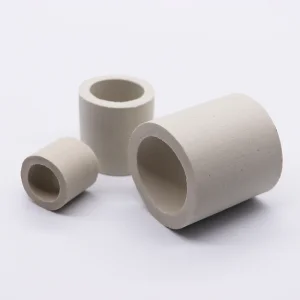
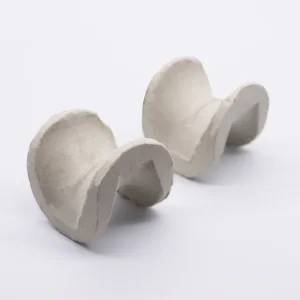
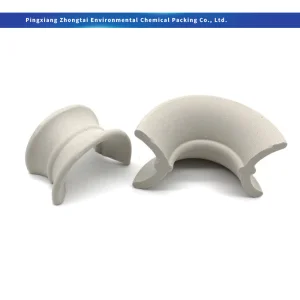
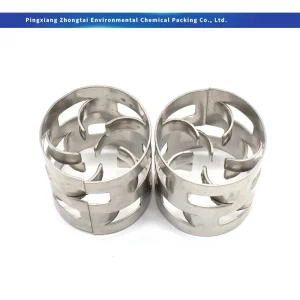
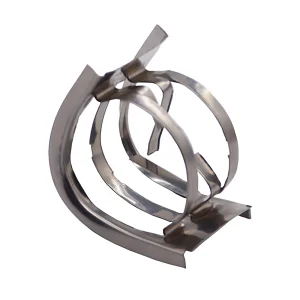
The mass transfer industry has progressed far beyond the original cylindrical Raschig ring invented in 1914. While cylindrical rings provided primary interfacial surface area, they suffered from internal dead zones, pronounced gas bypassing, and high dry pressure drop. Contemporary ceramic packing has evolved into third-generation geometries such as the Ceramic Intalox Saddle and the patented Ceramic 3Y Ring.
These specialized shapes feature dual open-curved surfaces, scalloped hydrodynamic edges, and targeted perforations that promote continuous liquid droplet renewal, minimize wall flow channeling, and reduce aerodynamic drag across the packed column bed by up to 38% compared to standard rings.
| Material System | Max Continuous Temp (°C) | Acid Resistance Rating | Oxidant Tolerance (Cl₂, Ozone, SO₃) | Mechanical Creep at Load | Relative CAPEX Factor |
|---|---|---|---|---|---|
| Chemical Porcelain (Zhongtai Standard) | 1050°C | Exceeds ASTM C515 (>99.8%) | Impervious to all oxidants | Zero (Fully Vitrified Glass-Phase) | 1.0x (Baseline Economical) |
| PVDF / Fluoropolymer | 140°C | Good in intermediate acids | Moderate (Degrades in high conc. SO₃) | High under continuous liquid weight | 3.8x – 5.2x |
| Polypropylene (PP / RPP) | 95°C | Moderate (Porous in HNO₃) | Poor (Severe environmental cracking) | Severe over 75°C bed temp | 0.7x – 0.9x |
| Hastelloy C-276 / Alloy 22 | 650°C | Excellent in general acids | Susceptible to wet chlorine pitting | Extremely low | 12.0x – 16.5x |
| Titanium Grade 2 | 350°C | Superior in wet chlorides | Catastrophic ignition hazard in dry Cl₂ | Low | 9.5x – 14.0x |
Strategic purchasing criteria evaluated by chemical plant managers, refining procurement directors, and international EPC project leads when securing wholesale ceramic column internals.
For deep packed towers where bed depths reach 6 to 12 meters, the static weight combined with liquid holdup induces immense hydraulic pressure on bottom packing tiers. Procurement specifications mandate point crush values above 6.5 kN for 25mm saddles and over 12.0 kN for 50mm variants to avoid structural crushing that clogs liquid distribution plates.
Trace iron (Fe₂O₃) levels must be maintained strictly below 0.8% wt. In catalytic reaction towers, chlorine liquefaction, or hydrogen peroxide absorption, rogue iron particles catalyze parasitic side reactions or thermal runaway. Zhongtai executes precise magnetic separation and X-ray fluorescence (XRF) testing on every dry body raw material batch.
Unplanned plant shutdowns in sulfuric acid or refinery cracking units cost operators hundreds of thousands of dollars per day. Enterprise buyers require manufacturing facilities possessing multiple continuous roller kilns with monthly outputs topping 2,500 cubic meters to ensure rapid dispatch without delaying turnaround critical paths.
Global procurement teams demand verifiable mill test certificates detailing apparent porosity, water absorption rates (tested per ASTM C373), specific gravity, and bulk density. Direct factory shipments from Pingxiang Zhongtai provide optional witness inspections via SGS, Bureau Veritas, or TÜV prior to sea container sealing.
How Pingxiang Zhongtai chemical packing solutions solve fluid dynamic bottlenecks across mission-critical gas scrubbers and absorption columns.
In modern contact process sulfuric acid plants (93% to 98.5% H₂SO₄), drying towers and intermediate/final absorption towers (IAT/FAT) operate under severe heat-of-absorption conditions. Standard packing often succumbs to acidic thermal shock or experiences premature hydraulic flooding under high gas velocities (F-factor > 2.2 Pa0.5).
Our Ceramic Intalox Saddles (50mm and 76mm) establish a high void fraction (>78%) and an engineered interstitial surface area that maximizes liquid boundary layer renewal. The smooth, vitrified surface resists acid mist adherence, keeping tower pressure drops stably below 120 Pa per meter of packed depth even at high irrigation densities (35–50 m³/m²·h).
Chlor-alkali plants generate high-concentration wet chlorine gas streams saturated with moisture and hypochlorous acid traces. In these scrubbers, standard metal packings (including 316L stainless steel) suffer rapid catastrophic pitting corrosion, while polypropylene becomes brittle through oxidative chlorination.
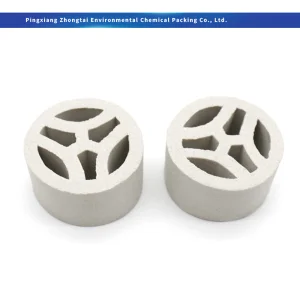
By implementing Ceramic 3Y Rings and Ceramic Raschig Rings, chemical plants achieve complete resistance to aggressive chlorination chemistry. The symmetric multidirectional strut geometry of the 3Y Ring prevents the nesting typical of traditional cylindrical rings, providing uniform liquid distribution across the entire tower diameter without forming dry dead spots where corrosive gas bypassing can trigger stack emission violations.
Regenerative Thermal Oxidizers (RTO) and Regenerative Catalytic Oxidizers (RCO) require heat exchange media capable of withstanding rapid 60-second valve reversal cycles between 200°C and 1000°C. Packed beds placed at the inlet zones often experience thermal spalling when non-vitrified media is installed.
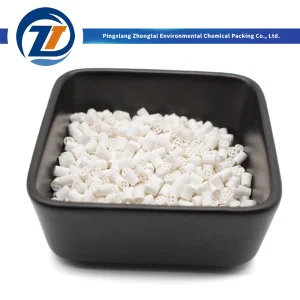
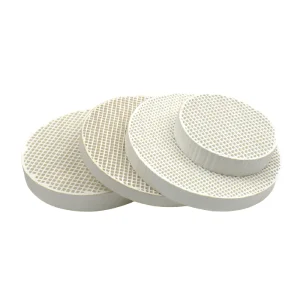
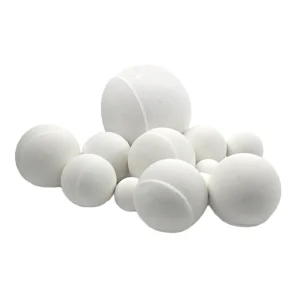
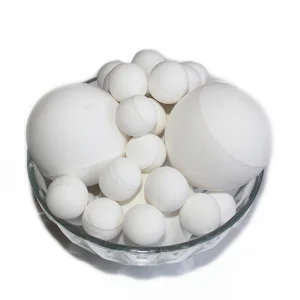
Pingxiang Zhongtai coordinates random chemical saddles with high-density Honeycomb Ceramic Storage Blocks and high-alumina support balls. This hybrid configuration captures fine particulate condensates, prevents thermal shock fractures, and recovers up to 96% of thermal energy, significantly reducing natural gas consumption in industrial VOC abatement installations.
From automated dry press compaction in Jiangxi to dockside unloading at Houston, Rotterdam, or Jubail—how we protect your capital equipment investment.
All chemical porcelain packings produced by Pingxiang Zhongtai adhere rigorously to ASTM C515 (Standard Specification for Chemical-Resistant Ceramic Tower Packings) and ASTM C279. Our production operates under certified ISO 9001:2015 quality management and ISO 14001 environmental frameworks. Dimensional tolerances are governed by laser-guided calipers to guarantee consistent void fraction and packing factor values (Fp) across the entire installed bed volume.
Ceramic random packings can experience edge chipping if packed loosely in transit. We eliminate transport attrition through multi-tiered packaging solutions: heavy-duty 1.0-ton UV-stabilized woven polypropylene bulk bags (Jumbo Bags) with internal moisture barriers, reinforced corrugated boxes, or steel-banded fumigation-free ISPM-15 plywood cases. Pallets undergo 360-degree high-tension automated stretch wrapping to ensure safe container handling at destination seaports.
Our mass-transfer chemical engineering support desk works directly with overseas client design groups. By inputting gas flow rate (G), liquid flow rate (L), operating temperature, absolute pressure, and allowable pressure drop (ΔP), we furnish complete hydraulic bed calculations: predicting column flood point percentages, Height of an Equivalent Theoretical Plate (HETP), and specific liquid holdup parameters prior to purchase confirmation.
Input tower diameter, gas/liquid velocities, system media corrosivity, and target HETP.
Dispatch of physical sample sets alongside full composition spectra (XRF) and strength data.
Automated extrusion or dry pressing with computer-regulated 1400°C roller-kiln vitrification.
ASTM acid resistance leaching, drop-shatter tests, and dimensional verification per batch.
FOB/CIF container loading with complete export documentation, COA, and bill of lading tracking.
Pioneering advancements in low-carbon ceramic manufacturing, catalytic functionalized surfaces, and hybrid ceramic-structured packing modules.
Traditional ceramic random packing relies exclusively on physical vapor-liquid boundary layer shearing. Zhongtai’s materials science team is collaborating with leading research institutes to develop micro-textured chemical porcelain surfaces. By manipulating micro-scale crystalline phase boundaries during cooling, we induce controlled surface hydrophilicity.
This innovation increases effective dynamic wetted area by over 24% at low liquid irrigation rates (<5 m³/m²·h). Furthermore, nano-doped transition metal oxides embedded directly into the ceramic outer layer enable catalytic pollutant oxidation (such as VOCs and ozone destruction) concurrently with physical wet acid absorption.
In accordance with global ESG mandates and Scope 3 supply chain carbon disclosures, Pingxiang Zhongtai has converted all thermal processing lines to ultra-low emission, natural gas-fired continuous tunnel and roller kilns. Integrated waste heat recovery captures thermal exhaust from cooling zones and directs it to green-body pre-drying ovens.
This closed-loop thermal architecture slashes the embodied carbon footprint of our ceramic random packings by 31% per metric ton compared to legacy coal-gas kiln infrastructure, offering Western EPC firms verifiable low-carbon verified internal components for carbon capture, utilization, and storage (CCUS) projects.
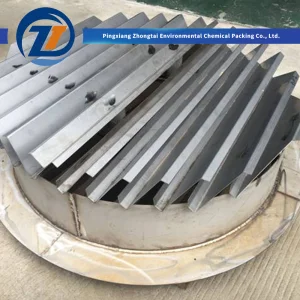
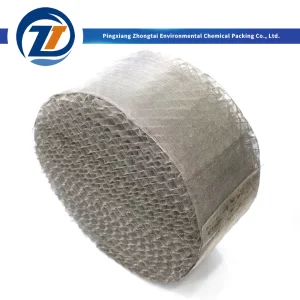
While random ceramic saddles represent the industry workhorse for fouling or high-particulate gas streams, vacuum acid rectification columns require exceptionally low HETP alongside minimal pressure drop. Zhongtai is expanding automated production of Ceramic Corrugated Plate Structured Packing (equivalent to Mellapak types).
Crafted from precision-sintered ceramic wave plates with integrated surface flow grooves, these structured modules combine the chemical and thermal invulnerability of ceramics with the minimal pressure drop characteristics of metal wire gauze, unlocking new process efficiencies in deep vacuum chemical refining.
Specific, data-driven answers addressing thermodynamics, chemical compatibility limits, bed sizing, and international logistics.
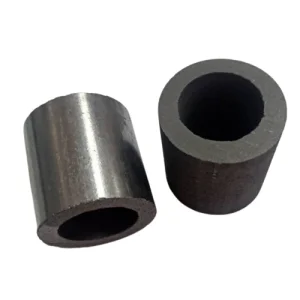
Explore our full range of carbon graphite rings, alumina proppants, RTO honeycombs, grinding media, and biofiltration components.