Explore our top-tier industrial ceramic, metallic, and environmental chemical packings engineered for severe industrial scrubbing, absorption columns, and multi-phase separation operations.
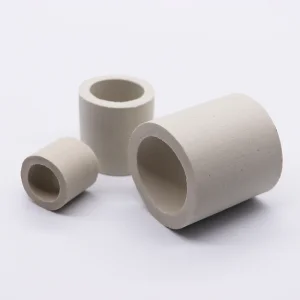
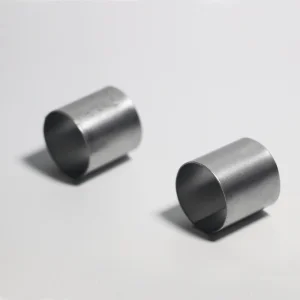
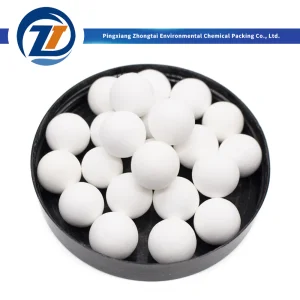
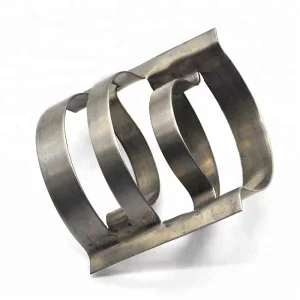
An engineering analysis of modern random dump packing geometries, continuous interfacial contact dynamics, and polymer formulation resilience across demanding chemical environments.
The transition from early generation cylinders like Raschig rings to third-generation high-performance shapes (e.g., Cascade Mini-Rings, Super Intalox saddles, Tri-Paks) has delivered up to a 42% reduction in column pressure drop ($\Delta P$). Modern thermoplastic packings boast open-cell voidages exceeding 90% to 95%, dramatically mitigating hydraulic flood limits and vapor entrainment under high gas-velocity conditions.
Polyolefins and fluoropolymers intrinsically possess low critical surface tension ($\gamma_c$). Advanced injection compounding integrates non-migrating surfactant additives and micro-textured hydrophilic grooves. This innovation suppresses liquid droplet channeling, encourages stable liquid film creation, and optimizes the effective mass transfer area ($a_e$) relative to geometrical surface area ($a$).
Unlike ceramic or metal packings, random plastic packings face long-term compressive creep under hydrostatic bed head at elevated process temperatures. Pingxiang Zhongtai utilizes 100% prime virgin resins formulated with heat-stabilized, hindered amine light stabilizers (HALS) and glass-fiber reinforcement (RPP), retaining high compressive modulus above 120°C.
Indicative baseline prices per cubic meter (FOB Chinese Major Ports). Actual contract quotations depend on raw polymer market indices (ICIS/Platts), wall thickness customisation, UV/fire additives, and order volume tiers.
| Packing Type | Available Materials | Nominal Sizes (mm) | Surface Area ($m^2/m^3$) | Void Fraction (%) | Max Temp (°C) | Est. FOB Price Range (USD/m³) |
|---|---|---|---|---|---|---|
| Plastic Pall Ring | PP, RPP, PE, PVC, PVDF | 16, 25, 38, 50, 76 | 110 – 340 | 88 – 94 | 90 (PP) / 140 (PVDF) | $210 – $780 / m³ |
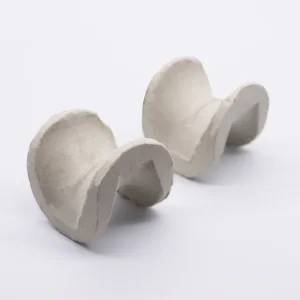
| Plastic Super Saddle (Intalox) | PP, RPP, CPVC, PVDF, PFA | 25, 38, 50, 76 | 95 – 290 | 90 – 95 | 100 (PP) / 150 (PVDF) | $240 – $890 / m³ |
| Plastic Cascade Mini Ring (CMR) | PP, RPP, HDPE, PVDF | No. 1, 2, 3, 4 | 130 – 320 | 92 – 96 | 95 (PP) / 145 (PVDF) | $260 – $850 / m³ |
| Plastic Tellerette / Rosette Ring | PP, RPP, PE, PVC, CPVC | S-O (47), M (95), L (145) | 120 – 280 | 85 – 93 | 80 (PVC) / 105 (CPVC) | $280 – $650 / m³ |
| Plastic Tri-Pak Spherical Packing | PP, RPP, PE, PVDF | 25, 32, 50, 95 | 115 – 275 | 90 – 95 | 90 (PP) / 140 (PVDF) | $310 – $920 / m³ |
| Plastic Heilex Ring | PP, RPP, PVDF | 50, 76, 100 | 90 – 160 | 94 – 97 | 95 (PP) / 140 (PVDF) | $290 – $810 / m³ |
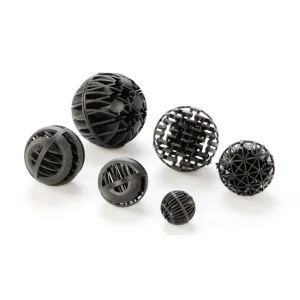
| Plastic Hollow Floating Ball | PP, HDPE | 19, 25, 38, 50, 100 | 85 – 220 | 82 – 90 | 85 (PE) / 100 (PP) | $160 – $420 / m³ |
Procurement Cost Formula Insight: Total landed cost of random plastic packings is dictated by three primary technical variables: (1) Polymer density and melt-flow index (MFI), (2) Single-unit wall thickness tolerances impacting volumetric weight by up to 22%, and (3) Container stowage factor (cubic compression in jumbo bags vs. rigid wooden crating). Zhongtai provides precision-calculated container load manifests optimizing 40ft High Cube (HC) volume utilization up to 68–72 m³ per container.
Chemical incompatibility is the #1 reason for catastrophic tower bed collapse. Match your process stream temperature, gaseous oxidizers, and solvent exposure against our material matrix.
Thermal Rating: -10°C to 100°C (PP) / Up to 125°C (Glass-Filled RPP)
Chemical Scope: Exceptional resistance to mineral acids ($H_2SO_4$, $HCl$), aqueous salts, and caustics ($NaOH$). RPP incorporates 15%–30% chemically coupled fiberglass strands to multiply tensile strength and prevent ring deformation under deep hydrostatic packed heights (exceeding 8 meters).
Thermal Rating: -30°C to 150°C
Chemical Scope: The ultra-high specification resin for wet chlorine ($Cl_2$), bromine vapors, concentrated nitric acid ($HNO_3$), and halogenated solvents. Completely impervious to UV degradation and extreme oxidative stress, eliminating ozone-stripping tower failure risks common to lower olefins.
Thermal Rating: 0°C to 60°C (PVC) / Up to 95°C (CPVC)
Chemical Scope: Self-extinguishing fire-retardant polymers with phenomenal structural stiffness. Impermeable to hypochlorite solutions, wastewater stripping off-gases, and aggressive chromic acid plating exhaust ducts.
Thermal Rating: -40°C to 80°C
Operational Strengths: Excellent low-temperature impact resistance and ductility. Favored in sub-zero gas scrubbing units, municipal water trickling filters, and aeration systems where cyclic hydraulic freeze-thaw events induce micro-cracking in more brittle resins.
Thermal Rating: Cryogenic (-190°C) to 200°C+
Operational Strengths: Complete universal chemical inertia across all pH values (0 to 14), including hydrofluoric acid ($HF$) and ultra-pure electronic-grade reagents. Eliminates trace metal leaching into ultra-clean semiconductor processing solvents.
Pingxiang, Jiangxi is recognized worldwide as the epicenter of industrial chemical packing. Here is how Zhongtai translates localized cluster synergy into verifiable cost, delivery, and quality dividends for international buyers.
Within a 15-kilometer radius of our Pingxiang Hi-Tech industrial park facility sits a consolidated supply chain encompassing polymer formulation compounding, precision CNC mold tooling, and testing laboratories. This hyper-localized ecosystem cuts component procurement cycle times by up to 60% relative to geographically fragmented producers.
Our manufacturing floor operates high-speed multi-cavity injection presses equipped with robotic extraction arms and infrared temperature gate monitors. Closed-loop cavity pressure controls ensure zero-flash molding, uniform wall thickness ($\pm 0.08\text{ mm}$), and elimination of internal micro-voiding that triggers premature stress cracking in high-temperature service.
Operating continuously since 2003, Pingxiang Zhongtai is audited by world-class multinational inspection firms (SGS, TÜV Rheinland) and international procurement teams. Following physical on-site audits by Korean engineering delegates in 2018, our plant expanded custom QA tracking: raw resin Melt Flow Index (MFI) batch logs, crush resistance curves, and export certificates of origin.
From carbon capture pilots in North America to marine sulfur scrubbers in East Asia, see where our random plastic packings optimize operational throughput and emission limits.
Exhaust Gas Cleaning Systems (EGCS) on commercial vessels and coal power stations demand random packings capable of resisting extreme thermal shifts and turbulent liquid slurry splash without dislodging. Polypropylene and RPP Super Saddles offer ultra-low weight, dampening vessel vibration loads while stripping $>98\%$ of $SO_2$.
Amine-based solvent absorption columns (MEA, MDEA, piperazine) operate under narrow hydraulic pressure drop allowances to reduce fan kilowatt loads. Specially textured polypropylene and PVDF Cascade Mini Rings minimize solvent frothing, optimize liquid film renewal, and maintain reliable $CO_2$ mass transfer efficiency.
In petrochemical sour water strippers and industrial wastewater aeration units, dissolved hydrogen sulfide ($H_2S$) and ammonia ($NH_3$) must be expelled without scaling. Spherical Tri-Pak and Pall ring shapes eliminate dead zones and prevent suspended sludge buildup that fouls conventional rings.
Handling wet chlorine gas ($Cl_2$) and sodium hypochlorite ($NaOCl$) synthesis lines rapidly degrades standard metals and cracking-prone plastics. PVDF and CPVC random packings are the global benchmark here, operating unaffected across decades of aggressive wet halogen vapor contact.
Designing an industrial packed column requires rigorous balancing of liquid holdup, gas-phase superficial velocity, and packing factor to avoid premature loading and hydraulic flooding.
Hydraulic capacity is determined through the modified Sherwood-Eckert correlation chart, wherein the gas capacity factor ($C_s$) is evaluated against the packing factor ($F_p$):
Where $v_G$ is gas velocity, $\rho_G$ and $\rho_L$ are phase densities, and $\nu$ is kinematic viscosity. Lower packing factors ($F_p$) permit higher gas flow rates through smaller column diameters, cutting total steel vessel fabrication capital expenditures ($CAPEX$).
To prevent excessive liquid bypassing down the interior vessel wall (where void fractions are artificially high), industrial standards dictate a tower-to-packing diameter ratio of:
For a 1000 mm ID scrubber, packing dimensions of 50 mm or 38 mm are ideal. For bed depths exceeding 5 to 6 meters, liquid redistributor trays and intermediate bed limiter grids must be installed to re-establish uniform cross-sectional irrigation.
Direct answers to the most common technical, commercial, and operational questions asked by chemical EPC project managers and column design teams.
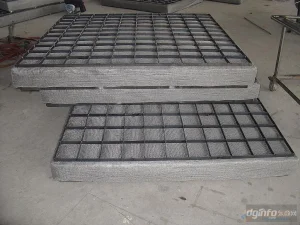
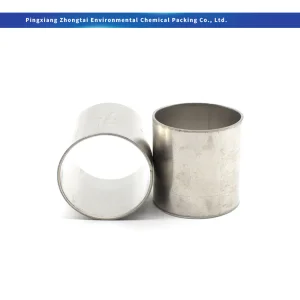
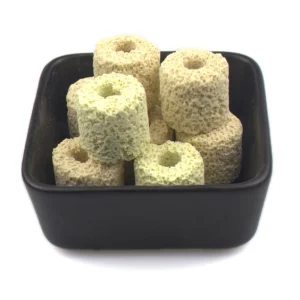
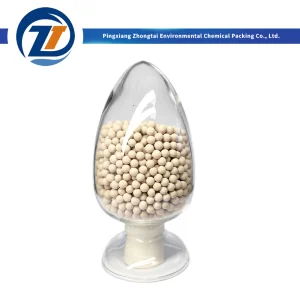
Review our comprehensive manufacturing catalog of structured packings, synthetic zeolite adsorbents, and high-performance biological water treatment filter carriers.
Submit your tower operating parameters (gas/liquid flow rates, operating pressure, temperature, chemical composition). Our Pingxiang engineering team prepares hydraulic calculations, packing factor recommendations, and customized export pricing within 24 hours.
