Factory-direct chemical adsorbents, ceramic proppants, structured packings, and catalytic supports manufactured to strict ISO 9001 and ASTM specifications.
An authoritative analysis of global synthesis capacity, advanced extrusion kinetics, and engineering benchmarks shaping modern mass transfer and adsorption processes.
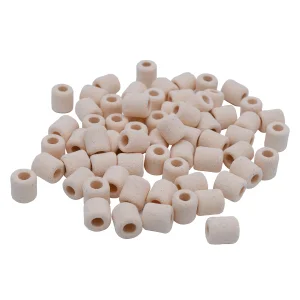
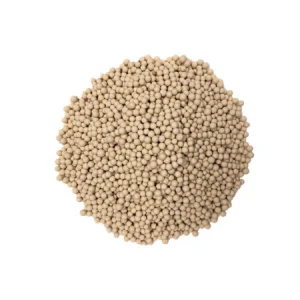
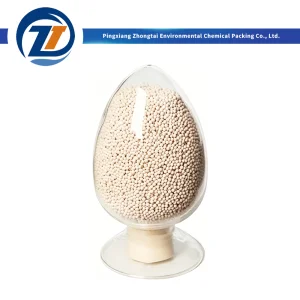
The global demand for high-purity synthetic zeolites has undergone a fundamental structural shift over the past decade. Chemical processing plants, natural gas cryogenic dehydration units, refinery hydrogen purification facilities, and medical air separation systems are increasingly transitioning toward specialized cylindrical molecular sieve pellets. Unlike spherical beads, extruded pellets offer distinct hydraulic profiles, customizable cross-sectional geometric ratios, and exceptional structural uniformity across fixed beds.
China has established itself as the global manufacturing core for advanced synthetic zeolites, leveraging raw material integration within chemical clusters like Pingxiang, Jiangxi. As modern industrial installations push operating pressures past 10 MPa and require dew points lower than -100°C (-148°F), modern China molecular sieve pellets factories have evolved from basic mineral blenders into sophisticated chemical synthesis ecosystems. These facilities integrate direct crystal growth, specialized clay binder formulation, high-pressure extrusion matrixes, and precision thermal activation kilns under unified Quality Assurance (QA) protocols.
Molecular sieve pellets are crystalline aluminosilicates possessing three-dimensional interconnecting networks of silica ($\text{SiO}_4$) and alumina ($\text{AlO}_4$) tetrahedra. The structural stability and selective adsorption capacity of these pellets depend entirely on the ratio of silicon to aluminum atoms ($\text{Si/Al}$) and the specific charge-balancing cations ($\text{Na}^+, \text{K}^+, \text{Ca}^{2+}, \text{Li}^+$) integrated into the crystal framework.
In a premier manufacturing setting, synthesis begins with hydrothermal crystallization to form pure zeolite powders (such as Type A or Type X). However, pure zeolite powder cannot be directly packed into industrial adsorption towers due to catastrophic pressure drops and rapid mechanical dusting. To form industrial pellets, the powder is blended with inorganic clay binders—predominantly high-purity attapulgite, kaolin, or bentonite. A top-tier factory controls binder proportions between 10% and 20% by weight, balancing mechanical crush strength against active zeolite mass reduction.
When selecting extruded molecular sieve pellets for heavy-duty process beds, procurement specialists and lead chemical engineers must evaluate physical specs beyond basic chemical composition. The table below outlines standard industrial benchmarks guaranteed by leading Chinese manufacturing facilities like Pingxiang Zhongtai Environmental Chemical Packing Co., Ltd.
| Zeolite Grade | Pellet Diameter (mm) | Bulk Density (g/ml) | Crush Strength (N/pellet) | Water Adsorption (RH 60%) | Attrition Rate (%) | Regeneration Temp (°C) |
|---|---|---|---|---|---|---|
| 3A Zeolite Pellet | 1.5 – 3.0 mm | 0.68 – 0.74 | ≥ 45 N (1.6mm) / ≥ 85 N (3.0mm) | ≥ 20.5% | ≤ 0.15% | 200 – 230 °C |
| 4A Zeolite Pellet | 1.5 – 5.0 mm | 0.66 – 0.72 | ≥ 40 N (1.6mm) / ≥ 80 N (3.0mm) | ≥ 21.0% | ≤ 0.12% | 200 – 250 °C |
| 5A Zeolite Pellet | 1.5 – 3.0 mm | 0.67 – 0.73 | ≥ 45 N (1.6mm) / ≥ 85 N (3.0mm) | ≥ 21.5% | ≤ 0.15% | 250 – 300 °C |
| 13X APG Pellet | 1.5 – 3.0 mm | 0.64 – 0.70 | ≥ 38 N (1.6mm) / ≥ 75 N (3.0mm) | ≥ 23.5% | ≤ 0.10% | 250 – 320 °C |
| Li-X PSA Pellet | 1.5 – 2.0 mm | 0.62 – 0.67 | ≥ 30 N (1.6mm) | N2 Capacity ≥ 24.0 ml/g | ≤ 0.20% | 150 – 200 °C |
The structural choice between molecular sieve pellets (extrusions) and molecular sieve beads (spheres) is a primary consideration in reactor design. While spherical beads offer even packing and uniform radial stress distribution, extruded pellets provide distinct mechanical advantages in specific operating contexts:
How China-manufactured molecular sieve pellets drive efficiency across global energy, chemical, and environmental processing sectors.
In cryogenic Liquefied Natural Gas (LNG) processing plants, feed gas moisture levels must be reduced below 0.1 ppmv to prevent catastrophic ice hydrate formation within aluminum plate-fin heat exchangers. High-density 3A and 4A pellets withstand severe thermal shocks during high-temperature gas regeneration (up to 300°C) without physical degradation.
Cryogenic air separation units rely on 13X APG molecular sieve pellets placed downstream of alumina beds to simultaneously scrub trace carbon dioxide, atmospheric moisture, nitrous oxide ($\text{N}_2\text{O}$), and heavy hydrocarbons ($\text{C}_2\text{H}_2$). This dual protection prevents freeze-ups and explosion risks in cold boxes.
Petrochemical steam crackers demand extremely selective water removal from cracked gas streams containing reactive diolefins. Custom-formulated 3A pellets exhibit precise pore restriction that admits water molecules ($2.6\text{ \AA}$) while completely excluding ethylene ($3.9\text{ \AA}$) and propylene ($4.5\text{ \AA}$), eliminating polymer coking on bed media.
High-exchange Lithium-X (Li-X) molecular sieve pellets provide unprecedented nitrogen adsorption capacity with a high $\text{N}_2/\text{O}_2$ selectivity factor. Used in VPSA (Vacuum Pressure Swing Adsorption) oxygen generators, these micro-pellets achieve 93%–95% pure $\text{O}_2$ outputs at low energy consumption.
Rigorous laboratory testing protocols ensuring physical batch consistency, minimal attrition, and predictable operational lifespans under aggressive industrial duties.
Procuring chemical media directly from a China molecular sieve pellets factory requires clear alignment between plant performance specifications and factory testing methodologies. High-quality Chinese manufacturers employ comprehensive quality assurance controls covering raw materials, extrusion forming, calcination, and final seal packaging.
Because activated molecular sieves are highly hygroscopic adsorbents, improper packaging during ocean transit will severely degrade product performance prior to bed loading. Quality-focused manufacturers enforce strict multi-barrier packaging standards:
Emerging innovations in binderless zeolite synthesis, mesoporous structures, and low-energy thermal regeneration protocols.
Traditional molecular sieve pellets contain up to 20% inert clay binder, which contributes zero adsorption capacity. Advanced manufacturing research focuses on chemical post-treatment of the extruded pellet, converting the kaolin binder matrix into active crystalline zeolite framework *in-situ*. Binderless molecular sieve pellets offer a 15–20% increase in working adsorption capacity per unit bed volume.
Standard zeolites contain exclusively micro-pores (< 2 nm), which can restrict diffusion speeds of bulky organic molecules. Next-generation molecular sieve pellets integrate secondary mesoporous networks (2–50 nm) directly within the crystalline structure. This intra-crystalline mesoporosity dramatically accelerates mass transfer rates and shortens regeneration cycles in heavy gas processing.
Conventional Thermal Swing Adsorption (TSA) relies on hot purge gas streams, consuming significant thermal energy. Future plant integrations are adopting conductive or radio-frequency active molecular sieve pellets. These modified extrusions enable targeted, rapid desorptive heating, lowering regeneration temperatures by up to 80°C and cutting total utility energy demand by over 30%.
Expert solutions to critical questions regarding bed sizing, hydrothermal degradation, regeneration procedures, and media selection.
Explore our complete catalog of high-crush ceramic proppants, tray hardware, biocatalysts, and specialized zeolite adsorbents.