Direct factory supply of high-purity molecular sieves, structured column packings, and catalytic carriers for global industrial applications.
In modern industrial gas processing, petrochemistry, natural gas conditioning, and environmental engineering, the separation of nitrogen ($N_2$) from hydrocarbon streams, air mixtures, or aqueous effluents represents one of the most thermodynamically challenging chemical engineering operations. As a premier China Molecular Sieve Nitrogen Removal Manufacturer & Factory, Pingxiang Zhongtai Environmental Chemical Packing Co., Ltd. synthesizes highly engineered crystalline aluminosilicates (zeolites) specifically tailored to exploit precise kinetic pore diameters, polarizability differences, and ion-exchange thermodynamics.
Zeolites feature a three-dimensional lattice of $SiO_4$ and $AlO_4$ tetrahedra connected by shared oxygen atoms. Substitution of $Si^{4+}$ by $Al^{3+}$ generates a net negative framework charge balanced by exchangeable cations ($Na^+$, $K^+$, $Ca^{2+}$, $Li^+$). By precisely adjusting the silica-to-alumina ratio ($Si/Al$) and exchangeable cation radius, our factory tunes the pore apertures from 3Å (3A) up to 10Å (13X) with sub-angstrom precision.
Nitrogen molecules possess a permanent quadrupolar moment ($0.31 \times 10^{-26} \text{ esu}\cdot\text{cm}^2$), whereas methane ($CH_4$) is non-polar. When exposed to modified lithium-exchanged (Li-X) or calcium-exchanged (5A) zeolites, the strong localized electrostatic field within the zeolite cavities induces an preferential electrostatic attraction with $N_2$, enabling sharp equilibrium-based thermodynamic separation in Nitrogen Reject Units (NRUs).
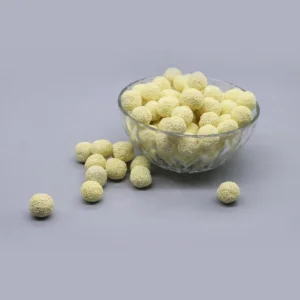
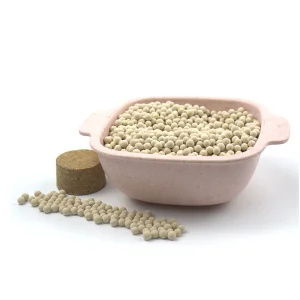
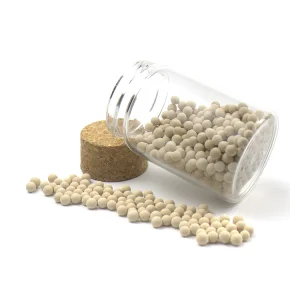
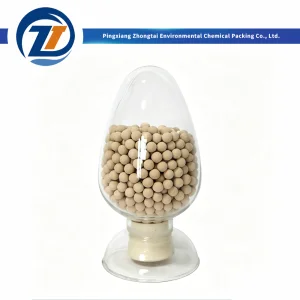
Industrial adsorption columns operate under dynamic transient conditions. Our spherical micro-bead molecular sieves minimize interstitial void fraction while maintaining optimal intraparticle mass transfer rates. This narrows the Mass Transfer Zone (MTZ), prevents early nitrogen breakthrough, reduces vessel height requirements, and minimizes blowdown energy during desorption cycles.
In Pressure Swing Adsorption (PSA) and Vacuum Pressure Swing Adsorption (VPSA) processes, the single-component adsorption isotherm ratio $\alpha_{N2/CH4}$ or $\alpha_{N2/O2}$ governs bed sizing. Standard 5A molecular sieves achieve a dynamic separation factor of 3.2:1 for $N_2/O_2$, while Zhongtai's advanced high-lithium exchange Li-X zeolite series raises the equilibrium separation factor up to 6.5:1, significantly lowering capital expenditure for air separation and natural gas upgrading units.
The global demand for high-efficiency molecular sieve nitrogen removal systems is experiencing unprecedented growth driven by stringent environmental decarbonization mandates, pipeline natural gas specification mandates, and the global expansion of green and blue hydrogen production networks.
Unconventional gas assets such as Coalbed Methane (CBM) and marginal natural gas wells in North America, China, and Australia frequently contain excessive inert nitrogen levels ($5\%$ to $30\%$). Pipeline entry specifications strictly cap total inert content (typically $<3\% N_2$). Molecular sieve nitrogen reject units (NRUs) operating via dual-bed or multi-bed PSA configurations provide a low-OPEX alternative to traditional cryogenic distillation columns, especially for small-to-medium throughput remote gas fields.
Factory Advantage: Zhongtai manufactures specialized $N_2/CH_4$ kinetic separation zeolites designed to operate at high feed pressures up to 70 bar, displaying exceptional mechanical tolerance to hydrocarbon condensate shocks.
In Liquefied Natural Gas (LNG) receiving terminals, boil-off gas accumulates high concentrations of volatile nitrogen. Removing $N_2$ before reliquefaction is critical to avoid system over-pressurization and maintain heating value standards. Furthermore, in helium-rich natural gas streams, molecular sieves serve as the primary pre-concentration step to strip nitrogen prior to cryogenic crude helium extraction.
Technical Specification: Our synthetic 13X and modified zeolite beds achieve dew points below $-70^\circ\text{C}$ while simultaneously polishing trace water, carbon dioxide, and sulfur species.
As steam methane reforming (SMR) and autothermal reforming (ATR) transition toward low-carbon Blue Hydrogen production with carbon capture and storage (CCS), nitrogen present in feedstocks or purging circuits must be removed down to sub-ppm levels for fuel-cell grade hydrogen (ISO 14687 Grade D).
Molecular sieve polishing beds positioned downstream of pressure swing adsorbers guarantee high-purity $H_2$ streams without losing valuable fuel gas to flare systems.
Beyond gas-phase separation, liquid-phase nitrogen removal (specifically ammonium ions $NH_4^+$) from industrial chemical plant runoff, municipal effluent, and land-fill leachate is vital to prevent eutrophication in aquatic ecosystems. Natural modified clinoptilolites and synthetic 4A/5A zeolite beds operate via ion exchange, selectively trapping $NH_4^+$ ions in exchange for harmless $Na^+$ or $Ca^{2+}$ ions.
Regeneration Capacity: Our specialized liquid-phase molecular sieve media can be thermally or chemically regenerated using mild saline backwashes, retaining $>90\%$ capacity after 500 operational cycles.
Pingxiang Zhongtai manufactures a comprehensive suite of molecular sieves tailored for high-selectivity gas separation and liquid treatment. Below is the technical specification matrix comparing our prime nitrogen removal adsorbents against international standards (ASTM / ISO).
| Adsorbent Grade | Zeolite Crystal Type | Nominal Pore Size | Bulk Density (g/ml) | Crush Strength (N/bead) | Static N₂ Capacity (cm³/g) | Primary Industrial Service |
|---|---|---|---|---|---|---|
| ZT-5A-NRU | Calcium Type A | ~5.0 Å | 0.68 – 0.72 | ≥ 85 | 14.5 (at 25°C, 1 bar) | Natural Gas N₂/CH₄ Separation, Normal-Paraffin Iso-stripping |
| ZT-13X-HP | Sodium Type X | ~10.0 Å | 0.64 – 0.68 | ≥ 75 | 18.0 (at 25°C, 1 bar) | PSA Oxygen Generators, Air Pre-purification (CO₂/H₂O/N₂ Removal) |
| ZT-LiX-VPSA | Lithium Low-Silica X | ~9.2 Å | 0.62 – 0.66 | ≥ 95 | 24.2 (at 25°C, 1 bar) | High-Efficiency VPSA Oxygen Concentrators, Industrial NRUs |
| ZT-CLO-W | Modified Clinoptilolite | ~4.0 Å | 0.80 – 0.85 | ≥ 110 | Ion-Exchange Mode | Ammonium (NH₄⁺) Removal in Wastewater & Aquaculture Recirculation |
* Note: All physical metrics are verified per batch under ISO 9001 quality control protocols. Custom particle size distributions (1.6–2.5 mm, 3.0–5.0 mm beads, or extruded pellets) are available upon request.
Procuring industrial adsorbents and process tower packings from China requires absolute certainty regarding material purity, mechanical integrity, and international regulatory compliance. Zhongtai provides a seamless end-to-end engineering support structure to guarantee long-term operational peace of mind.
Our production facilities operate under strict ISO 9001:2015 Quality Management Systems and ISO 14001 Environmental Standards. Every batch of molecular sieves undergoes X-ray Fluorescence (XRF) elemental analysis, BET surface area measurement, crush strength statistics, and dynamic moisture/gas breakthrough testing prior to packaging.
Molecular sieves are extremely hygroscopic. We package our products in heavy-duty hermetically sealed steel drums (150 kg net) with inner polyethylene bag liners, or 1000 kg moisture-proof super-sacks fitted with vacuum degassing valves. This guarantees zero activity loss during long ocean transit cycles.
Adsorption bed performance depends heavily on proper packing density. Zhongtai provides detailed vessel loading guidelines, pressure-drop calculation models based on the Ergun Equation, and on-site technical supervision for turnarounds and major plant revamps globally.
Our molecular sieve adsorbents are currently operating in critical gas purification and wastewater treatment units across Asia, Europe, North America, and the Middle East.
A major energy producer in Shanxi Province, China, operated a coalbed methane gathering station with raw gas containing $18.5\% N_2$. Traditional amine scrubbing could not isolate nitrogen. Zhongtai engineered a 6-bed VPSA system packed with ZT-5A-NRU molecular sieves.
Result: Reduced stream $N_2$ content to $<2.4\%$, enabling direct injection into the national gas grid while achieving $91.5\%$ methane recovery.
A European metallurgical facility replaced legacy 13X beds in their 10,000 $Nm^3/h$ oxygen plant with Zhongtai's advanced ZT-LiX-VPSA lithium molecular sieves.
Result: Increased unit oxygen productivity by $34\%$ while reducing specific electrical energy consumption from 0.42 kWh/m³ to 0.31 kWh/m³ $O_2$.
An industrial park wastewater treatment plant faced stringent seasonal ammonium nitrogen ($NH_4-N$) discharge limits ($<2$ mg/L). Biological nitrification struggled during cold winter months ($<8^\circ\text{C}$).
Result: Installing a tertiary polished bed of ZT-CLO-W modified zeolites consistently maintained effluent $NH_4-N$ below 0.8 mg/L regardless of ambient temperature fluctuations.
As industrial decarbonization goals intensify toward 2030 and 2050 targets, standard adsorbents must evolve. Zhongtai's R&D department is continuously advancing the boundaries of separation science through three core innovation tracks:
By synthesizing microporous zeolite shells around meso-porous alumina or silica cores, we drastically shorten the internal intraparticle diffusion pathway. This architecture increases mass transfer rate parameters by up to $300\%$, permitting ultra-fast PSA cycling frequencies and reducing total adsorbent inventory in modern compact modular NRU units.
Integrating Metal-Organic Frameworks (MOFs) into zeolitic matrices combines the structural stability and hydrothermal resistance of inorganic zeolites with the ultra-high surface area and tailored chemical functionality of MOFs. This breakthrough offers unprecedented equilibrium separation factors for challenging $N_2/CH_4$ gas mixtures.
We are deploying machine-learning kinetic models that simulate bed breakthrough dynamics based on real-time plant operating variables (feed pressure, temperature, dew point, impurity profiles). This enables plant engineers to optimize regeneration temperature ramps, saving up to $15\%$ in regeneration heat requirements.
Detailed engineering answers to the most common questions regarding molecular sieve selection, nitrogen removal kinetics, bed regeneration, and procurement.
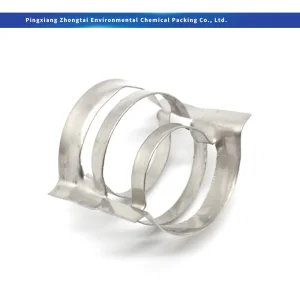
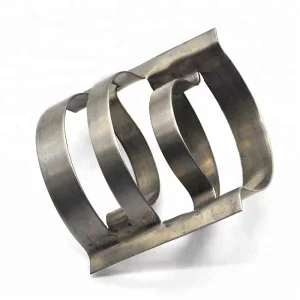
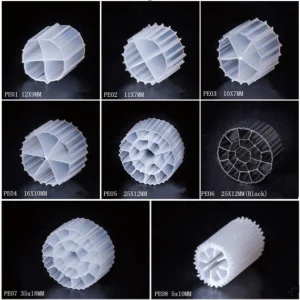
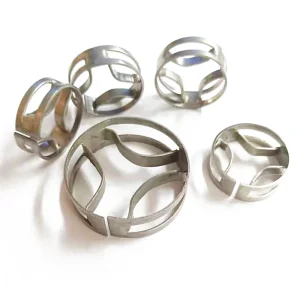
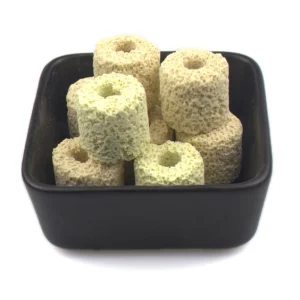
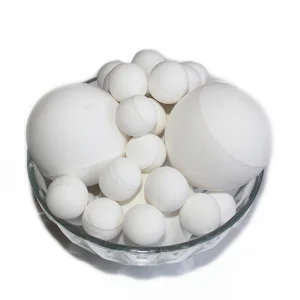
Complete chemical tower packing solutions engineered for harsh operating environments, high temperature column operations, and specialized bio-filtration.