Engineered for maximum mass transfer efficiency, thermal resistance, and operational longevity.
An authoritative guide to Type A synthetic zeolites, crystallographic selectivity, and dynamic adsorption kinetics.
Molecular Sieve 4A is the alkali metal sodium aluminosilicate form of the Type A crystal structure ($\text{Na}_{12}[(\text{AlO}_2)_{12}(\text{SiO}_2)_{12}]\cdot x\text{H}_2\text{O}$). It features an effective pore opening of approximately 4 Angstroms (0.4 nm). Molecules with a kinetic diameter smaller than 4 Å—such as water ($\text{H}_2\text{O}$), carbon dioxide ($\text{CO}_2$), sulfur dioxide ($\text{SO}_2$), and hydrogen sulfide ($\text{H}_2\text{S}$)—are readily adsorbed, while larger hydrocarbons are excluded.
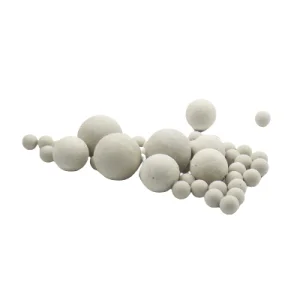
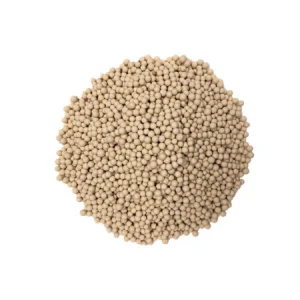
The equilibrium static water adsorption capacity of high-grade Chinese 4A zeolite typically reaches $\ge 21.5\text{ wt}\%$ at 25°C and 75% relative humidity. Mass transfer zone (MTZ) performance is governed by uniform bead size distribution (1.6–2.5 mm or 3.0–5.0 mm), minimizing fluidization risks and bed attrition during high-velocity pressure swing adsorption (PSA) or thermal swing adsorption (TSA) cycles.
High thermal stability allows repeated regeneration at temperatures between 200°C and 315°C without structural collapse of the aluminosilicate framework. Optimizing the binder-to-zeolite ratio ensures that crush strength remains superior ($\ge 30\text{ N/bead}$ for 1.6–2.5 mm particles), preserving operational efficiency across thousands of thermal cycles.
| Property Parameter | Standard Commercial Grade 4A | High-Crush Industrial Grade 4A | Low-Binder / High-Capacity 4A |
|---|---|---|---|
| Nominal Pore Diameter | 4 Angstroms (0.4 nm) | 4 Angstroms (0.4 nm) | 4 Angstroms (0.4 nm) |
| Static Water Adsorption ($\ge\text{wt}\%$) | 21.0 % | 21.5 % | 23.5 % |
| Bulk Density ($\text{g/mL}$) | 0.68 – 0.72 | 0.72 – 0.76 | 0.65 – 0.70 |
| Average Crush Strength ($1.6\text{–}2.5\text{ mm}$) | $\ge 25\text{ N}$ | $\ge 45\text{ N}$ | $\ge 35\text{ N}$ |
| Attrition Rate ($\le\text{wt}\%$) | 0.10 % | 0.05 % | 0.08 % |
| Target Industrial Service | Refrigerant & Gas Drying | High-Pressure Natural Gas TSA | Air Separation Units (ASU) & IG Units |
Analyzing supply chain shifts, cost drivers, and key purchasing criteria for B2B enterprise buyers.
Global EPC contractors and refinery operators are increasingly shifting procurement toward top-tier Chinese manufacturers. Advanced synthetic clay refinement, automated extrusion technology, and rigorous ISO quality controls have significantly closed the technical gap with Western OEMs while offering a 25% to 40% cost efficiency per metric ton.
The rapid expansion of Liquefied Natural Gas (LNG) liquefaction terminals, bio-gas upgrading facilities, and green hydrogen drying networks has driven unprecedented global demand for high-crush, low-dust 4A molecular sieves capable of continuous operation under extreme cyclic pressures.
Procurement Insight: When requesting FOB or CIF pricing quotes from China suppliers, ensure the quote specifies binder type (attapulgite vs. clay), particle size mesh (e.g., 4x8, 8x12 mesh), static vs. dynamic adsorption capacity, and moisture resistance packaging standards (UN-rated steel drums with hermetically sealed inner aluminum foil liners).
Deploying Molecular Sieve 4A across critical industrial mass-transfer processes worldwide.
Serves as the vital front-end purification desiccant. Removes trace moisture and carbon dioxide from ambient air prior to cryogenic distillation, preventing equipment freezing and explosion risks in cryogenic heat exchangers.
Used extensively in static drying closed loops for automotive and commercial air conditioning systems (R-134a, R-410A, R-600a), preventing acid formation and ice blockage in capillary expansion valves.
Inhibits water and solvent condensation within the air cavity of double or triple-glazed architectural windows, maintaining optical clarity and thermal insulation values across extreme seasonal variations.
Ensuring total compliance with international industrial standards for seamless integration into global process plants.
Every production batch undergoes comprehensive laboratory analysis certified under ISO 9001:2015 standards. Testing procedures strictly follow ASTM protocols for granular and pelleted adsorbents:
To withstand long-distance maritime transit and tropical ambient humidity during storage, we supply tailored, climate-sealed packaging options:
Pioneering green manufacturing and ultra-high-efficiency binderless zeolite technology.
Traditional molecular sieves incorporate 15% to 20% inert clay binder, which dilutes active mass transfer. China's advanced R&D is commercializing binderless 4A zeolites, converting inert matrices directly into active crystal phase. This increases static water capacity by over 15% while maintaining structural integrity.
Developing sub-micron crystal agglomerates that significantly reduce intra-crystalline diffusion pathways. These micro-engineered beads facilitate faster adsorption-desorption dynamics, enabling industrial users to shorten PSA cycle times and lower parasitic heating costs during thermal regeneration.
Integrating clean energy kilns, closed-loop process water recycling, and industrial waste heat capture systems across manufacturing hubs in Jiangxi, leading the transition toward eco-friendly chemical synthesis compliant with global CBAM and ESG frameworks.
Expert answers addressing technical specifications, price quotations, dynamic performance, and application guidelines.
Molecular Sieve 4A quotes depend primarily on raw material purity (synthetic sodium aluminosilicate vs kaolin clay quality), binder ratio (attapulgite content), particle shape/size (beads vs pellets), crushing strength rating, and packaging requirements (steel drums with vacuum foil vs standard jumbo bags). Ocean freight variations and order volumes also impact final CIF prices.
The primary difference lies in their effective pore aperture diameter. Type 3A (3 Å) adsorbs water while excluding hydrocarbons like ethylene and propylene, making it ideal for unsaturated cracked gas drying. Type 4A (4 Å) adsorbs $\text{H}_2\text{O}$, $\text{CO}_2$, $\text{H}_2\text{S}$, and short-chain alkanes. Type 5A (5 Å) incorporates calcium ions to adsorb iso-alkanes and normal paraffin hydrocarbons up to $\text{C}_4\text{H}_{10}$.
Under optimal operating conditions with proper purge gas dry-down and controlled heating rates (avoiding thermal shock and liquid water hydrothermal aging), premium 4A molecular sieves endure thousands of regeneration cycles (typically 3 to 5 years of continuous operational service in industrial TSA systems).
Standard export shipments are accompanied by a Factory Certificate of Analysis (COA) detailing batch crush strength, bulk density, loss on attrition, loss on ignition (LOI), and static water adsorption capacity. REACH compliance declarations, Material Safety Data Sheets (MSDS), and Certificates of Origin (Form E, CO) are provided upon request.
Complementary tower packings, catalysts supports, and specialized industrial ceramics.