Continuous production lines in Pingxiang optimized for rapid rail transit to the Moscow Industrial Cluster, guaranteeing high thermodynamic shock tolerance and inclusion retention under rigorous casting cycles.
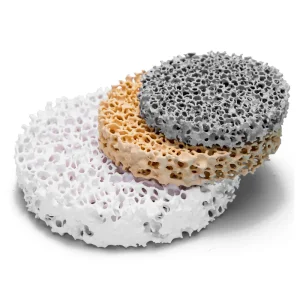
Optimized for Moscow secondary aluminum alloy plants, die-casting, and billet production up to 1100°C.
Explore Aluminum Filters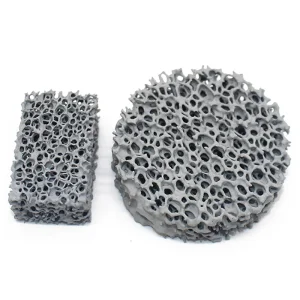
Premium Silicon Carbide matrix engineered for grey iron, ductile iron, and non-ferrous foundry operations.
Explore SiC Filters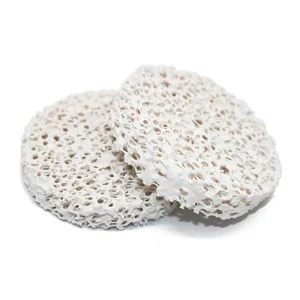
High-purity Al2O3 open-cell foam designed to suppress macro/micro inclusions in structural steel runs.
Explore Alumina Filters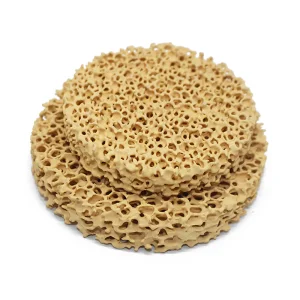
Ultra-refractory partially stabilized zirconia resisting molten alloy steel temperatures exceeding 1760°C.
Explore Zirconia FiltersThe Moscow Metropolitan Area and the wider Central Federal District (including Moscow Oblast, Kaluga, Tula, and Yaroslavl) form the manufacturing nerve center of Russian heavy machinery, automotive propulsion, rail transport components, and defense aerospace. As industrial facilities accelerate import substitution and implement modernized gating systems, the technical demand for defect-free metallurgical castings has reached unprecedented levels.
In foundries producing precision automotive engine blocks, turbine housings, and rolling stock couplings, non-metallic inclusions account for over 65% of casting rejections. Ceramic foam filters provide multi-dimensional tortuous pathways that reduce scrap rates by up to 75%.
Moscow foundries operate under stringent GOST standards (such as GOST 26358 for cast iron and GOST 977 for steel castings). Zhongtai manufactures ceramic foam filters compliant with ISO 9001 and calibrated directly against GOST mechanical tolerance levels.
Leveraging direct container freight trains via Manzhouli and Zabaikalsk to Moscow Vorsino and Bely Rast terminals, we maintain unbrokerable logistics cycles, bypass maritime chokepoints, and streamline customs clearance via direct ruble/RMB trade.
Unlike conventional extruded honeycomb ceramics or woven wire meshes, open-cell ceramic foam filters operate through a tri-modal filtration mechanism: mechanical screening, cake filtration on the front face, and deep-bed hydrodynamic interception within the reticulated cellular matrix.
When liquid iron or aluminum rushes into the sprue base, high Reynolds numbers trigger intense turbulence, re-oxidizing the melt and generating secondary slag inclusions. The tortuous reticulated network of ceramic foam transforms turbulent surging into controlled laminar flow, minimizing mould cavity wall erosion and preventing air entrainment.
| Substrate Material | Primary Crystal Phase | Maximum Working Temp (°C) | Thermal Shock Resistance | Compressive Strength (MPa) | Target Moscow Industry Applications |
|---|---|---|---|---|---|
| Silicon Carbide (SiC) | SiC - Al2O3 - SiO2 | 1500°C | 1200°C to Cold Water (3x) | ≥ 1.5 - 2.5 | Automotive ductile/grey iron, engineering machine casting, nodular iron. |
| Alumina (Al2O3) | Corundum / Mullite | 1200°C | 1100°C to Ambient Air | ≥ 1.0 - 1.8 | Continuous casting aluminum billets, aerospace foil alloys, rolling slabs. |
| Zirconia (ZrO2) | Y-PSZ / Mg-PSZ | 1760°C | 1650°C to Ambient Air | ≥ 1.8 - 3.2 | Heavy steel castings, high-alloy stainless, heat-resistant turbine parts. |
Inclusions larger than the pore opening diameter (typically determined by PPI ratings from 10 to 30 PPI) are instantly arrested at the filter entrance via physical sieving, forming an active filter cake.
Micro-inclusions (1–30 μm) carried through the fluid stream collide with the irregular cell walls. Sintered surface micro-roughness creates boundary stagnation zones where van der Waals and interfacial tension lock contaminants.
At casting temperatures, chemical affinity between molten oxides and the ceramic surface matrix triggers chemical bridging, effectively bonding non-metallic inclusions permanently into the filter skeleton.
For plant managers across the Moscow industrial belt, ceramic foam filters are not merely consumables; they represent an essential yield multiplier in an era of high energy and raw material costs.
Because ceramic foam filters effectively homogenize flow and kill kinetic surging, sprue runner cross-sections can be reduced by 15–30%, directly improving overall metal casting yield.
Abrasive oxide inclusions (corundum specks, silicates) in cast parts chip CNC carbide inserts. Cleaned casting metal extends tool edge lifetime by over 40% during subsequent finishing.
Hydraulic cylinders, pump housings, and gas valves cast without filtration suffer from micro-porosity and leakage under hydrostatic testing. Foam filtration suppresses gas micro-voids.
By eliminating internal cold shuts, blowholes, and slag lines, secondary remelt energy expenditure drops significantly, saving thousands of megawatt-hours per year across large foundries.
Pingxiang Zhongtai leads R&D efforts to resolve next-decade metallurgical filtration bottlenecks, transitioning from standard single-porosity structures to functionally graded ceramic matrices.
Developing dual-layer architectural foam filters (e.g., 10 PPI inlet transitioning into 30 PPI interior core) to prevent early surface blinding while trapping sub-micron impurities, tripling effective pour capacity.
Integrating yttria-stabilized nano-phase grain boundaries into alumina and SiC matrices. This arrests micro-crack propagation caused by extreme thermal shocks during massive heavy-ingot steel pours.
Precision 3D-molded ceramic filter edges with ceramic fiber gasket rings pre-bonded onto perimeter edges to eliminate sand abrasion during filter installation inside automated green-sand moulding lines.
Navigating cross-border procurement requires deep administrative and regulatory synchronization. Zhongtai maintains comprehensive documentation and operational workflows dedicated to Russian industrial buyers.
Our products adhere to all safety and technical standards of the Eurasian Economic Union. Full Certificates of Conformity, Material Safety Data Sheets (MSDS in Russian), and laboratory inspection sheets accompany every freight batch.
Direct container loading at Pingxiang connected to China-Europe Railway Express (CRE). Rapid dispatch directly to Moscow railway hubs (Bely Rast, Vorsino, Kresty) ensures predictable delivery timelines unaffected by sea canal blockages.
Direct bilateral trade settlements in RMB (Chinese Yuan) or Rubles via cross-border interbank payment systems, completely shielding procurement departments from third-party banking delays or foreign exchange restrictions.
Engineering, chemical, and commercial questions answered with technical precision.
Expanding beyond foundry filters, Zhongtai supplies petrochemical extraction proppants, environmental water purification pads, tower packings, and molecular sieves to Russian energy and industrial plants.
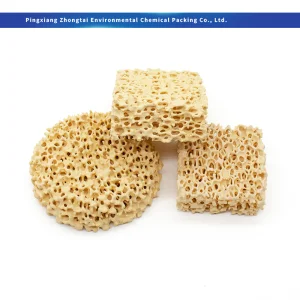
Broad PPI porosity range (10-60) providing customizable inclusion filtration efficiency.
View Filter Details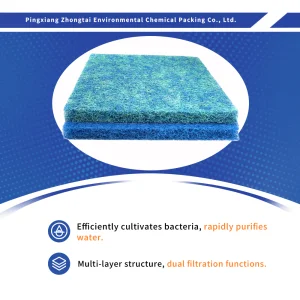
Eco-friendly high-surface-area filtration pad for municipal treatment and aquaculture facilities.
View Biological Media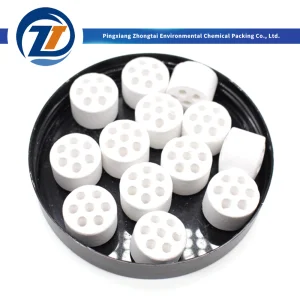
Calcined bauxite proppants maintaining deep-well fracture conductivity under high closure stress.
View Proppant Media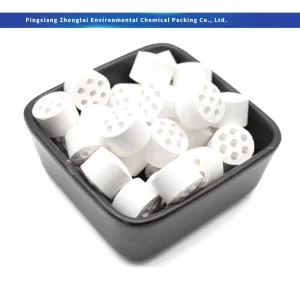
Tightly graded sphericity preventing proppant crushing under closure pressures up to 100 MPa.
View Crush-Resistant Media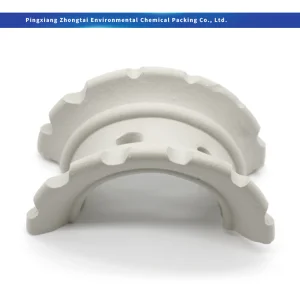
Exceptional corrosion proof random mass-transfer packing for sulfuric acid towers and gas scrubbing.
View Saddle Packing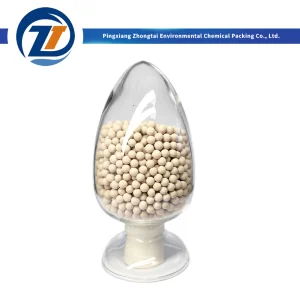
Pore diameter 3Å strictly excluding larger olefins while selectively capturing trace moisture.
View 3A Sieve Details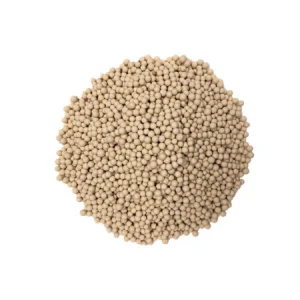
Specialized co-adsorption of CO2 and water vapor before cryogenic rectification systems.
View 13X Sieve Details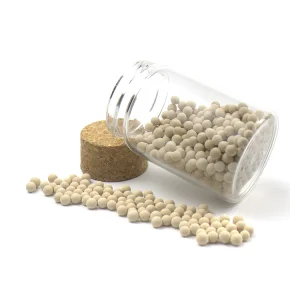
High dynamic nitrogen adsorption capacity and high selectivities for pure oxygen enrichment.
View 5A Sieve DetailsDirect manufacturer prices, batch-certified metallurgical test reports, and door-to-door delivery throughout Moscow Oblast and the Central Economic Region.
Send Inquiry Now