Direct-from-manufacturer pricing on certified industrial ceramics, catalyst support bed media, high-efficiency adsorbents, and molten casting filtration systems.
Overcoming the hydraulic bottlenecks of Raschig rings and classical Berl saddles through advanced scalloped geometry, micro-turbulent edge interfaces, and non-nesting profiles.
In modern chemical engineering operations, column mass transfer efficiency is dictated by the continuous renewal of the gas-liquid interphase. Traditional random packings—most notably early-generation Raschig rings and smooth Berl saddles—suffered from fatal fluid mechanical defects: high bed nesting, premature hydraulic flooding, and catastrophic liquid channel flow along the tower wall. The development of Ceramic Super Intalox Saddles represents the pinnacle of aerodynamic and fluidic optimization in aggressive chemical process environments.
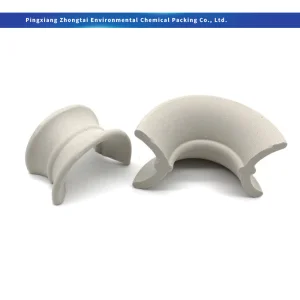
Unlike conventional saddles with smooth planar boundaries, the Super Intalox design incorporates scalloped exterior edges, internal reinforcing ribs, and precisely curved saddle arcs. This complex geometry physically prevents the packing pieces from interlocking or "nesting" inside the packed bed. By preserving an open, interconnected void volume exceeding 72% to 79% (depending on size), the pressure drop ($\Delta P$) across the bed is reduced by 28% to 35% compared to cylindrical Raschig rings and by up to 15% compared to standard Intalox saddles under equivalent vapor-liquid loading rates.
The serrated edges of the Ceramic Super Intalox Saddle function as droplet detachers and boundary layer disruptors. Instead of liquid forming stagnant thick sheets that slide inertly down the ceramic surface, the scalloped serrations continuously tear the film into microscopic droplets. This maximizes the effective interfacial area ($a_e$) relative to the geometric area ($a$), accelerating volatile component transfer and stripping efficiency while driving down the overall Height Equivalent to a Theoretical Plate (HETP).
Verified technical parameters for process plant revamps, simulation models (Aspen Plus / PRO/II), and greenfield column dimensioning.
| Nominal Size | Dimensions (D×H×T) | Bulk Density | Specific Surface Area | Free Void Fraction | Dry Packing Factor ($F_p$) | Crush Strength (Side) | Standard Material Grade |
|---|---|---|---|---|---|---|---|
| #1 (25 mm / 1") | 25 × 23 × 2.5 mm | 620 – 680 kg/m³ | 255 m²/m³ | 73% | 210 m⁻¹ (64 ft⁻¹) | > 1,200 N/piece | Aluminosilicate Ceramic (22-28% Al₂O₃) |
| #2 (38 mm / 1.5") | 38 × 34 × 3.5 mm | 560 – 610 kg/m³ | 165 m²/m³ | 76% | 135 m⁻¹ (41 ft⁻¹) | > 1,650 N/piece | High-Density Chemical Stoneware |
| #3 (50 mm / 2") | 50 × 45 × 4.5 mm | 490 – 540 kg/m³ | 120 m²/m³ | 78% | 92 m⁻¹ (28 ft⁻¹) | > 2,300 N/piece | Acid-Resistant Refractory Porcelain |
| #4 (76 mm / 3") | 76 × 68 × 6.5 mm | 420 – 460 kg/m³ | 85 m²/m³ | 81% | 52 m⁻¹ (16 ft⁻¹) | > 3,500 N/piece | Mullite-Enriched Vitrified Ceramic |
Chemical Composition & Mineralogical Phase Integrity: The durability of wholesale ceramic packing hinges on eliminating soluble iron oxides ($Fe_2O_3 < 0.8\%$) and optimizing the balance of silicon dioxide ($SiO_2 > 70\%$) and aluminum oxide ($Al_2O_3 \ge 23\%$). Our automated firing schedules in shuttle and tunnel kilns yield a dense mullite-cristobalite crystalline framework embedded in a high-viscosity vitreous silicate matrix. In conformance with ASTM C279 (Class III) and GB/T 18749, our ceramic saddles exhibit solubility in boiling sulfuric acid of less than 0.25%, guaranteeing immunity against embrittlement and granular dusting under cyclic thermal swings.
Why petrochemical mega-complexes, metallurgical smelters, and modern acid plants specify ceramic random media over metallic or polymeric alternatives.
Essential in drying towers, primary inter-pass absorption towers, and final absorption columns where 93–98.5% concentrated sulfuric acid runs at temperatures between 80°C and 130°C. Metals succumb to corrosion while polymers degrade rapidly.
Heavy crude refineries and natural gas processing plants deploy ceramic saddles in sour water strippers and thermal regenerators due to zero leaching risk, structural creep resistance under tall packed beds, and complete thermal stability.
Electrochemical production of chlorine gas requires dense stoneware packing that resists both moist wet chlorine gas attack and concentrated sulfuric acid counter-flow, preventing catalyst degradation in downstream compression units.
Waste incinerator emissions laden with halogenated compounds (HCl, HF traces, SOx, NOx) require ceramic random packing that tolerates pH cycling, particulate accumulation, and sudden temperature spikes up to 400°C.
How localized geological advantages, intelligent vacuum extruders, continuous telemetry kilns, and multi-tier quality control anchor the global chemical supply chain.
The production of industrial chemical ceramic media requires an intricate synergy of geological mineral access, high-temperature thermal discipline, and advanced extrusion engineering. Pingxiang City in Jiangxi Province has served as the global nerve center for chemical packing production for decades. Rather than operating as fragmented workshops, modern Chinese ceramic manufacturing facilities embody Industry 4.0 digitalized execution.
Raw materials—primarily local fine-particle kaolin, pyrophyllite, feldspar, and non-plastic quartz—undergo continuous wet ball-milling for 24 hours to attain a sub-micron fineness (<0.045 mm sieve residue below 0.3%). Automated iron-removal magnetic separators operating at magnetic flux densities exceeding 12,000 Gauss strip out trace ferritic contaminants. This eliminates the microscopic inclusion voids that cause catastrophic cracking during sudden thermal shock cycles inside refinery absorbers.
Forming is conducted via closed-loop de-airing vacuum extruders with automatic cutter units that enforce a dimensional tolerance within ±1.5 mm across all axes. The green bodies are dried utilizing waste heat recovery tunnels before being transferred to 120-meter automated roller hearth and tunnel kilns. Here, natural gas firing with 32-zone computerized thermocouple control guarantees that vitrification temperatures ($1280^\circ\text{C} - 1320^\circ\text{C}$) are sustained with less than 5°C variance across the entire kiln cross-section.
Chemical turnarounds operate on strict demurrage penalties where plant downtime can cost in excess of $250,000 per day. Pingxiang's tightly integrated industrial ecosystem enables rapid production scalability. With daily extrusion outputs exceeding 80 metric tons per kiln line, multi-vessel orders (such as simultaneous 500 m³ bed re-packings for 1,000,000 TPA sulfuric acid lines) can be produced, quality-tested, export-palletized, and delivered to major export ports (Shanghai, Shenzhen, Ningbo) within 10 to 14 days of final drawing approval.
Transparent price benchmarks, cost drivers, packing volume considerations, and Total Cost of Ownership (TCO) evaluation for global EPC contractors.
B2B wholesale pricing for Ceramic Super Intalox Saddles is dictated by size-dependent production yields, raw material alumina content, kiln volumetric occupation, and international freight containerization efficiency. Below is the verified factory-direct wholesale pricing benchmark for standard containerized export volumes:
| Product Specification | Nominal Size | Wholesale Volume Range (FOB China) | Container Capacity (40ft HQ) | Standard Packaging Method | Production Lead Time |
|---|---|---|---|---|---|
| Ceramic Super Intalox #1 | 25 mm (1") | $320.00 – $410.00 / m³ | approx. 50 – 55 m³ (~35 MT) | 1,000 kg Jumbo Bags / 25 kg PP Bags | 7 – 10 Days |
| Ceramic Super Intalox #2 | 38 mm (1.5") | $270.00 – $340.00 / m³ | approx. 55 – 60 m³ (~34 MT) | Jumbo Bags on Fumigated Pallets | 7 – 12 Days |
| Ceramic Super Intalox #3 | 50 mm (2") | $220.00 – $290.00 / m³ | approx. 58 – 62 m³ (~32 MT) | Reinforced UV-Proof Jumbo Bags | 5 – 10 Days |
| Ceramic Super Intalox #4 | 76 mm (3") | $180.00 – $250.00 / m³ | approx. 60 – 65 m³ (~29 MT) | Jumbo Bags / Crates / Bulk Pallets | 7 – 10 Days |
*Note: Exact unit pricing is subject to alumina grade (standard 23% vs. high-purity 30%+ Al₂O₃), natural gas spot indices, and seasonal raw clay costs. Project-specific discounts of 5% to 12% apply on consolidated refinery contracts exceeding 200 m³.
Total Cost of Ownership (TCO) vs. Initial Purchase Price: Sophisticated procurement teams evaluate random packing not merely on FOB purchase price per cubic meter, but on Lifetime Power Penalty. Because Ceramic Super Intalox Saddles provide up to a 35% lower pressure drop than Raschig rings and 15% lower than traditional saddles, the electric consumption of main process gas blowers is substantially curtailed. Over an operational lifecycle of 6 years in a high-capacity sulfuric acid or sour gas scrubber, the energy savings realized from lower hydraulic resistance often exceed the original purchase cost of the ceramic packing bed by a factor of 4.5x.
Strict adherence to ASTM international benchmarks, chemical leach tests, and site installation best practices to eliminate premature bed breakage.
Samples are crushed and boiled in 70% sulfuric acid for 48 hours. Mass loss must remain strictly under 0.5% (our factory average: 0.18%), proving that silica leaching is virtually absent.
Saddles are heated to 820°C in an electric furnace and immediately quenched in cold water (20°C) across 10 continuous cycles. Acceptance criteria: zero visible micro-fracturing or acoustic degradation.
To eliminate crushing during tower installation, columns must be filled with water prior to loading. Saddles sink gently through the fluid column, buffering kinetic impact and preventing the creation of broken fines.
Direct answers to the most common engineering queries from plant operators, chemical simulation teams, and procurement managers.
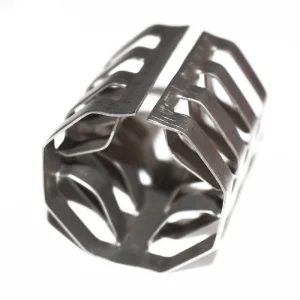
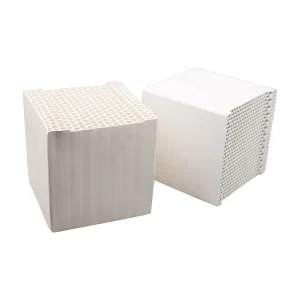
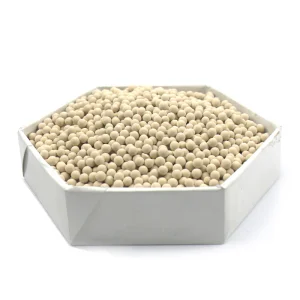
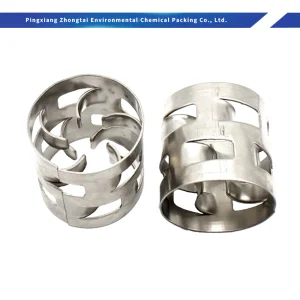
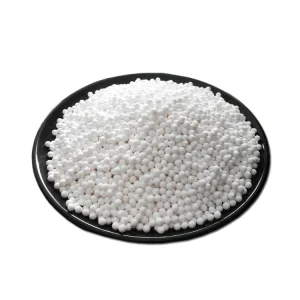
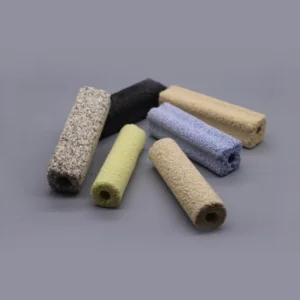
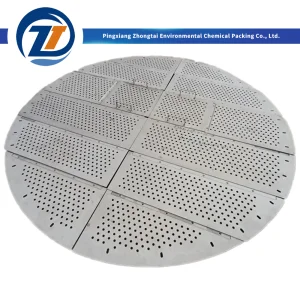
Explore our full line of corrosion-resistant stainless steel random packings, high-capacity fractionation trays, molecular sieves, and honeycomb ceramics.
Need customized pressure drop calculations, Aspen column model inputs, or emergency turnaround dispatch from our Pingxiang manufacturing base? Our senior engineering team provides complete technical datasheets and custom FOB/CIF quotes within 4 business hours.
