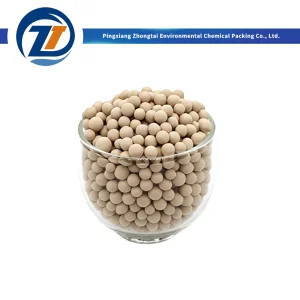
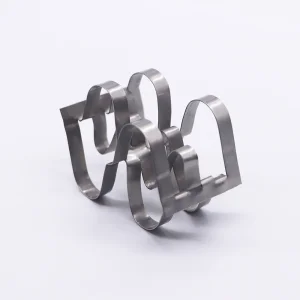
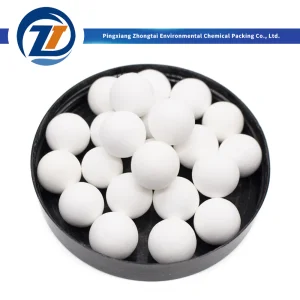
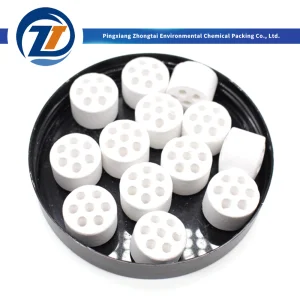
Engineered for catalyst protection, high-shear micronization, molten metal purification, and corrosive packed tower fractionation.
An authoritative engineering assessment of global supply chains, microstructure synthesis, and metallurgical demand across petrochemical, mining, and advanced battery ecosystems.
The explosive demand for lithium iron phosphate (LiFePO4) cathode active materials and battery separator coatings has transformed the grinding media industry. Modern process lines reject traditional natural silica sand and low-density glass beads due to rapid fracture and heavy contamination. Buyers increasingly mandate micro-sized YSZ (Yttria-Stabilized Zirconia) beads ranging from 0.05 mm to 0.8 mm, demanding sphericity tolerances exceeding 98% and uniform grain size distributions.
In hydrocracking, continuous catalytic reforming (CCR), and hydrodesulfurization (HDS) reactors, pressure swings and high-temperature steam cause severe mechanical crush and chemical volatilization. Refineries worldwide specify high-alumina inert ceramic balls with negligible leachable silica (<0.1 wt%) to eliminate the formation of volatile silicon fluorides or silica redeposition on expensive noble-metal catalyst beds, preventing multi-million-dollar downtime.
Pingxiang, Jiangxi remains the primary epicentre of the global chemical ceramics industrial cluster. Factory-direct procurement leverages local calcined bauxite, advanced spray-granulation drying towers, and multi-chamber computer-controlled roller tunnel kilns. This vertical integration allows large-scale bulk orders (100–1,000+ metric tons) to maintain tight structural consistency, rapid delivery schedules, and price stability against fluctuating maritime freight dynamics.
A rigorous breakdown of physical, chemical, and thermomechanical properties governing selection across mass transfer columns and agitated media mills.
| Media Grade / Classification | Al₂O₃ Content (%) | SiO₂ Content (%) | Bulk Density (g/cm³) | Crush Strength (kN/particle, 1/2") | Water Absorption (%) | Primary Industrial Role |
|---|---|---|---|---|---|---|
| Standard Inert Ceramic Ball | 17 – 23% | 70 – 76% | 1.35 – 1.45 | ≥ 3.0 kN | < 3.0% | Hydrotreating Catalyst Hold-Down |
| Medium Alumina Support Media | 23 – 35% | 60 – 68% | 1.45 – 1.55 | ≥ 4.5 kN | < 2.0% | Gas Dehydration & Secondary Columns |
| High Alumina Inert Ball (92%) | 90 – 92% | 6.0 – 8.0% | 2.10 – 2.25 | ≥ 9.5 kN | < 0.5% | Deep Reactor Bottom Support & Milling |
| Ultra-Purity Alumina (99.5%) | ≥ 99.5% | ≤ 0.10% | 2.25 – 2.35 | ≥ 14.0 kN | < 0.1% | Ammonia Converters & High-Steam Units |
| Y-TZP Zirconia Beads (95% ZrO₂) | — | ≤ 0.05% | 3.60 – 3.80 | ≥ 22.0 kN | < 0.01% | Sub-Micron Li-Battery Agitator Mills |
| Acid-Proof Ceramic Random Rings | 18 – 28% | 68 – 74% | 0.65 – 0.85 | ≥ 2.5 kN | < 1.5% | H₂SO₄ Absorption & Cl₂ Scrubbing |
Thermal spalling occurs when steep temperature gradients across dense ceramic bodies trigger uneven thermal expansion. When sudden regeneration cycles or thermal surges occur in fixed beds, inadequate mullite-phase synthesis causes radial cracking, resulting in broken fragments that migrate into collector screens and downstream pumps.
At operating temperatures exceeding 350°C in the presence of high partial pressures of steam, free quartz within standard ceramic media volatilizes as gaseous Si(OH)₄. This vaporized silica travels downstream, condensing on cooler catalyst active sites, irreversibly deactivating high-value platinum, palladium, or nickel catalysts.
In wet bead mills operating at tip speeds of 10 to 14 m/s, irregular internal pores act as stress concentration notches. Sub-surface micro-fractures propagate under continuous dynamic collisions, yielding fine ceramic grit that contaminates high-purity paints, inks, and electronic electrode slurries.
Deploying specialized ceramic media, tower packings, and catalytic substrates to solve chemical degradation, extreme hydraulics, and particulate loading.
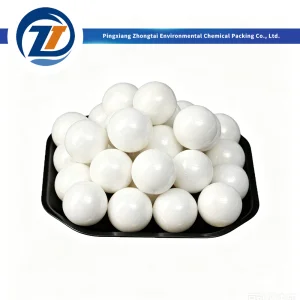
In hydroprocessing units, layered gradations of inert balls (from 1/8" to 2") ensure uniform hydraulic distribution of hydrocarbon feed while preventing fluidization of active catalyst particles. Zhongtai ceramic support balls maintain compressive load endurance under 250 bar pressure and continuous exposure to hydrogen sulfide (H₂S) and organic acids.
Modern wet grinding systems for cathode material synthesis require high-density, yttria-stabilized ceramic beads. The ultra-fine micro-crystalline matrix avoids micro-chipping, ensuring iron and silicon contamination stay well below single-digit parts per billion (ppb) thresholds essential for EV battery longevity and thermal safety.
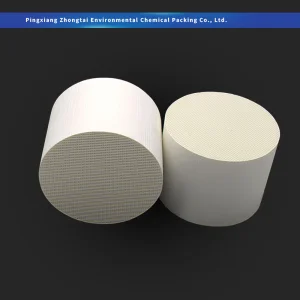
Volatile Organic Compound (VOC) abatement systems utilize cordierite and mullite honeycomb ceramic matrices alongside spherical hold-downs. Exceptional volumetric heat capacity and low thermal expansion coefficients maximize heat exchange efficiency (>95%), reducing gas fuel consumption in pharmaceutical and coating plants.
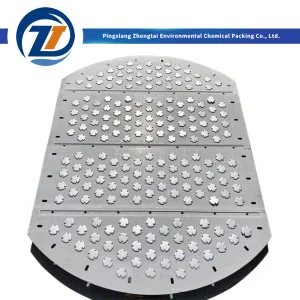
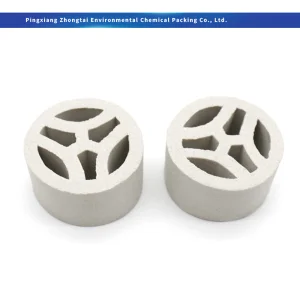
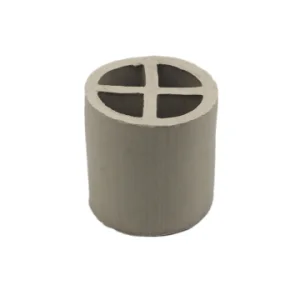
Sulfuric acid manufacture, chlorine gas drying, and acid gas scrubbing subject internal packing to extreme dehydration and aggressive corrosive attack. Acid-resistant ceramic cross rings, Intalox saddles, and structured corrugated packings deliver high specific surface area with negligible mass loss against 98% concentrated sulfuric acid.
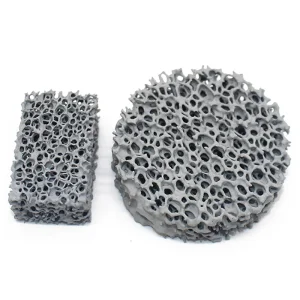
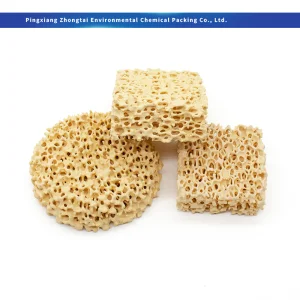
Aluminum foundries and steel casting facilities leverage high-porosity silicon carbide and zirconia ceramic foam filters. These capture microscopic non-metallic inclusions, oxide films, and slag from molten metal streams, dramatically eliminating internal casting porosity and lowering structural scrap rates.
Deep subterranean shale fracturing calls for high-strength ceramic proppants derived from calcined bauxite. Engineered for closure stresses surpassing 10,000 psi, these spherical proppants maintain hydraulic conductivity inside fractured rock fissures without crushing under massive lithostatic loads.
Moving beyond per-metric-ton unit costs to evaluate downstream energy savings, catalyst protection margins, and extended cycle life.
Procuring substandard inert ceramic beads with uncontrolled silica contents or non-uniform firing curves presents immense operational hazards. A single premature bed collapse or silica poisoning incident in a 50,000 BPD hydrocracker can trigger over $1,500,000 in unplanned shutdowns, catalyst skimming, screen repairs, and lost production capacity within days.
In wet attrition ball mills, bead sphericity directly governs kinetic transfer. Precisely classified micro-beads with true sphericity (>95%) eliminate internal mill wall jamming, minimize kinetic energy dissipation as unwanted heat, and drop electrical power consumption by 12% to 18% per metric ton of ground pigment or battery slurry.
Exporting ceramic media demands heavy-duty packaging solutions. Zhongtai provides multi-wall polypropylene 1,000 kg FIBC bulk bags with moisture-resistant PE liners, steel-strapped wooden cases, or reinforced hermetic steel drums mounted on heat-treated ISPM-15 fumigated pallets to guarantee zero transit breakage over long ocean voyages.
Every production batch shipped from Pingxiang Zhongtai is audited through exhaustive physical, chemical, and thermomechanical test standards.
Spectroscopic determination of Al₂O₃, SiO₂, Fe₂O₃, TiO₂, and alkali flux residues ensuring strict adherence to guaranteed minimums.
Hydraulic compressive stress testing on random statistical samples per batch, verified across multiple diameters according to ASTM C133 standards.
Samples are heated to 850°C in muffle furnaces and rapidly plunged into cold water across repeated cycles to confirm zero micro-fracturing.
Precision measurement of true specific density, apparent porosity, and water absorption to verify vitrification and sintering density.
Formal Certificate of Analysis and third-party inspection sign-offs (SGS, BV, or client-appointed inspectors) issued prior to container sealing.
How modern chemical ceramics production is evolving toward low-carbon firing, non-oxide composites, and circular recycling programs.
By shifting from legacy coal-gas producer systems to state-of-the-art clean natural gas and oxygen-enriched combustion roller kilns, Zhongtai has curtailed specific CO₂ emission intensity by over 26% per ton of finished ceramic media while maintaining +/-5°C kiln temperature uniformity.
Our materials laboratory is engineering nano-engineered composite beads featuring Zirconia-Toughened Alumina (ZTA) and Silicon Nitride (Si₃N₄). These next-generation spheres offer up to four times the fracture toughness of conventional alumina, targeting extreme pharmaceutical wet-milling duties.
In accordance with global circular economy benchmarks, we partner with domestic petrochemical enterprises to divert clean spent refractory inert beds away from landfills. Recycled media undergoes crush separation, re-calcination, and reintegration into secondary structural bricks and auxiliary insulation products.
In-depth responses regarding chemical specifications, testing protocols, lead times, and global shipping configurations.
Complete mass transfer internals, high-grade zeolite molecular sieves, and heavy-duty well proppants manufactured for global distribution.