Advanced Engineering Whitepaper: Precision Mass Transfer Solutions, Gas Sweetening Systems, and Petrochemical Fractionation Internals Engineered for Egypt's Expanding Energy Infrastructure.
Send Inquiry NowEngineered for high-volume fractionation, rapid acid absorption, and sour-gas treatment units operating across the Alexandria and Suez refinery clusters.
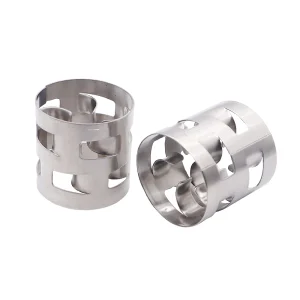
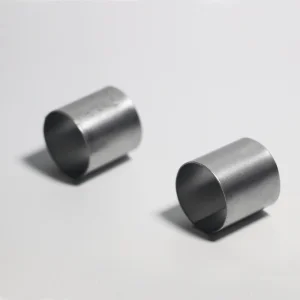
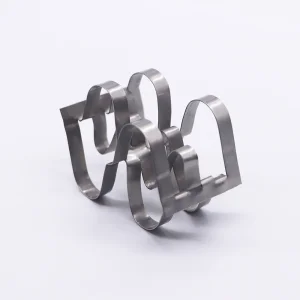
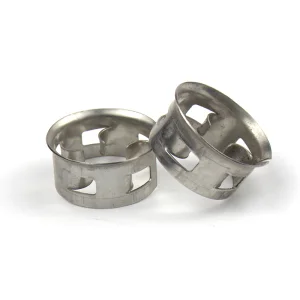
A rigorous examination of fluid dynamics, operational economics, and raw-material metallurgy transforming separation processes.
As Egypt intensifies its mandate to consolidate its status as the Eastern Mediterranean's premier natural gas liquefaction and hydrocarbon trading terminal, the operational demands imposed on mass transfer columns have escalated dramatically. Between the mega-scale processing facilities at the offshore Zohr gas field, the strategic expansions across the MIDOR (Middle East Oil Refinery) plant, and the heavy fertilizer production corridors along the Nile Delta, fluid-separation equipment must balance stringent mechanical robustness against aggressive thermodynamic stresses.
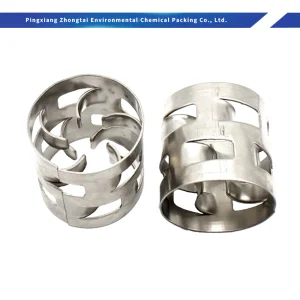
Egypt’s refining and chemical sectors are shifting systematically away from antiquated fractionation trays toward high-efficiency random and structured metal packings. The national modernization programs managed under EGPC (Egyptian General Petroleum Corporation) and EGAS (Egyptian Natural Gas Holding Company) mandate enhanced capacity without enlarging pressure-vessel footprints. This operational necessity drives the rapid integration of high-flux metal tower packing (MTP), primarily characterized by carbon steels, Austenitic alloys (AISI 304, 304L, 316, 316L), and Duplex stainless steels capable of withstanding the sour gas containing high levels of hydrogen sulfide (H₂S) and carbon dioxide (CO₂) found in Western Desert and offshore Mediterranean operations.
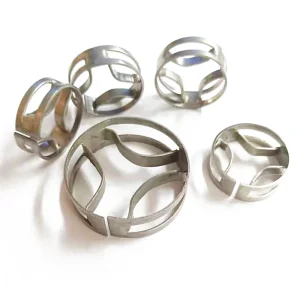
Moreover, Egypt's agrochemical cornerstone—dominated by nitrogenous and phosphatic fertilizer mega-complexes in Damietta and Ain Sokhna—utilizes huge carbon dioxide stripping and ammonia synthesis columns. Here, bed fouling, hydraulic weeping, and high localized pressure drops directly compress bottom-line yields. The deployment of specialized metallic packing assemblies such as low-aspect-ratio rings (e.g., Cascade Mini Rings) and optimized-angle structured wire gauze mitigates vapor channeling while delivering continuous, micro-turbulent liquid film renewal.
Acid gas sweetening facilities require certified 316L and Duplex packing configurations to handle high amine recirculation rates without pitting or stress-corrosion cracking.
Crude atmospheric and vacuum distillation revamps require ultra-low pressure-drop structured packings to expand volumetric distillate cuts without tower rebuilds.
Olefins, aromatics, and syngas purification towers mandate automated Chinese industrial manufacturing lines for fast containerized replenishment and tight dimensional tolerances.
Across the global spectrum, chemical plants are navigating energy-reduction protocols where the reboiler duty of distillation columns accounts for a massive fraction of industrial thermal footprints. Structured and high-performance random metal packings have evolved to minimize the height equivalent to a theoretical plate (HETP), consequently dropping the reflux ratios needed to achieve high purity metrics. This hydrodynamic efficiency lowers the thermodynamic energy required per kilogram of product.
Global supply networks, however, face acute constraints: regional European and North American manufacturers often exhibit extended manufacturing lead times (16–26 weeks) alongside prohibitive tooling costs. Global engineering, procurement, and construction (EPC) conglomerates are therefore aligning supply frameworks with integrated Chinese manufacturing centers. Facilities in industrial epicenters like Pingxiang, Jiangxi leverage end-to-end processing—from high-speed automated stamping presses to automated annealing kilns and on-site ultrasonic cleaning suites—ensuring multi-ton column packing charges can be manufactured, inspected, and shipped within 3 to 4 weeks.
How Pingxiang Zhongtai couples tight chemical metallurgy with digital stamping automation to satisfy strict project timetables.
Zhongtai operates at the epicenter of China’s dedicated chemical packing cluster in Pingxiang. This geographic and operational positioning eliminates tier-two component outsourcing and reduces raw metal coil transit cycles. For EPCs servicing operations in Port Said, Alexandria, or Damietta, this structural efficiency generates measurable procurement advantages:
| Performance Criterion | Legacy Trays / Standard Raschig | Advanced Random Packing (Pall/CMR/VSP) | Wire Gauze Structured Packing (250Y/500X) |
|---|---|---|---|
| Hydraulic Pressure Drop (mbar/m) | High (6.0 - 12.0) | Moderate to Low (1.5 - 3.5) | Ultra-Low (0.2 - 0.8) |
| Mass Transfer Efficiency (HETP, mm) | 800 - 1200 mm | 400 - 650 mm | 150 - 300 mm |
| Turndown Ratio Range | Limited (2:1 or 3:1) | High (up to 5:1) | Extremely Flexible (up to 10:1) |
| Operational Risk in Fouling Duties | High plugging tendency | Low-to-moderate; exceptional wash-down | High sensitivity; requires pre-filtering |
| Egyptian Refinery Application Fit | Decommissioning legacy trains | Standard for Amine Absorbers / Strippers | Specialty chemicals, high-vacuum distillation |
A persistent vulnerability faced by Middle Eastern chemical facilities is micro-scale alloy degradation driven by trace molybdenum or nickel depletion. Every shipment exiting our Pingxiang facility undergoes strict Spectrometric Analysis (PMI testing) backed by EN 10204 3.1 Mill Test Certificates. Coil thicknesses are gauged with micron-level tolerance bands to prevent mechanical deformities under multi-meter column bed hydraulic head weights. Packings destined for Egyptian sour gas service undergo mandatory stress corrosion testing under ASTM G39 protocols.
Specific engineering workflows optimized for Egyptian geographical and environmental constraints.
Challenge: Excessive foaming and flooding in high-pressure MDEA absorption columns handling raw natural gas.
Solution: Replacing legacy rings with 38mm Stainless Steel 316L Cascade Mini Rings. The lower aspect ratio minimizes vapor velocity shear, curbing entrainment and reducing reboiler duty by 14%.
Challenge: Extreme thermal transients and high-concentration acid condensation causing structural fatigue in SO₃ drying towers.
Solution: Implementation of Alloy 20 and Hastelloy C-276 Intalox Saddles alongside heavy ceramic support beds, providing unyielding resistance to thermal shock and acid corrosion.
Challenge: Pressure-drop bottlenecks in vacuum towers leading to cracking of valuable heavy fractions.
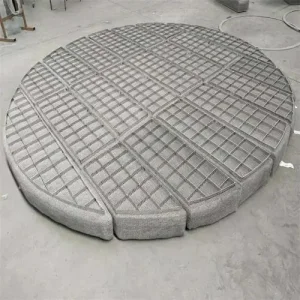
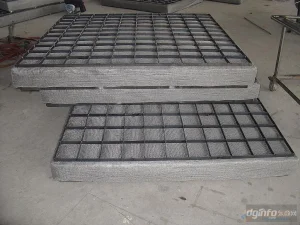
Solution: Installation of SS304 Structured Wire Corrugated Plate Packing (250Y equivalent), dropping total column delta-P from 45 mbar to 12 mbar while boosting gas oil yield.
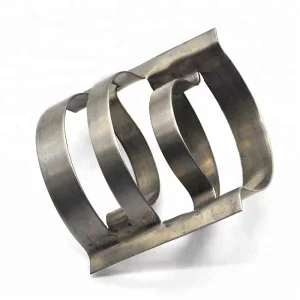
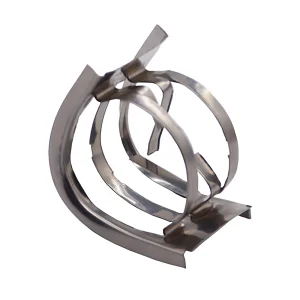
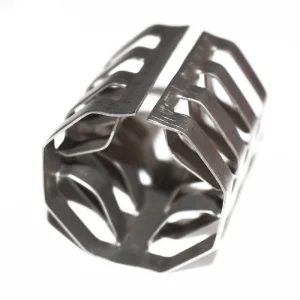
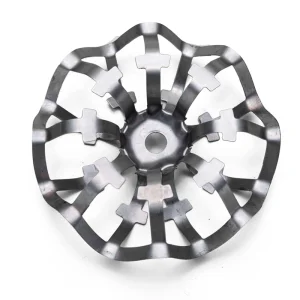
Specialized structured wire gauze, engineered saddles, and high-voidage geometric rings for aggressive chemical environments.
Authoritative technical guidance for plant procurement officers, process consultants, and plant turn-around teams.
