Mass Transfer & Chemical Separation Engineering

Metal Tower Packing Manufacturers & Quotes in Boston

Engineered high-efficiency random and structured metallic mass transfer solutions. Certified precision fabrication for Greater Boston, New England biomanufacturing clusters, and worldwide high-purity chemical processing.

Request Engineering Quotation
Product Architecture

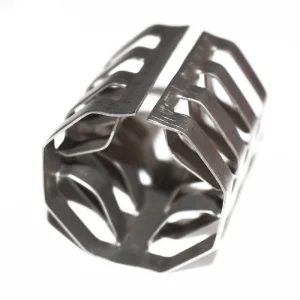
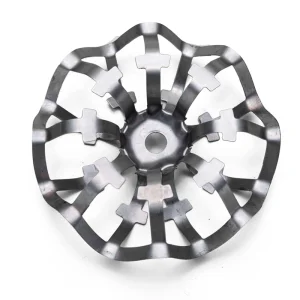
Precision Boston-Grade Random Column Packings

Engineered for low pressure drop, maximum operational capacity, and exceptional boundary surface area for liquid-vapor mass transfer in New England process plants.
Industrial Status & Whitepaper

Mass Transfer Demands in Greater Boston & Global Industry

A rigorous evaluation of thermodynamic mass transfer equipment across New England's innovation corridor and global petrochemical, bio-refining, and decarbonization facilities.

40%
Average Pressure Drop Reduction vs. Old Trays
316L+
High-Purity Pharma & Bio-solvent Grade Alloys
>99.2%
VOC & Hazardous Air Pollutant Removal Efficiencies
ISO9001
Factory-Direct Quality Verification Standards

1. Localized Industrial Landscape: Greater Boston & Route 128 Corridor

The Greater Boston metropolitan area, historically celebrated as an epicentre of high-technology, education, and maritime trade, holds a distinct position within advanced industrial chemical operations. Unlike vast commodity refining centers located along the Gulf Coast, the industrial ecosystem spanning Middlesex, Essex, and Norfolk counties, through the Worcester industrial corridor, is characterized by high-value, specialized specialty chemistry, biotechnology scaling, pharmaceutical solvent recovery, and advanced wastewater remediations.

Engineering teams in Cambridge, Boston Harbor industrial parks, and surrounding technical zones require column internals that maintain absolute mechanical integrity under rigorous cycling. Boston's modern life sciences companies frequently operate high-performance liquid chromatography (HPLC) purification columns, large-scale fermentation solvent recovery units (such as ethanol, acetonitrile, and methanol fractionators), and fine chemical synthesis towers. In these operating theatres, fouling risks, liquid backmixing, and metal ion leaching are totally unacceptable. Consequently, the local demand skews overwhelmingly toward surgical-grade SS316L, duplex alloys, and high-performance metallic structured gauzes manufactured to micron-level dimensional tolerances.

2. Global Macroeconomic & Industrial Trends in Tower Internals

Globally, the mass transfer internals industry is navigating a pivotal technological transition driven by carbon-neutrality initiatives, volatile energy markets, and intensifying environmental ESG regulations. Conventional fractionating trays and early-generation random packings (such as basic ceramic saddles or solid cylindrical rings) are being progressively decommissioned worldwide in favor of high-performance third- and fourth-generation metallic geometries.

  • Decarbonization and Direct Air / Point-Source Carbon Capture: Massive investments in post-combustion CO2 scrubbing utilize advanced amine solutions (MEA, DEA, AMP) that require exceptional gas-liquid contacting with near-zero pressure drop across giant column diameters (often exceeding 8 to 12 meters). Stainless and specialty nickel-alloy metal packing provides the mechanical resilience necessary to withstand enormous bed weights without packing collapse.
  • Thermal Revamps for Cryogenic Air Separation (ASU): Expanding liquefied natural gas (LNG) infrastructure and semiconductor-grade ultra-pure gas fabrication rely on precision metal wire gauze packings, which provide theoretical stage heights (HETP) as low as 100–150 mm under vacuum and low-liquid-load regimes.
  • Supply Chain Transparency and Factory-Direct Technical Integration: EPC contractors and process engineering firms increasingly bypass third-party trading intermediaries in favor of direct manufacturer relationships capable of supplying full material traceability (EN 10204 3.1 certification), finite element structural verification, and computational hydrodynamic simulations.
Packing Typology Available Metallurgies Specific Surface Area (m²/m³) Void Fraction (%) Primary Industrial Use Cases
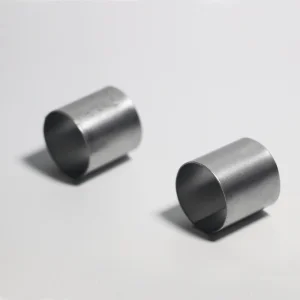
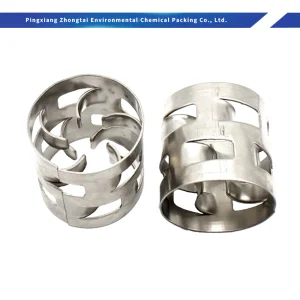
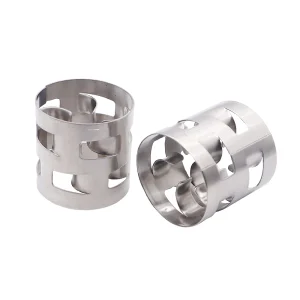
Metal Pall Ring SS304, SS316L, Carbon Steel, Titanium 110 – 350 90 – 96% Atmospheric distillation, ammonia stripping, degasification
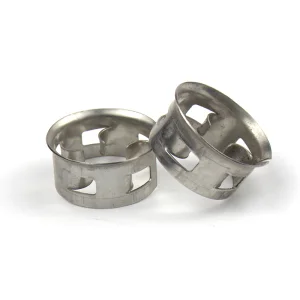
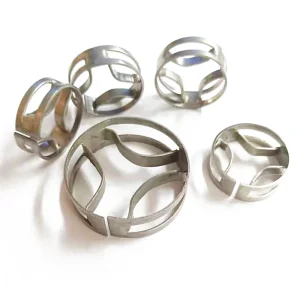
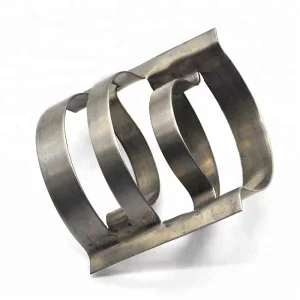
Cascade Mini Ring (CMR) SS316L, Duplex 2205, Monel 400 140 – 390 92 – 97% Acid gas absorption, refinery revamps, high-liquid loading
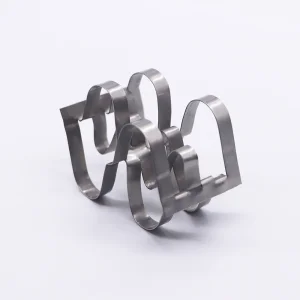
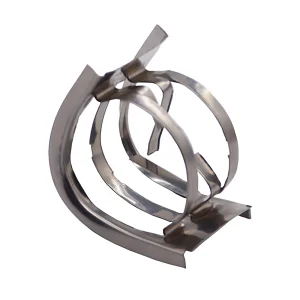
Metal Intalox Saddle SS304, SS316L, Hastelloy C276 120 – 320 93 – 98% Vacuum distillation, thermal separation, high-pressure fractionators
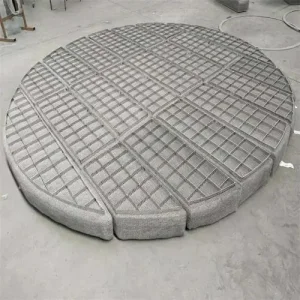
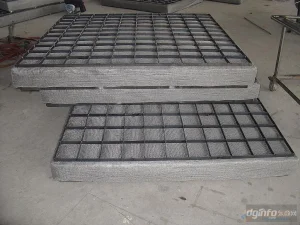
Wire Gauze Structured Packing SS316L, 304, Phosphor Bronze, Inconel 500 – 750 95 – 98.5% Pharma solvent reclamation, isotope distillation, fine fragrance

Transparent Boston Quotes

We provide rapid technical cost models based on direct alloy spot prices, volume breaks, and DDP freight handling into the port of Boston or regional logistical nodes across Massachusetts.

Metallurgical Assurance

Batch-level spectrometry and positive material identification (PMI) ensure zero compliance issues in FDA-regulated pharma or high-stress chemical processing environments.

Hydraulic Design Assistance

Our engineering group delivers complete tower hydraulics documentation, calculating flooding velocity, loading points, mass transfer coefficients, and hold-up matrices.

3. Technology Roadmap: The Next Decade in Mass Transfer Efficiency

The pathway to next-generation separation processes involves deep technological convergence between material science, surface modification, and advanced computational fluid dynamics (CFD):

  • Micro-Textured & Nanocoated Metallic Surfaces: By laser-etching or chemically creating sub-micron texturing on stainless steel ribbons before stamping, packings can induce sustained liquid film spread even at low liquid flow rates (below 1 m³/m²·h). This eliminates premature channel rivulet dry-outs and extends operational turndown ratios up to 10:1.
  • Automated Precision Punching with Zero Wall Stress: Advanced robotic mechanical stamping prevents localized hardening and stress crack corrosion points, prolonging column operating lifetimes inside aggressive chlorides or acid gas contactors.
  • Integrated AI-Assisted Packing Selection: Thermodynamic modeling platforms ingest exact binary and multi-component equilibrium curves, instantly determining whether high-surface random rings or corrugated gauze arrays maximize throughput versus capital expenditure for Boston retrofits.
Factory Inventory Catalog

High-Efficiency Tower Internals Catalog

Explore our complete spectrum of metal random packings and high-efficiency corrugated structured wire matrices, manufactured for global export and New England process installations.
Require Fast Quotes or Custom Metallurgy for Boston Projects?

Direct export pricing, Mill Test Reports (MTRs), and full technical specification sheets ready for immediate review.

Send Inquiry Now
System Integration

Engineered Turnkey Solutions for Demanding Industries

Real-world integration protocols for distillation columns, acid absorbers, air strippers, and bio-scrubbers operating under strict process tolerances.

Biopharma & Solvent Purification

Boston's high-concentration life-science clusters require high-purity ethanol, acetone, and IPA recovery from broth separations. Metal wire gauze packings deliver sub-200mm HETP values to assure pharmaceutical grade purity without thermal degradation.

Acid Gas & Municipal Scrubbers

For municipal wastewater degassing across New England and industrial gas desulfurization, our SS316L and Alloy 20 Pall and Cascade rings resist hydrogen sulfide attack while optimizing liquid distribution at low liquid-to-gas ratios.

Refinery & Petrochemical Revamps

Replacing antiquated bubble cap or valve trays with modern Intalox saddle and Super Raschig metal rings routinely yields 25% to 45% increases in column capacity, reducing total energy usage across de-ethanizers and fractionators.

Technical Selection Guide: Structured Packing vs. Random Packing

Determining whether a column inside a Boston regional plant should be charged with metallic random packing (e.g., Pall Rings, Intalox Saddles) or corrugated structured wire gauze hinges upon four primary physical parameters:

  • Operating Pressure Regime: Deep vacuum operations (under 100 mbar) demand structured wire gauze packing due to its ultra-low pressure drop per theoretical stage (0.1 to 0.5 mbar/stage). For atmospheric to moderate high-pressure services, high-capacity random packings are often the most economical and robust choice.
  • Fouling and Particulate Risk: Liquids with suspended particulates, polymerizable monomers, or potential crystallization perform significantly better with random packings such as Cascade Mini Rings or Pall Rings, which are far easier to chemically clean or hydro-blast during turnarounds than tight wire mesh bundles.
  • Column Diameter and Tower Geometric Constraints: In columns below 300 mm ID, structured packing must be precisely factory-rolled to prevent significant wall bypass. Above 1200 mm ID, properly engineered liquid distributors are mandatory to ensure that both random and structured media maintain uniform vapor-liquid interfacial area throughout the full bed depth.
Frequently Asked Questions

Engineering, Procurement & Shipping FAQ

Authoritative technical guidance for plant managers, process engineers, and procurement officers sourcing metal tower packing in Boston and international markets.

What are the key advantages of specifying SS316L over SS304 for Boston biopharma and chemical recovery towers?
SS316L contains 2–3% molybdenum, which radically enhances resistance to pitting and crevice corrosion in chloride-bearing environments, aggressive solvents, and trace organic acids. For biomanufacturing and pharmaceutical plants located along the Massachusetts coastline and Boston Harbor, the marine atmospheric background combined with rigorous CIP (Clean-In-Place) chemical sanitization protocols renders SS316L the baseline requirement to avoid iron contamination and premature bed structural breakdown.
How does Metal Cascade Mini Ring (CMR) packing compare with standard Pall Rings?
The Cascade Mini Ring features a lower aspect ratio (height-to-diameter ratio typically 1:3 versus 1:1 for Pall Rings) and a flared cylinder edge. When poured randomly into a column bed, CMR units preferentially orient with their cylindrical axes vertical. This creates open pathways for vapor ascent, decreasing pressure drop by approximately 20% and significantly reducing the tendency of the packing to orient horizontally and pool liquid, providing a substantial capacity boost for capacity-constrained columns.
What documentation and quality verification accompany each export shipment to the United States?
Every shipment arrives with full Mill Test Certificates (MTC) conforming to EN 10204 3.1, verifying exact chemical alloy composition and mechanical properties. In addition, our QA group provides dimensional inspection logs, packing crush test certifications, positive material identification (PMI) logs, and full customs compliance records (commercial invoice, ISF filings, certified packing lists, and Certificate of Origin) to facilitate rapid customs clearance at the Port of Boston or US inland ports of entry.
Can metal tower packing be quoted directly with shipping to job sites in Massachusetts or New England?
Yes. We offer fully transparent CIF Boston, DDU, and DDP terms directly to plant facilities, fabrication yards, or engineering warehouses across Massachusetts, Rhode Island, and Connecticut. Our logistics coordinators manage oceanic container transit, port drayage, customs clearance, and direct flatbed or liftgate delivery in compliance with local site receiving constraints.
What parameters are required to calculate the exact volume of packing and optimal column diameter?
To size the bed and select the optimal packing geometry, our application engineers require: total gas and liquid mass flow rates, operating system pressure and temperature, gas and liquid densities and viscosities, interfacial surface tension, the targeted separation efficiency (number of theoretical stages or required percentage removal), and allowable pressure drop budget. Contact our engineering desk via the inquiry form below to initiate an exact simulation.