High-efficiency porous ceramic substrates and fluidized biofilm carriers designed for rapid nitrification kinetics and optimal denitrification performance in Mediterranean aquaculture ecosystems.
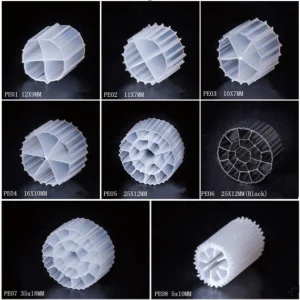
Moving Bed Biofilm Reactor (MBBR) Engineered for Spain RAS Plants
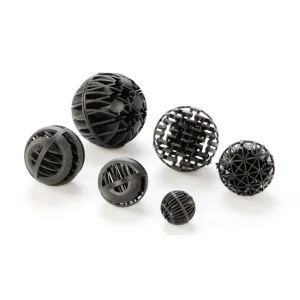
High-Flow Polypropylene Bio Ball Biological Substrates
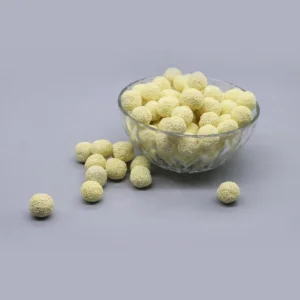
Far-Infrared Sintered Ceramic Bacterial House Spheres
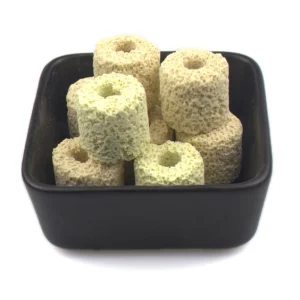
Micro-Porous Extruded Far-Infrared Bacterial House Blocks
From land-based Recirculating Aquaculture Systems (RAS) in Galicia to high-profile public aquaria in Valencia and Barcelona, Spanish biological filtration demands absolute consistency, high hydraulic shear resistance, and chemically unreactive media.
Spain accounts for a major share of EU aquaculture production, notably Seabass (*Dicentrarchus labrax*), Gilthead Seabream (*Sparus aurata*), and Turbot. Modern closed-containment hatcheries and grow-out facilities located across Andalusia, Murcia, and Galicia increasingly retrofit trickling filters and moving bed bioreactors with sintered ceramic and high-SSA Virgin HDPE media to satisfy stringent biochemical oxygen demand (BOD) and total ammonia nitrogen (TAN) reduction parameters.
World-class marine exhibit infrastructures such as *L'Oceanogràfic* in Valencia and the *Aquarium Barcelona* operate massive closed-loop lifesupport systems (LSS). These multi-ton filtration loops require bio-ceramic and composite packing media exhibiting near-zero silica and heavy metal leaching to protect sensitive elasmobranchs, scleractinian corals, and deep-sea teleosts from chemical shifts.
The Spanish ornamental aquatics distribution network supplies specialist pet retailers from Madrid to Bilbao. Sourcing direct from verified manufacturers allows distributors to offer private-label sintered glass rings, far-infrared blocks, and cellular quartz balls that withstand mechanical breakdown during high-volume transshipment and retail distribution.
Procurement teams and project engineers require specific physical and geochemical profiles to ensure biological stability and prevent common hydraulic failure modes.
| Evaluation Parameter | Common Low-Tier Market Media | Zhongtai High-Performance Spec | Operational Impact in Mediterranean Systems |
|---|---|---|---|
| Pore Connectivity & Geometry | Dead-end micropores (<0.1 µm), prone to premature biofilm clogging | Open-cell interconnected macro/mesopores (10–100 µm) | Facilitates deep-layer colonization by anaerobic denitrifiers without hydraulic channeling. |
| Specific Surface Area (SSA) | Nominal claims without BET gas adsorption verification | BET-certified: 450 to 1,200 m²/L functional specific area | Maximizes colony density of *Nitrosomonas* and *Nitrobacter*, reducing required filter footprint. |
| Chemical Neutrality & Leaching | Alkaline slag release causing undesirable pH shift to 8.5+ | Acid-washed, high-calcined inert aluminosilicate / quartz | Maintains stable buffer capacity; zero iron, copper, or unreacted silica elution into closed water. |
| Compressive Strength (Kgf) | Fragile; degrades into dust under heavy hydraulic drop | >50–120 kgf crush strength per unit (sintered >1250°C) | Withstands high-flow commercial Bakki showers and deep pressurized canister filtration columns. |
Speak directly with our chemical packing and bio-media engineers to specify custom porosities, bulk packaging options, or request factory test sheets (COA/TDS).
Operating across Spanish maritime ports such as Valencia, Algeciras, and Barcelona demands rigorous compliance with European chemical legislation and reliable maritime supply chain operations.
Under EU Regulation (EC) No 1907/2006 (REACH), all synthetic mineral and ceramic articles deployed in closed aquatic systems must be free of Substances of Very High Concern (SVHC). Zhongtai guarantees batch-tested raw materials free from lead, cadmium, mercury, and arsenic contamination, verified by independent laboratory testing under standard European water extraction protocols.
Our bio-ceramic rings and bacterial house media undergo programmed tunnel-kiln sintering between 1200°C and 1300°C. This thermal cycle vaporizes organic blowing agents under strict atmospheric control, resulting in an open interconnected matrix. The internal core hosts facultative anaerobic bacteria capable of reducing nitrate (NO₃⁻) to nitrogen gas (N₂), while outer boundaries drive rapid aerobic ammonia-nitrite oxidation.
Headquartered in Pingxiang, Jiangxi—China's industrial ceramics center—Zhongtai links directly via rail-to-port intermodal lines to Ningbo and Shanghai. Full container load (FCL) shipments clear primary Spanish ports of entry (Valencia, Barcelona, Algeciras) within 28–35 transit days, packed on heat-treated ISPM-15 export pallets or reinforced bulk super-sacks.
We provide full white-label capabilities for Spanish pet brands and industrial suppliers. This includes custom extrusion geometries, proprietary far-infrared and mineral doping formulations, custom retail-ready mesh bags, and barcoded full-color display boxes tailored to local distribution specs.
Biological filtration continues to evolve beyond passive surfaces into active biochemical engineering platforms that optimize energy, reduce water exchange rates, and lower carbon footprints.
Incorporation of natural trace minerals (tourmaline, germanium, magnesium silicates) directly into the clay matrix during extrusion. These dopants generate low-level far-infrared emissions (4–14 µm) that break hydrogen-bonded water clusters, promoting enzyme activation within biofilm matrices.
Development of MBBR and fixed bio-rings utilizing bio-derived post-consumer polymers and recycled cordierite/mullite industrial refractories. This approach reduces the embodied carbon index across European aquaculture capital equipment installations.
Application of Computational Fluid Dynamics (CFD) modeling to design structured bio-packing and conjugated geometric rings. This engineering minimizes boundary layer drag, prevents particulate clogging, and lowers aeration energy consumption in Spanish installations.
Explore our specialized sintered ceramics, glass quartz substrates, and random tower packing manufactured to ISO 9001 standards and delivered to Iberian project specifications.
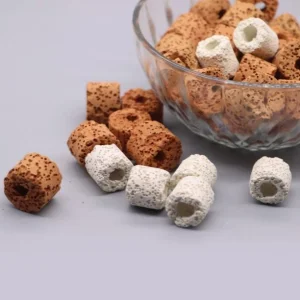
Breath Ceramic Bio Ring for Intensive Fish Farming
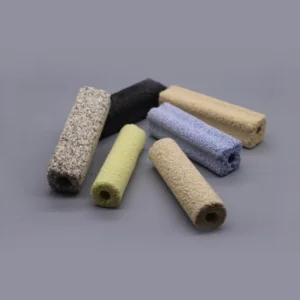
Far-Infrared Bacteria House Cylindrical Columns
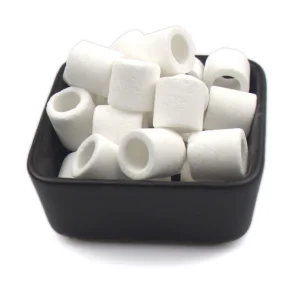
Micro-Cellular Sintered Ceramic Glass Rings
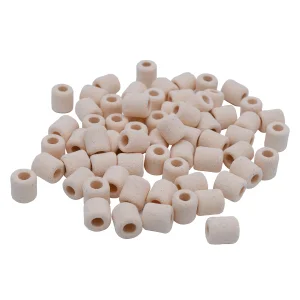
Neutral pH Glass Ceramic Bio-Rings for High Surface Colonization
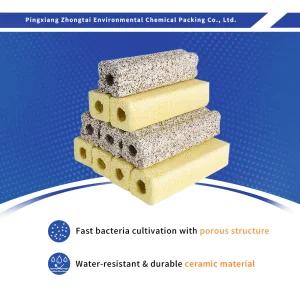
Far-Infrared Nitrifying Bacteria House for Bakki Showers
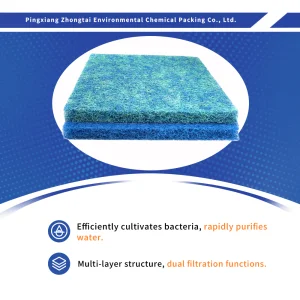
Multi-Layer Dense Polymeric Biological Filter Mat
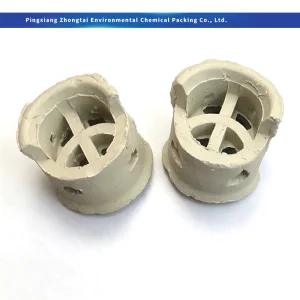
Acid & Heat-Resistant Ceramic Conjugate Ring Packing
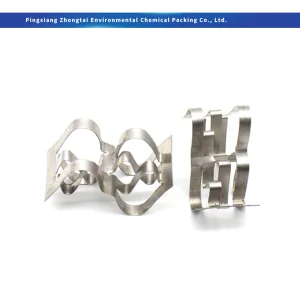
High-Capacity SS304/SS316 Metal Super Raschig Rings (RSR)
Detailed answers addressing physical specifications, shipping terms, and water chemistry parameters for Spanish aquaculture operators and importers.
Whether retrofitting a commercial RAS facility in Galicia, building an exhibit in Valencia, or scaling distribution across Spain, our engineering and export team is ready to support your specifications.
