Engineered to handle elevated ambient temperatures (+50°C) and intense bioloads in desert recirculating aquaculture systems (RAS), municipal public aquariums, and commercial Gulf life support units.
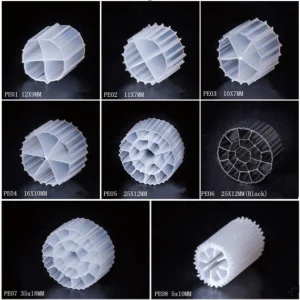
Optimized fluid dynamics virgin HDPE media providing >1,200 m²/m² protected surface area for municipal wastewater and desert RAS.
View Specifications →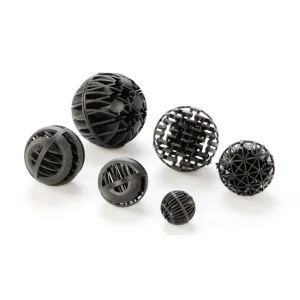
Non-clogging gas-stripping sphere design for degassing towers, commercial wet/dry trickling filters, and Red Sea marine sumps.
View Specifications →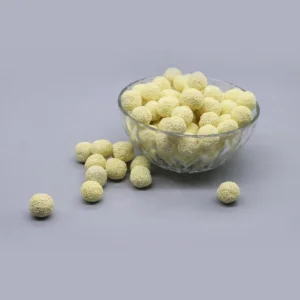
Formulated with mineral-rich volcanic quartz; emits micro-far-infrared wavelengths activating nitrifier cell metabolic rates.
View Specifications →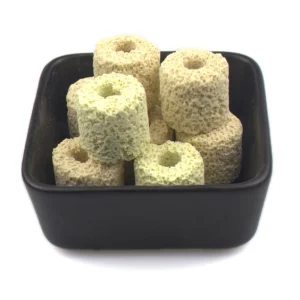
Interconnected microporous structure facilitating simultaneous aerobic nitrification and deep-core anaerobic denitrification.
View Specifications →Strategic economic transformation under Saudi Vision 2030 is driving massive capital expenditures into aquatic life support systems, coastal megaprojects, and desert-based aquaculture food security.
Developments across NEOM (Sindalah Island), the Red Sea Global destination, AMAALA, and Qiddiya require monumental life support systems (LSS) for public aquariums, coral propagation labs, and luxury resort artificial lagoons. Media must maintain absolute biological stability without leaching silica, heavy metals, or altering target seawater chemistry.
Saudi Arabia faces blistering summer ambient heat exceeding 48°C, with baseline Arabian Gulf and Red Sea salinities hovering between 39 PSU and 43 PSU. Elevated salinity decreases dissolved oxygen (DO) saturation while warm temperatures spike unionized toxic ammonia (NH3). Filter media must provide ultra-high specific surface area (SSA) to support dense autotrophic colonies under low dissolved gas conditions.
The National Fisheries Development Program (NFDP) targets 600,000 tons of aquaculture production annually by 2030. Land-based indoor Recirculating Aquaculture Systems (RAS) rearing marine species (Barramundi, Grouper, Seabream, and Pacific White Shrimp) demand resilient, mechanical-shock-resistant bio-carriers capable of heavy stocking bioloads without pore collapse.
Understanding the micro-scale transport phenomena inside sintered glass, aluminosilicate porous ceramics, and virgin polymeric MBBR substrates.
| Media Classification | Material Matrix | Specific Surface Area | Open Porosity (%) | Primary Kinetic Function in KSA Systems |
|---|---|---|---|---|
| Quartz Glass Sintered Rings | Ultra-pure fused borosilicate / SiO2 crystalline | 4,200 – 5,800 m²/L | 72% – 78% | Rapid colonization of Nitrosomonas & Nitrobacter; rapid TAN oxidation in high-density freshwater and marine aquariums. |
| Far-Infrared Ceramic House | Al2O3-SiO2-Fe2O3 composite with rare-earth mineral doping | 3,500 – 4,600 m²/L | 68% – 75% | Dual-zone nitrification (outer aerobic crust) and anaerobic denitrification (hypoxic core) for direct nitrate (NO3-) respiration into N2 gas. |
| Virgin HDPE MBBR Media | High-Density Polyethylene + Hydrophilic Additives | 800 – 1,200 m²/m² | Continuous Flow | Self-cleaning moving bed bio-treatment; resists mechanical attrition in high-salinity industrial and aquaculture effluent scrubbing. |
| Engineered Plastic Bio Balls | Polypropylene (PP) with UV-stabilizer | 350 – 550 m²/m³ | 92% Void Ratio | Degassing tower packing; breaks water film tension to optimize oxygen dissolution and strip volatile CO2/H2S in hyperthermic facilities. |
| Open-Cell Ceramic Foam Blocks | Silicon Carbide / High Alumina foam matrix | 2,800 – 3,800 m²/L | 80% – 85% | High-flux sump partitions, sumps for public oceanariums, Bakki shower cascades requiring zero bypass and high flow velocities. |
Our ceramic media features bimodal pore sizing: macro-pores (10–50 μm) enable convective fluid transport and bacterial colonization, while meso-pores (0.1–5 μm) sustain anaerobic denitrifying biofilms shielded from hydraulic shear stress.
Selected high-temperature sintered mineral blocks emit non-ionizing far-infrared radiation that matches the natural vibration frequency of cellular water clusters, activating endogenous enzymatic reactions in nitrifiers and aquatic fauna.
Calcined at 1,250°C to 1,350°C, all crystalline lattices remain chemically inert. The media will not cause unwanted carbonate hardness (KH) drift or alkaline spikes, maintaining equilibrium in delicate reef aquariums and controlled shrimp hatcheries.
Engineered media topologies tailored to diverse industrial, municipal, and commercial aquatic challenges across the Arabian Peninsula.
For large volume (>1,000 m³) shark tanks, coral exhibits, and penguin habitats in Riyadh, Jeddah, and Al-Khobar. We supply combined solutions incorporating trickle-tower plastic media for primary gas exchange, followed by pressurized deep-bed sintered ceramic columns ensuring oligotrophic water clarity with turbidity <0.1 NTU.
High-density hatchery and grow-out systems demanding rigorous ammonia clearance rates. Moving Bed Biofilm Reactor (MBBR) carriers engineered from high-purity virgin HDPE ensure dynamic fluidization with minimal aeration energy, maintaining total ammonia nitrogen (TAN) <0.5 mg/L even under peak daily feeding regimes.
Ultra-luxury resort water bodies at Sindalah, AMAALA, and the Red Sea Project require crystal-clear, biologically filtered seawater that avoids chemical overuse. Sintered quartz glass rings and porous ceramic blocks provide subterranean biological scrubbing, filtering thousands of cubic meters without toxic chlorinated discharge.
Positioned directly in China's historical center for industrial chemical packing and technical ceramics, Pingxiang Zhongtai leverages full vertical integration for unbeatable supply continuity.
Locally sourced high-purity kaolin clay, feldspar, and optical-grade quartz, batch-tested via X-Ray Fluorescence (XRF) to ensure strictly 0% toxic heavy metals.
Computerized polymer foaming and high-pressure extrusion shaping guarantee consistent internal void distribution and maximum specific surface area.
120-meter automated natural gas tunnel kilns operating at 1,300°C with closed-loop PID temperature curves, eliminating brittle batches and thermal shock cracks.
Shrink-wrapped high-density export cartons, palletized with fumigation-free ISPM-15 wooden or plastic pallets ready for rough ocean transit and GCC port handling.
| Evaluation Parameter | Pingxiang Zhongtai Factory Direct | Generic Trading Intermediaries | Western Domestic Brands |
|---|---|---|---|
| Price per Cubic Meter | Factory-level tier pricing ($350–$900/m³) | 35%–60% middleman markups | 3x–5x premium for identical specifications |
| Production Capacity | 50,000+ m³ annual capacity | Dependent on outsourced sub-factories | Constrained by high operational overhead |
| Custom Formulations | Custom geometry, pores, & private labeling | Fixed catalog stock only | Rigid product offerings |
| Batch Traceability | Full batch COA, ICP heavy metal reports | Rarely provided or unverified | Provided, but at excessive cost |
Ensuring zero-friction customs processing through King Abdulaziz Port (Dammam) and Jeddah Islamic Port with verified documentation.
We work directly with approved notified bodies (e.g., TÜV, Intertek, SGS) to register products on the SABER portal. We issue both Product Certificates of Conformity (PCoC) and Shipment Certificates of Conformity (SCoC) aligned with the Technical Regulation for Building Materials and Chemical Plastics.
Direct weekly vessel connections from Shanghai, Ningbo, and Shenzhen to Jeddah Islamic Port (Red Sea Gateway) and King Abdulaziz Port Dammam (Arabian Gulf Gateway) with a standard ocean transit of 14–18 days, minimizing inventory holding costs for commercial projects.
Standard carton packaging deteriorates rapidly in Gulf coastal humidity and desert UV exposure. Our export-grade pallets incorporate UV-resistant shrink barrier wrapping, internal moisture-absorbent desiccant packs, and reinforced edge protectors to prevent in-transit crushing.
Avoid catastrophic biological filter failure by applying strict media qualification tests prior to bulk container ordering.
Verify water absorption via ASTM C373. Legitimate bio-ceramic filter media should exhibit an absorption rate exceeding 60% by weight. Sub-standard industrial tiles ground into rings often show <15% absorption, preventing meaningful internal biological colonization.
Conduct ASTM C279 chemical resistance checks. Expose media samples to 10% hydrochloric acid and hypersaline Red Sea water (42 PSU) at 60°C for 48 hours. Ensure mass loss remains strictly below 0.5% without physical pulverization or crumbling.
Marine coral reefs and juvenile shrimp are vulnerable to copper (Cu), zinc (Zn), cadmium (Cd), and arsenic (As). Insist on Inductively Coupled Plasma Mass Spectrometry (ICP-MS) laboratory leach verification confirming non-detectable levels in sensitive artificial seawater.
Precision-manufactured filter media ready for private labeling, customized dimensions, and containerized dispatch to Saudi Arabia and the GCC.
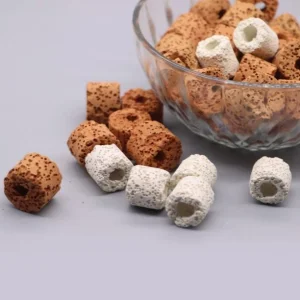
Micro-perforated sintered ceramic rings optimized for freshwater hatcheries and marine nursery RAS biofilters.
View Specifications →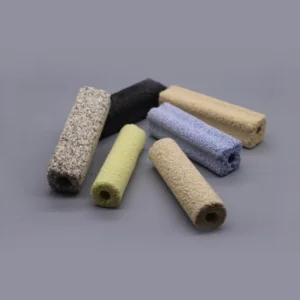
Square and hexagonal block profile with massive open channels; engineered for high-flow trickle filters and sump chambers.
View Specifications →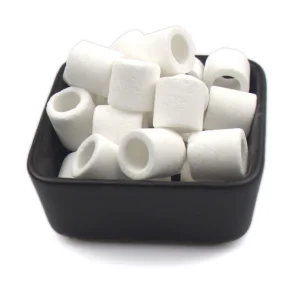
Ultra-dense void micro-architecture delivering 5,800 m²/L surface area without altering pH or KH parameters in delicate tanks.
View Specifications →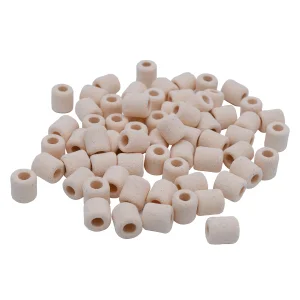
Engineered for canister filters, commercial sumps, and modular RAS units; rapid biological maturation within 7–10 days.
View Specifications →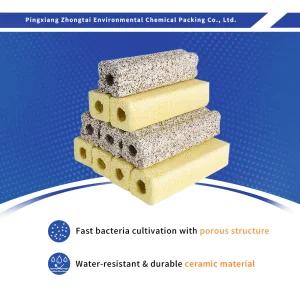
High-temperature calcined rod geometry designed specifically to withstand relentless Bakki shower cascading impact.
View Specifications →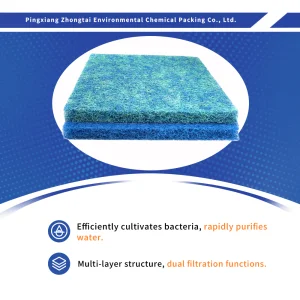
Thermal-bonded cross-weave fibers offering reliable mechanical particulate retention alongside deep biological nitrification beds.
View Specifications →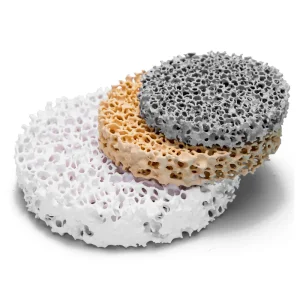
Rigid three-dimensional reticulated foam skeleton offering ultra-low pressure drop and zero bypass for industrial water contactors.
View Specifications →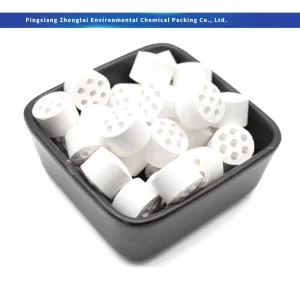
Engineered for extreme deep-bed pressurized pre-treatment vessels, withstanding high hydraulic thrust in industrial plants.
View Specifications →Detailed engineering, commercial, and shipping answers addressing common procurement inquiries.
Standard low-fire ceramic media tends to disintegrate via chemical spalling when exposed to the high ionic strength of hypersaline seawater (up to 42,000 ppm TDS). Our bio-ceramic formulations are fired in automated kilns at 1,300°C to 1,350°C, ensuring full vitrification of the structural aluminosilicate backbone. This process locks the crystalline matrix, rendering it impervious to osmotic cracking, sodium salt intrusion, and chemical dissolution.
Every shipment bound for Dammam, Jeddah, or Riyadh dry ports requires registration through the electronic SABER platform. As an established exporter, Pingxiang Zhongtai provides all required documentation: ISO 9001 factory audits, comprehensive laboratory chemical analysis (XRF/ICP), and non-hazardous declarations. We partner with authorized conformity inspection bodies to issue the Product Certificate of Conformity (PCoC) and Shipment Certificate of Conformity (SCoC) swiftly.
Yes. We provide complete OEM/ODM solutions for pet retail brands, commercial aquaculture suppliers, and project contractors across Saudi Arabia. This service includes customized retail packaging (printed polybags, corrugated color cartons with Arabic and English bilingual labeling, barcode implementation), as well as custom bulk containerization in 500 kg jumbo tote bags tailored for large-scale installations.
Our standard Minimum Order Quantity (MOQ) is 1 cubic meter (approx. 1 pallet) for standard stock items, and 1 full 20ft container (approx. 28–30 m³) for customized branding or bespoke media formulations. Ocean freight transit from Chinese main ports (Ningbo/Shenzhen) to Jeddah Islamic Port is typically 14 to 18 days, and to King Abdulaziz Port in Dammam is roughly 16 to 22 days.
No. Our far-infrared and mineral-infused bio-ceramic formulations use naturally occurring tourmaline and rare non-metallic volcanic minerals. Every batch is certified via gamma-ray spectrometry and ICP testing to ensure absolute compliance with international drinking water safety standards and environmental radiation safety protocols, releasing zero toxic contaminants.
Biological media sizing is calculated based on daily total ammonia nitrogen (TAN) production, water temperature, salinity, and target effluent TAN levels. In high-temperature Saudi operations (where ambient conditions reduce dissolved oxygen), our engineering team utilizes our verified kinetic nitrification coefficient ($K_N$) of 0.8–1.4 g TAN/m²/day to determine exact volumetric loading requirements, preventing unexpected system crashes.
