Engineered for extreme ambient temperatures and high-turbidity water systems across Khartoum, Port Sudan, and Gezira State.
Sudan's aquatic, agricultural, and industrial sectors face distinct hydrological challenges due to its unique tropical and hyper-arid climate. Sourcing aquarium filter media and biological tower packing for the Sudanese market requires a granular understanding of local water quality parameters. Water sourced from the River Nile (White Nile and Blue Nile confluence at Khartoum) contains elevated levels of suspended solids, seasonal silt loading (Total Suspended Solids, TSS, exceeding 3,500 mg/L during the monsoon silt floods from July to October), and high baseline alkalinity (pH ranging between 7.6 and 8.4).
Furthermore, ambient summer temperatures in inland farming zones such as Omdurman, Wad Madani, and Atbara frequently surpass 42°C to 46°C. High water temperatures directly accelerate ammonia production ($\text{NH}_3$) from fish metabolic waste and organic decomposition while simultaneously reducing Dissolved Oxygen (DO) saturation limits in water. In recirculating aquaculture systems (RAS), commercial Nile Tilapia (Oreochromis niloticus) hatcheries, and ornamental fish breeding facilities, inadequate biological filtration rapidly leads to lethal spikes in un-ionized ammonia ($\text{NH}_3$) and nitrite ($\text{NO}_2^-$).
Key Engineering Insight for Sudanese Buyers: Standard filter media with low pore interconnectivity quickly clog when subjected to raw Nile river water silt. To maintain optimal nitrification under Sudan’s high thermal profiles, biological filter media must exhibit high specific surface area (SSA > 600 m²/m³), open-cell microporous structure, and superior thermal stability up to 1300°C sintering density to prevent structural degradation under aggressive backwashing.
The commercial demand for high-performance aquarium filter media in Sudan spans three primary market segments:
When procuring aquarium filter media from Chinese OEM manufacturers, procurement managers and trade importers in Sudan must evaluate pricing metrics based on volume (Cubic Meters, $m^3$), weight (Metric Tons, MT), or bulk carton packages. Below is a detailed wholesale pricelist guidance benchmark reflecting current factory-direct pricing for export to Sudan:
| Filter Media Category | Material / Specs | Specific Surface Area (SSA) | Est. Wholesale Price (FOB China) | Est. CIF Port Sudan Price (20GP/40HQ) |
|---|---|---|---|---|
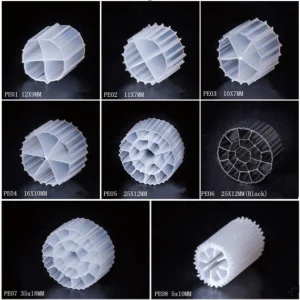
| Moving Bed Biofilm Reactor (MBBR) | 100% Virgin HDPE (K1/K3/K5 design) | > 800 m²/m³ | $280 – $420 / m³ | $340 – $490 / m³ |
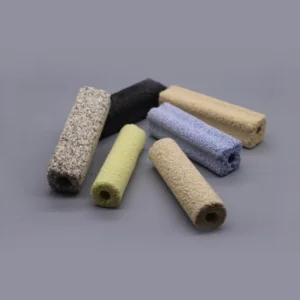
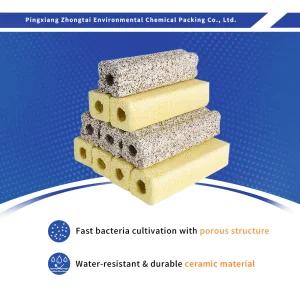
| Far-Infrared Bacterial House Column | Petal-shaped porous ceramic (160×40mm) | > 1200 m²/m³ | $0.12 – $0.28 / piece | $0.16 – $0.34 / piece |
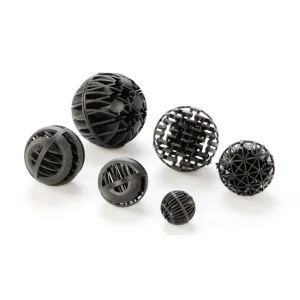
| Plastic Bio Ball (With/Without Sponge) | High-Density Polypropylene (PP) Ø26-76mm | 350 – 550 m²/m³ | $12 – $22 / 1000 pcs | $16 – $28 / 1000 pcs |
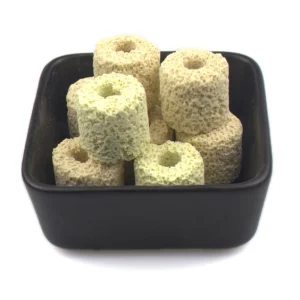
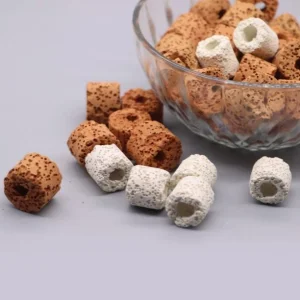
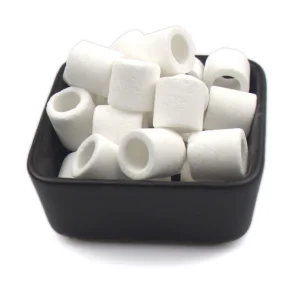
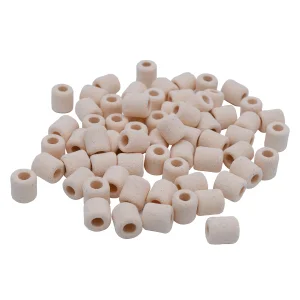
| Breathable Ceramic Bio Rings | Micro-porous sintered glass/ceramic | > 950 m²/m³ | $320 – $480 / MT | $390 – $560 / MT |
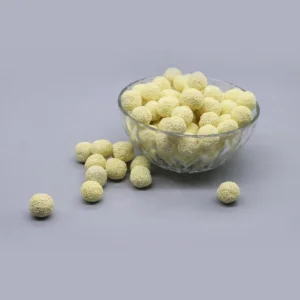
| Far-Infrared Bio-Bacteria Balls | Mineral-infused porous ceramic spheres | > 1100 m²/m³ | $350 – $520 / MT | $420 – $610 / MT |
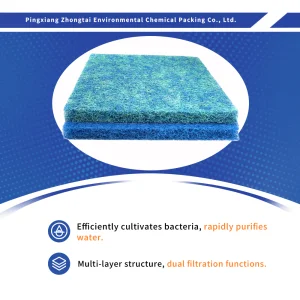
| Multi-Layer Bio-Filter Mat | Eco-friendly PET matrix (Blue/Green) | N/A (Mechanical/Bio) | $8.50 – $14.00 / sq meter | $10.50 – $17.00 / sq meter |
Note: Prices vary depending on raw material grade (virgin vs. recycled polymers for plastics, ultra-pure kaolin vs. standard clay for ceramics), order volume, packaging requirements (mesh bags, customized retail boxes, or bulk jumbo bags), and prevailing ocean freight rates to Port Sudan South Port Container Terminal.
As a global direct manufacturer located in Pingxiang, Jiangxi Province, China—the world-renowned epicenter of chemical packing and industrial ceramics—our enterprise leverage an integrated industrial cluster. Sourcing aquarium filter media directly from our Pingxiang production base yields decisive commercial and technical benefits for Sudanese distributors:
Our continuous tunnel kilns maintain strict sintering temperatures up to 1300°C, ensuring high mechanical crush strength (>150N per ring) and optimal open pore connectivity.
We use high-purity natural kaolin clay, tourmaline, and far-infrared mineral powders free of heavy metals (lead, cadmium, arsenic), guaranteeing non-toxic water chemistry.
With an annual output exceeding 35,000 metric tons of ceramic media and 50,000 m³ of plastic bio-carriers, we easily fulfill high-volume government and commercial tenders.
Sudan's diverse water sector requires tailored biological filtration solutions. Below are the core deployment scenarios for our filter media in the local market:
Challenge: Excessive ammonia accumulation due to high feed conversion ratios in 38°C water.
Solution: High-density MBBR K3 carriers combined with Bakki Shower ceramic columns to maximize gas exchange and rapid nitrification.
Challenge: Retail demand for visually striking, durable bio-media for home aquariums.
Solution: Far-infrared bacterial house columns packaged in customized 1kg or 5kg retail mesh cartons for immediate store sales.
Challenge: Corrosive saline air and high-sulfur groundwater pre-treatment.
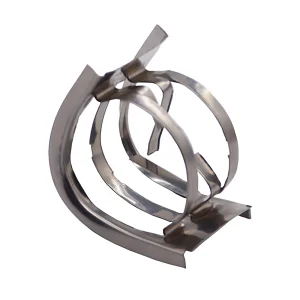
Solution: UV-stabilized Polypropylene (PP) plastic bio-balls and structured tower packing resistant to chemical corrosion and salt scaling.
Shipping industrial cargo to Sudan requires strict compliance with international shipping regulations and local customs clearance procedures. Our dedicated export department provides end-to-end logistics support to ensure smooth import operations:
Explore our full catalog of high-performance ceramic, glass, and plastic filter media optimized for Sudanese trade buyers.
The global aquarium filter media industry is undergoing a technological transition toward high-efficiency, bio-active materials. In warm-climate aquaculture regions like Sudan, traditional biological media (such as standard gravel or basic plastic rings) are rapidly being replaced by advanced far-infrared ceramic matrixes and high-surface-area MBBR carriers.
Infused with natural tourmaline and mineral oxides, our far-infrared ceramic media emit deep infrared rays that break water molecular clusters, increasing dissolved oxygen absorption and stimulating beneficial bacterial growth.
Engineered fluid-dynamic shapes allow MBBR carriers to stay suspended in fluidized beds. Constant collision strips away aged biofilm and maintains thin, highly active nitrifying bacterial layers.
Our proprietary sintering process creates interconnected micro-pores ranging from 10 to 100 microns, providing ideal habitat for both aerobic (Nitrosomonas, Nitrobacter) and anaerobic denitrifying bacteria.
Technical and commercial answers to clarify buying decisions for aquarium and industrial filter media in Sudan.
