Advanced nitrification-accelerating substrates optimized for recirculating aquaculture systems (RAS) across Erongo, Hardap, and Khomas regions.
A comprehensive analysis of hydrological constraints, marine economic zones, and high-efficiency bio-filtration requirements in South-Western Africa.
The Republic of Namibia occupies an ecologically rigorous geopolitical zone characterized by hyper-arid climatic regimes alongside exceptionally productive marine coastal upwellings. With the Benguela Current system driving coastal fisheries around Walvis Bay and Lüderitz, juxtaposed against severe freshwater deficits throughout the interior Central Plateau and Kalahari Basin, Namibia’s aquatic engineering landscape is governed by an absolute mandate: uncompromising water conservation through closed-loop recirculating ecosystems.
In response to volatile precipitation patterns and depleted groundwater reservoirs, commercial aquaculture operators—ranging from inland tilapia and African catfish hatcheries around the Hardap Dam to intensive coastal marine aquaculture facilities cultivating abalone and oysters in Swakopmund—have transitioned from flow-through hydraulic designs to modern Recirculating Aquaculture Systems (RAS). Under RAS configurations, the volumetric water replacement rate is constrained to less than 1% to 3% daily. This technological architecture places the entire biological survival of the biomass onto the chemical and biological filtration kinetics of the bio-media substrate.
Namibian aquaculture facilities and public water displays face distinct operational stress factors not encountered in temperate, water-abundant territories. Coastal marine operations encounter hypersaline aerosol environments and sudden sulfur eruption plumes along the continental shelf, demanding media beds that exhibit complete chemical inertness and resistance to rapid pH shifts. Meanwhile, desert-edge facilities in Windhoek and Okahandja must buffer high ambient diurnal temperature fluctuations ranging from 5°C at night to over 38°C during peak sunlight, which dramatically destabilizes the metabolic activity of nitrifying microbial populations (*Nitrosomonas* and *Nitrobacter*).
Traditional calcareous or poorly sintered gravel substrates prove disastrous under these conditions. They crumble rapidly, release unbuffered carbonates that drive carbonate hardness (KH) to erratic levels, and generate fine particulate sludge that fouls UV sterilizers and drum micro-screens. Consequently, Namibian process engineers and facility directors are systematically replacing legacy crushed stone with engineered synthetic bio-carriers, microporous sintered borosilicate glass rings, and high-voidage honeycomb cordierite-mullite blocks that maintain stable hydraulic velocity and deep cellular biofilm architecture.
Every cubic meter of makeup water in the Erongo region involves expensive sea-water reverse osmosis (SWRO) desalination costs. High-SSA biological media maximizes biochemical conversion, slashing water replacement overhead.
Seasonal ocean upwellings generate sulfur plumes off Walvis Bay. Our far-infrared bio-ceramic structures cultivate stable deep-pore chemolithotrophic sulfur-oxidizing bacteria that shield live stocks from lethal mortalities.
Namibia's luxury safari lodges in Sossusvlei, Etosha, and the Zambezi Strip utilize pristine decorative aquaria. Our high-purity glass rings and bacteria house units guarantee crystal clarity without frequent maintenance interventions.
Rigorous laboratory metrics validating surface area density, structural longevity, and nitrifying kinetics in high-load aquaculture systems.
| Evaluation Parameter | Zhongtai High-Alumina & Borosilicate Bio-Media | Standard Commercial Lava Rock / Pumice | Low-Grade Crushed Sintered Rings |
|---|---|---|---|
| BET Specific Surface Area | 1,450 – 2,100 m² / liter | 80 – 160 m² / liter | 320 – 480 m² / liter |
| Internal Pore Distribution | Dual-zone: Macro-pores (50–100 μm) + Micro-pores (0.1–5 μm) | Random non-interconnected fissures | Predominantly sealed micro-fissures (anaerobic choking) |
| Hydraulic Flow Voidage Ratio | 78% – 85% (Prevents channeling and dead zones) | 35% – 45% (High sludge accumulation) | 50% – 60% (Prone to bio-clogging) |
| Chemical Inactivity / pH Alteration | Zero leaching, 100% neutral borosilicate/cordierite base | Leaches iron, silicates, and heavy trace elements | Unstable alkaline flux, raises KH/pH uncontrollably |
| Crush Strength & Attrition Rate | >1,200 N per unit; <0.05% annual abrasion loss | Variable; friable under moderate hydraulic pressure | High pulverization; clouds system with ceramic dust |
| Far-Infrared Bio-Activation | Active mineral composite emits 4–14 μm FIR energy waves | None | None |
The operational superiority of Zhongtai bio-filter media stems from our Pingxiang manufacturing center—internationally recognized as the chemical ceramic and mass-transfer packing capital of China. By maintaining strict control over pyrometric cone firing (1,180°C to 1,320°C in automated continuous tunnel kilns), our engineering team achieves an interconnected open-cell porous lattice that enables simultaneous multi-stage bioreaction: aerobic nitrification along the outer turbulent perimeter, accompanied by facultative anoxic denitrification within the deep core matrices.
Why Tier-1 African EPCs, government ministries, and private fisheries source directly from Pingxiang Zhongtai Environmental Chemical Packing Co., Ltd.
Our proximity to pristine kaolin, cordierite, and industrial feldspar deposits in Jiangxi Province allows us to synthesize custom refractory and ceramic formulations with micro-element profiles that accelerate bacterial biofilm adhesion. Batch-level spectroscopy confirms the total absence of toxic heavy metals, arsenic, and free calcium oxide, protecting sensitive juvenile finfish and high-value marine crustaceans.
Operating over 20 advanced kiln lines and multiple polymer extrusion hubs, Zhongtai delivers uninterrupted high-volume containerized shipments (20GP, 40HQ) directly to the Port of Walvis Bay. Every bulk shipment is packed in moisture-impermeable woven polypropylene jumbo bags or heavy export-grade honeycomb cartons secured on heat-treated, fumigated pallets meeting ISPM-15 customs criteria.
We provide full white-label contract manufacturing for local aquarium supply distributors and industrial contractors across southern Africa. From custom pore diameters, dimensional color-coded extruded rings, and branded mesh-bag packaging to tailored chemical towers requiring hybrid ceramic and SS316L packing combinations, our engineering wing adapts products to your precise tender specifications.
Every single production batch undergoes standardized laboratory testing in accordance with ISO 9001 standards: porosity gas pycnometry, point-load crush strength tests, and accelerated acid/alkali resistance leaching audits. Complete Certificates of Analysis (COA) and material safety documentation accompany each bill of lading, removing all guesswork from import clearance.
Proven operational setups engineered to withstand environmental extremes from coastal Atlantic bays to hyper-arid interior savannas.
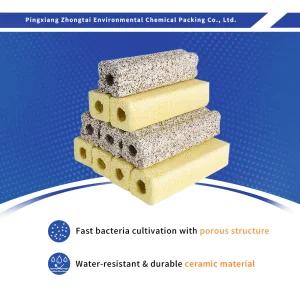
Coastal oyster and abalone nurseries require ultra-clean seawater free of micro-turbidity and pathogenic bloom vectors. Zhongtai Far-Infrared Ceramic House columns implemented in high-flow trickle towers (Bakki Showers) strip ammonia, supercharge dissolved oxygen levels, and maintain pristine biological stability during Atlantic red tide incursions.
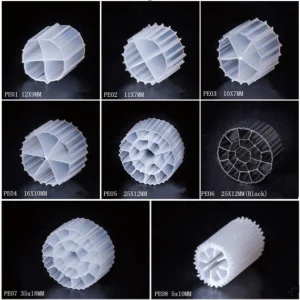
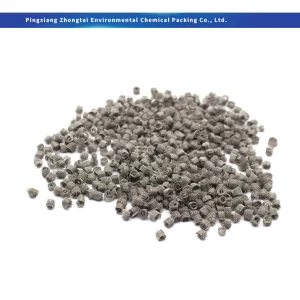
High-density inland aquaculture setups handling heavy organic waste loads rely on our Virgin HDPE MBBR biocarriers. Suspended in aerated fluidized moving beds, the self-cleaning continuous motion prevents bio-fouling and sloughing dead-spots, delivering rapid total ammonia nitrogen (TAN) and nitrite conversion under heavy feeding regimens.
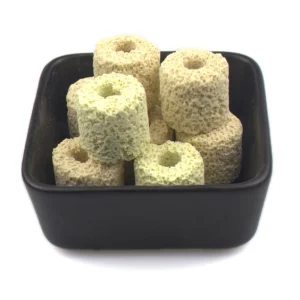
Exclusive safari lodges in the Namib-Naukluft and Etosha National Parks demand showcase aquaria that operate silently and faultlessly with minimal water changes. Our microporous breath ceramic rings provide immense surface area within compact external canister or sump compartments, keeping bioloads crystal clear for international guests.
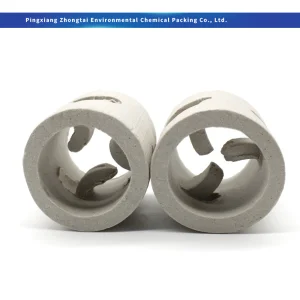
Namibia's extensive mining sector (uranium, diamond, and base metal extraction in Erongo and Karas) produces complex wastewater streams that require multi-stage remediation prior to environmental release or processing loop recycle. Zhongtai acid-resistant ceramic pall rings and random tower packings provide robust gas scrubbing, carbon dioxide stripping, and deep-bed chemical filtration capable of resisting corrosive acidic liquors.
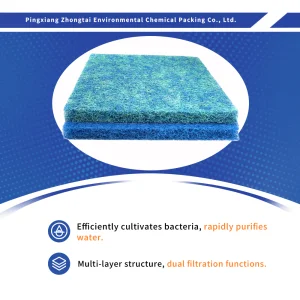
Municipal water reclamation authorities in arid centers such as Windhoek lead the world in direct potable reuse strategies. By implementing high-voidage honeycomb ceramic matrices and high-purity molecular sieve beds within biological contactors, facilities enhance denitrification rates and adsorb trace chemical compounds before membrane hyperfiltration.
A procedural evaluation framework for technical procurement managers, civil engineers, and supply chain executives.
Procuring media for municipal infrastructure or commercial-scale aquaculture requires an engineering review far beyond unit purchasing price. Substandard media causes frequent bed replacements, structural attrition that damages pumps, and disastrous biomass mortality events. When submitting Request for Quotations (RFQs) or evaluating supplier bids, Namibian procurement teams should mandate compliance with four critical metrics:
Demand documented nitrogen adsorption BET isotherms verifying not merely total void volume, but accessible open-pore structure. Media must display bi-modal porosity: macropores (30 to 100 microns) that allow rapid colonization of nitrifying bacteria clusters without physical occlusion, and internal micropores that foster facultative anaerobic bacteria colonies for nitrate reduction.
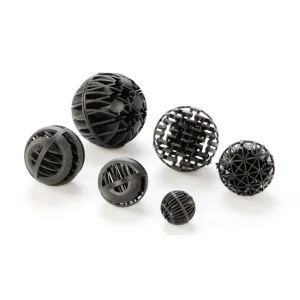
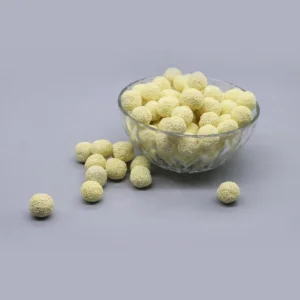
In deep bio-towers, trickling filters, and pressurized vessels exceeding 2.5 meters of bed depth, lower-tier media pulverizes under static hydraulic and gravitational loading. Zhongtai bio-ceramic rings and balls guarantee point-load resistance exceeding 1,200 Newtons, guaranteeing zero compaction, zero channel-flow short-circuiting, and a mechanical service life exceeding 10 years.
Request certified test reports under ASTM C279 demonstrating acid solubility below 0.5% and boiling water absorption rates of 18% to 26%. The media matrix must be entirely free from heavy metal impurities such as lead, cadmium, and arsenic, ensuring compliance with both environmental discharge regulations and strict mariculture biosafety protocols.
Navigating oceanic freight to Southern Africa demands meticulous multimodal coordination. Zhongtai manages direct container bookings from Chinese loading ports (Ningbo, Shanghai, Shenzhen) to the Port of Walvis Bay. We supply complete commercial documentation, packing lists, electronic export declarations, and automated sea-waybill tracking for seamless transit through the Trans-Kalahari Logistics Corridor.
Comprehensive filtration elements and mass-transfer media supporting Namibian industrial aquaculture, scrubbers, and aquatic purification facilities.
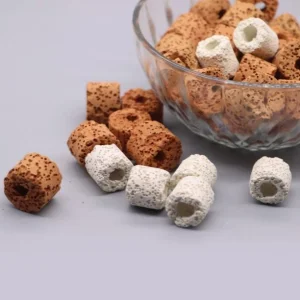
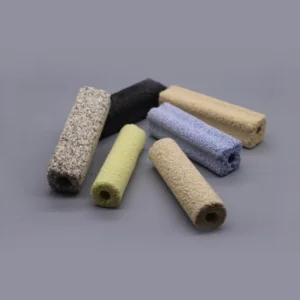
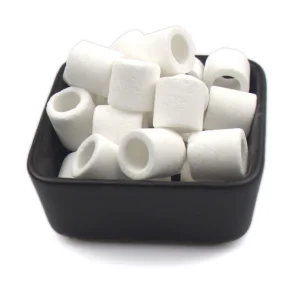
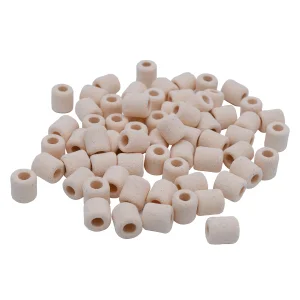
In-depth responses covering installation, biochemical kinetics, shipping lead times, and water quality optimization.
Interior Namibian locations experience rapid day-to-night temperature drops. In standard media, this shifts bacterial metabolism and leads to ammonia spikes. Zhongtai Far-Infrared and high-thermal-mass ceramic media absorb thermal energy during peak hours and emit 4–14 μm micro-vibrational infrared wavelengths that stimulate cellular enzyme activity within the biofilm. This keeps *Nitrosomonas* and *Nitrobacter* populations active during cold night hours, preventing chemical drops.
Yes. Our bio-ceramics are sintered at temperatures between 1,180°C and 1,320°C from pure cordierite, alumina, and borosilicate mineral bases. They contain zero free calcium, carbonate binders, or corrosive oxides. They maintain absolute inertness in both hypersaline Atlantic mariculture water and fresh inland water, without altering general hardness (GH), carbonate hardness (KH), or introducing trace mineral contaminants.
Production cycles typically require 7 to 14 days depending on order volume. Containerized freight is routed via Ningbo, Shanghai, or Shenzhen directly to the Port of Walvis Bay via major oceanic shipping lines (such as Maersk, MSC, or CMA CGM), with average sea-transit times running between 20 and 26 days. We provide comprehensive export documentation, including Bill of Lading, Commercial Invoices, Packing Lists, Certificates of Analysis (COA), and fumigation certificates for prompt Namibian customs clearance.
In high-density finfish grow-out tanks where total suspended solids (TSS) and organic feeding rates are high, static beds can clog without aggressive backwashing. Fluidized MBBR media, kept in continuous motion by bottom aeration, self-clean through friction, shedding old biofilm and maintaining peak biological kinetics. Conversely, static bio-ceramic rings and bacterial houses excel in polished downstream trickling filters, secondary bio-chambers, and decorative aquariums where high water clarity and low maintenance are essential.
Yes, we offer comprehensive OEM and ODM support. We provide custom carton graphics, barcoding, high-strength retail mesh bags (500g, 1kg, 5kg), and industrial bulk jumbo bags (500kg, 1,000kg) labeled to your brand's specifications. Local African distributors can launch proprietary retail lines while benefiting directly from Pingxiang factory-floor manufacturing economics.
Whether you are designing a high-capacity coastal mariculture hatchery in Walvis Bay, modernizing municipal wastewater bio-scrubbers in Windhoek, or supplying wholesale retail aquaria across southern Africa, partner directly with Pingxiang Zhongtai for factory-engineered excellence.
