Targeted solutions engineered for fluid bed bioreactors, multi-tier trickling sumps, and intensive marine hatcheries supplying the Maharashtra aquatic market.
From high-density ornamental aquaculture in Crawford Market to recirculating aquaculture systems (RAS) across Palghar and Raigad, water quality dynamics dictate strict biological stabilization.
Mumbai's tropical maritime climate experiences prolonged elevated ambient temperatures (28°C to 36°C). Warmer coastal water severely limits dissolved oxygen (DO) saturation while accelerating the dissociation of total ammonia nitrogen into toxic un-ionized ammonia (NH₃). Standard generic bio-media fail under this biological loading; advanced media with massive surface-area-to-volume ratios are vital to host concentrated Nitrosomonas colonies capable of instant ammonia conversion.
As the commercial gateway of India, Mumbai operates massive distribution networks bridging domestic breeding operations in Kerala, West Bengal, and Maharashtra with international export routes. High turnover facilities require drop-in, inert media that eliminate shipping dust, withstand recurring backwashing, and maintain physical integrity without shedding particulate matter into high-flow pump lines.
Direct accessibility to Jawaharlal Nehru Port Trust (JNPT / Nhava Sheva) enables commercial hatcheries, public municipal aquariums (e.g., Taraporewala rebuild initiatives), and retail mega-chains across Thane and Navi Mumbai to source custom containerloads directly from specialized industrial ceramic clusters, significantly bypassing intermediary markups.
Why Tier-1 filtration brands in North America, Europe, and India shift procurement from generic distributors to specialized Chinese ceramic clusters.
| Performance Metrics | Zhongtai Pingxiang Industrial Facility | Generic Commodity Ceramic Kilns | Standard Synthetic Pellets (Plastic) |
|---|---|---|---|
| Raw Material Sourcing | Purified kaolin, cordierite, and high-purity quartz formulations | Unprocessed local industrial mud / low-grade clays | Virgin or re-granulated PE/PP compounds |
| Sintering Temperature | Controlled multi-zone gradient: 1,180°C – 1,300°C | Flash fired: 800°C – 950°C (yields brittle structures) | Thermal extrusion / Injection molding |
| Micropore Interconnectivity | Continuous open network (10–100 μm optimal bacterial niche) | Closed outer vitrified walls; inaccessible inner core | Exterior surface only (micro-ribs subject to shear) |
| Chemical Neutrality | Zero heavy metal leaching; zero pH/TDS spiking | High residual ash leaching; erratic pH swings | Leaching risks if non-certified recycled plastic |
| Crush & Abrasion Resistance | Superior structural density (>120 kg/cm² load resilience) | High abrasion dust formation; degrades during transit | Extremely high elastic resilience (zero dust) |
Comprehensive biological and chemical column solutions, ready for containerized shipping to India's commercial aquaculture farms, public facilities, and industrial chemical facilities.
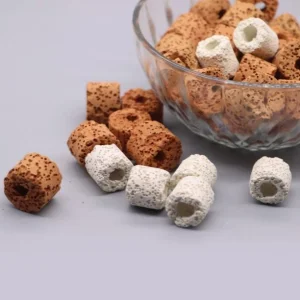
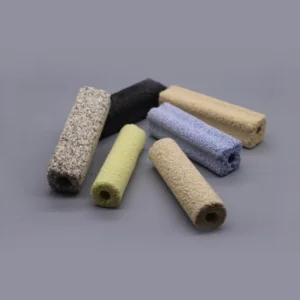
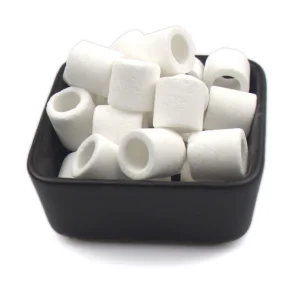
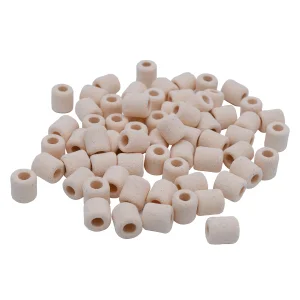
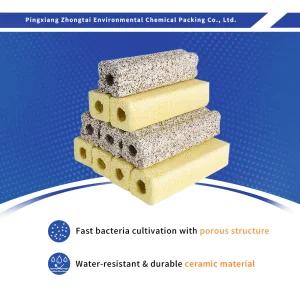
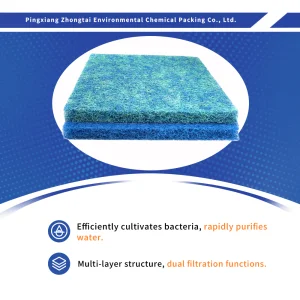
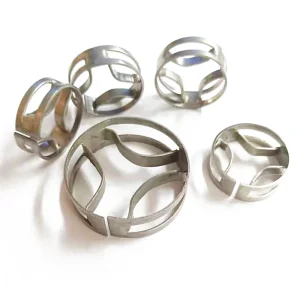
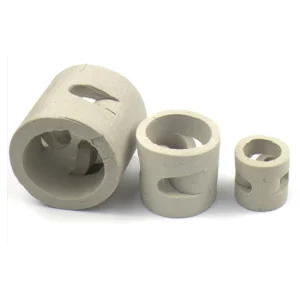
A rigorous biological filtration unit requires a multi-layer strategy combining aerobic rapid nitrifiers, mechanical separators, and anaerobic denitrifying depths.
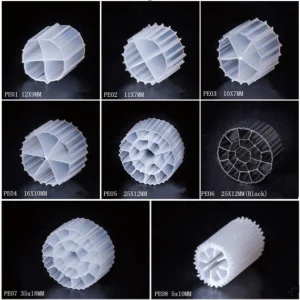
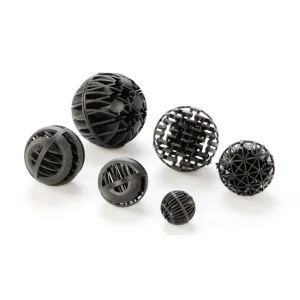
Prior to contacting high-porosity sintered glass or ceramic media, high solids loads must be captured. Utilizing high-density multi-layer biological pads or coarse plastic bio-balls breaks downward hydraulic shearing forces, trapping flocculated detritus and protecting fine internal ceramic micro-pores from bio-fouling and anaerobic choking.
For high-load trickling applications such as Bakki Showers or overhead trickle filters common in Koi ponds across Maharashtra, Far-Infrared Bacteria House blocks provide exceptional shearing resistance. Water crashing through open hollow-core structures introduces massive dissolved oxygen while circulating freely across continuous pore walls.
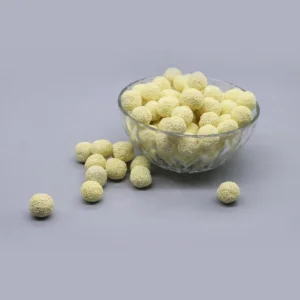
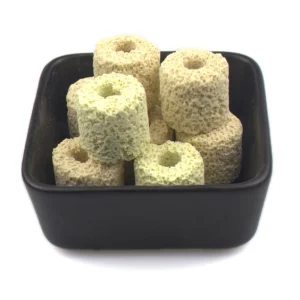
Controlling nitrate (NO₃⁻) accumulation in high-stocking marine systems without massive water exchange requires deep, quiescent anoxic micro-zones. Sintered quartz glass rings and porous nano-spheres feature interior paths exceeding 15mm from outer boundary water films, where oxygen depletion encourages facultative anaerobic bacteria to convert nitrate into inert nitrogen gas (N₂).
Direct technical answers regarding shipping times, customs HS classification, chemical neutrality, and load optimization.
