Inside a distillation or absorption column, gas and liquid must contact each other efficiently. The packing inside the tower helps create that contact. Imtp Packing is a metal random packing used in these processes. Its open, saddle-like elements provide surfaces for liquid to spread while allowing vapor to pass through.
Operators and process engineers may consider IMTP packing when they need substantial mass transfer with manageable pressure drop. Compared with simpler packing shapes, its geometry can support liquid distribution and reduce resistance to rising vapor. Small details matter. The packing size, material, column diameter, liquid load, and vapor rate all affect performance. A selection that works well in one tower may not suit another.
This guide explains what IMTP packing is, how it works, and where it is commonly used. It also looks at practical considerations such as installation, fouling risk, corrosion compatibility, and operating limits. These factors should be checked against process data and the equipment supplier’s specifications, rather than assumed from the packing name alone. It is not magic. Poor liquid distribution or unsuitable operating conditions can limit even a well-designed packing bed. Some choices require trade-offs, and real plant results may differ from design estimates. Understanding those limits helps readers ask better questions before specifying or replacing packing.
What IMTP Packing Is and How It Is Classified
IMTP is a metal random packing: installers pour the individual pieces into a tower rather than arrange them in layers. Its open, saddle-like shape gives vapor and liquid many contact surfaces while leaving channels for flow. That classification separates it from structured packing, which uses ordered sheets. It is also distinct from ceramic or plastic random packing because IMTP refers to a metal form. Simple, but useful.
Classification can also describe material, nominal size, and geometry. Perry’s Chemical Engineers’ Handbook, 9th edition, categorizes random packing by form and size; commercial metal-packing schedules commonly list sizes around 25, 38, 50, and 75 mm. The chosen size affects capacity, pressure drop, and separation performance. Packed-column design guidance commonly uses a column-to-packing diameter ratio of roughly 8–10 to limit wall effects. That is a guide, not a guarantee. In a plant, fouling, liquid distribution, and vapor load can shift the result, so a size that looks efficient on paper may need reconsideration under real operating conditions.
What Is IMTP Packing and What Is It Used For?
Common IMTP random-packing sizes, shown by nominal size in millimeters
IMTP is a type of metal random packing used inside mass-transfer columns, including absorption and distillation towers. The chart shows commonly available nominal packing sizes; actual availability varies by supplier and application. Size selection depends on factors such as column diameter, capacity, pressure drop, and separation requirements.
How Its Structure Supports Mass Transfer
IMTP packing is a metal random packing used inside columns for gas–liquid contact. Each open, saddle-like piece gives liquid a surface to wet while leaving passages for vapor to rise. Unlike a flat sheet, its irregular shape creates contact from several directions. Small details matter. Bed depth, liquid load, and installation quality all affect how evenly the packing performs.
Mass transfer happens at the interface between the gas and liquid. As liquid trickles over the metal surfaces, vapor moves through the open spaces and meets the wetted film. Repeated contact gives components more opportunity to move between phases. The open geometry can support good capacity with relatively low resistance to vapor flow, though actual pressure drop depends on operating conditions. It is not magic: poor liquid distribution can leave dry zones, reducing effective contact area. Compatibility also depends on the metal selected and the process environment.
Tips: Check liquid distribution and packing support before operation. Keep the bed level, and inspect for fouling after service. A useful design still needs real operating data; estimates can miss local channeling.
What Is IMTP Packing and What Is It Used For? — How Its Structure Supports Mass Transfer
| Dimension |
Description |
How It Supports Mass Transfer |
| Packing type |
Metal random packing made of individual, three-dimensional elements placed in a tower rather than arranged in layers. |
Creates a large wetted contact area for liquid and vapor while allowing both phases to move through the packing bed. |
| Element structure |
Open, saddle-like elements with contoured surfaces and openings; the exact geometry depends on the packing design. |
Open passages promote liquid spreading and vapor–liquid contact, while reducing the chance of obstructing flow. |
| Nominal size |
Common nominal sizes include approximately 25, 40, 50, 60, and 70 mm; available sizes vary by design and supplier. |
Smaller elements generally provide more contact area per unit volume but can create greater resistance to flow. Larger elements generally provide wider flow passages. |
| Pressure drop |
Its open geometry is intended to provide relatively low resistance to gas flow compared with less open packing designs, subject to operating conditions and tower design. |
Lower resistance can be useful where pressure drop must be controlled, including some vacuum column services. |
| Liquid distribution |
Individual elements provide multiple surfaces and flow paths for liquid to spread through the packed bed. |
Effective wetting helps expose more surface area for transfer between the liquid and gas phases. Good initial liquid distribution remains essential. |
| Typical operations |
Used in packed towers for distillation, absorption, stripping, and gas scrubbing. |
Supports transfer of components between phases, such as separating volatile components or removing a soluble gas from a gas stream. |
| Materials |
Common construction materials include carbon steel and stainless steel; other alloys may be selected for compatible process conditions. |
Material selection helps the packing withstand the process fluid, temperature, and corrosion environment. |
| Installation format |
Loose elements are loaded into a packed section, usually over a support grid and beneath a liquid distributor. |
Bed depth, support design, and liquid distribution influence how evenly the phases contact one another throughout the tower. |
| Design considerations |
Selection depends on tower diameter, required separation, vapor and liquid rates, fluid properties, fouling tendency, and allowable pressure drop. |
These factors determine whether the packing can achieve the required mass-transfer performance without flooding or poor wetting. |
How IMTP Packing Works Inside a Tower
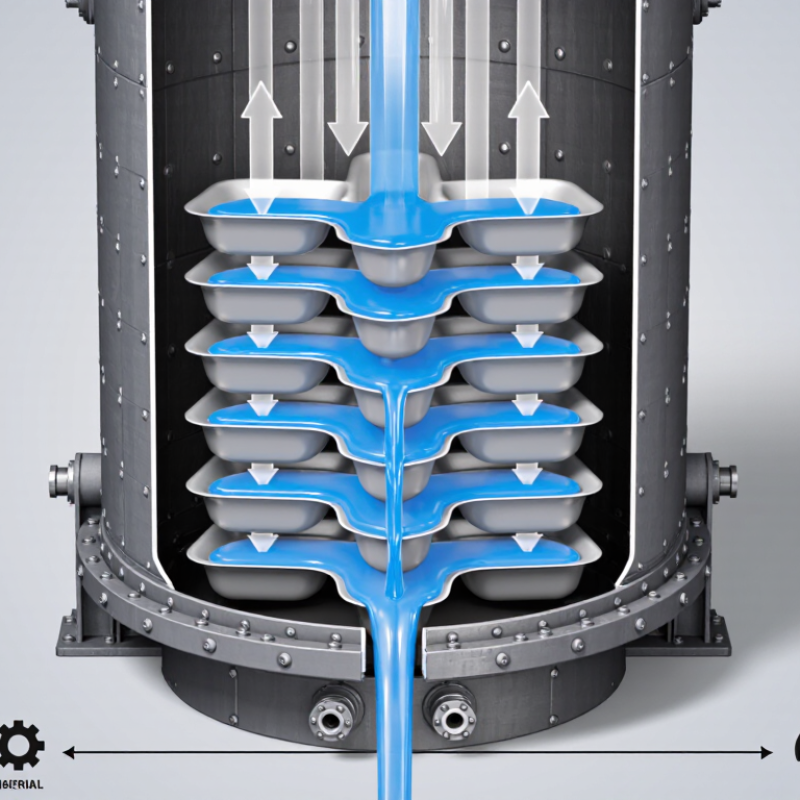
Inside a packed tower, IMTP packing creates a large wetted surface where rising gas and descending liquid can contact each other. Its open, irregular metal shapes leave channels for both phases to move through. Liquid enters from a distributor above the packing and spreads across the pieces, forming thin films and small droplets. Gas rises through the open spaces. The contact supports heat or mass transfer, such as separating components from a process stream.
Packing rests on a support grid, while retainers help keep it in place. Good liquid distribution matters: if flow gathers in one area, other parts of the bed may do less work. Towers with deep beds may need liquid redistributors to reduce this unevenness. In practice, a neat design drawing can meet a less tidy reality, especially if packing is damaged or installed unevenly. Performance also depends on tower diameter, fluid properties, and operating rate, so packing choice should follow process-specific design checks.
Tips: Check that the distributor is level and its outlets are clear. During inspection, look for crushed pieces, deposits, and signs of channeling. Small details matter. Keep records of operating conditions; they can help distinguish a packing issue from a change in feed or flow.
Where IMTP Packing Is Commonly Used
Where IMTP Packing Is Commonly Used
IMTP packing is commonly installed in towers that bring gas and liquid into close contact. Its open metal shape provides surface area while allowing vapor to move through the bed. Plants use it in absorption, stripping, and distillation duties. It can suit processes where operators need substantial capacity and controlled pressure drop. Conditions matter.
In chemical processing, packed columns may remove selected components from gas streams or recover useful solvents. Refineries and gas-processing facilities also use packing in separation and treatment towers. Environmental systems can use it in scrubbers, where liquid contacts exhaust gas to capture targeted compounds. Suitability depends on temperature, fluid chemistry, solids, and the tower’s operating range. Real installations are rarely as neat as a design sheet suggests; uneven liquid distribution can reduce performance, even with well-chosen packing.
Tips: Check material compatibility, liquid distribution, and expected fouling before selection. Confirm the tower can support the packing bed, too. Small details matter. Ask an experienced process engineer to review loading and pressure-drop calculations against actual operating data.
Factors to Consider When Selecting IMTP Packing
Selecting IMTP packing starts with the process conditions, not the packing size alone.
Check gas and liquid flow rates, operating pressure, temperature, and the required separation. These values help estimate capacity, efficiency, and pressure drop. Fit matters. The tower’s inside diameter and support arrangement also matter, since packing needs room for installation and stable operation. A larger size may reduce pressure drop, but it can also lower mass-transfer efficiency. The trade-off should be checked against process data rather than assumed.
Material compatibility is essential.
Compare the packing metal with the process fluids, including likely corrosion and temperature effects. Consider whether the stream contains solids or may form deposits; narrow passages can become a maintenance concern. Liquid distribution deserves equal attention. Even suitable packing can perform poorly if liquid enters unevenly or the tower is poorly loaded. Check that the distributor, bed depth, and packing size work together. Where operating data are uncertain, pilot testing or a careful hydraulic review can reduce risk. A spreadsheet can rank options, but it cannot correct poor distribution. It is easy to focus on one metric and miss the installation details that shape real performance.
Conclusion
Imtp Packing is a type of metal random packing used inside process towers to improve contact between rising vapor and descending liquid. Its open, ring-like elements provide a large wetted surface while leaving clear paths for fluids to move. This balance supports efficient mass transfer and helps limit flow resistance compared with denser packing arrangements.
Inside a tower, Imtp Packing is distributed in packed beds, where vapor and liquid repeatedly meet as they travel in opposite directions. It is commonly used in absorption, stripping, and distillation operations across chemical and other process industries. When selecting it, engineers consider the required separation performance, tower dimensions, operating flow rates, pressure drop, liquid distribution, material compatibility, and resistance to fouling or corrosion. The right choice depends on the process conditions and the balance needed between capacity, efficiency, and reliable operation.