China Top Raschig Rings Packing Suppliers?

Time:2026-11-28 Author:Mason
0%

Choosing China’s top Raschig Rings Packing suppliers requires more than comparing prices. The right supplier must control ring dimensions, material quality, surface finish, and batch consistency. These details affect wetting, pressure drop, and service life inside an operating column. The U.S. Environmental Protection Agency’s Air Pollution Control Cost Manual discusses packed-bed scrubbers as established gas-treatment equipment, while emphasizing design and operating conditions. That matters: a packing sample alone cannot prove performance in a real tower.

The International Energy Agency’s The Future of Petrochemicals report identifies petrochemicals as a major source of future oil-demand growth. That industrial context helps explain ongoing demand for reliable separation and process equipment, though it does not forecast Raschig ring sales specifically. Buyers should ask suppliers for material certificates, dimensional tolerances, corrosion data, and inspection records. Request clear details for ceramic, metal, or plastic rings, including the intended temperature and chemical environment. Then compare production capacity, export experience, and documented quality controls—not just a polished catalogue. Small differences matter. A few chipped ceramic edges or inconsistent ring sizes can complicate loading and performance. One caution: supplier claims are not independent test results. Ask what was measured, how it was tested, and whether the data applies to your operating conditions. This guide examines Chinese suppliers through those practical checks, while recognizing that no single ranking fits every application.
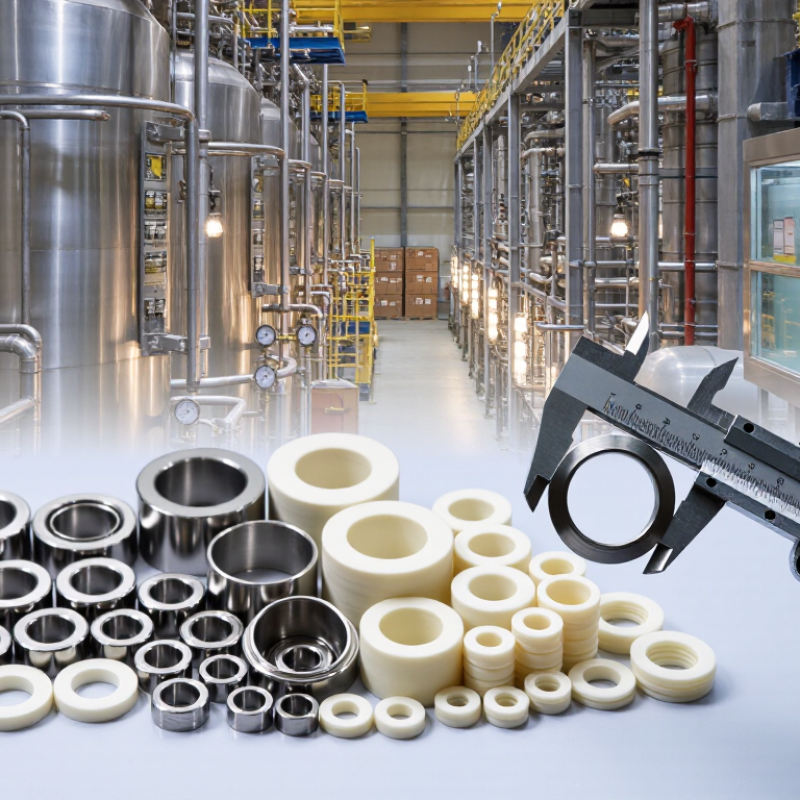
China Top Raschig Rings Packing Suppliers?

Raschig Rings: Definition, Structure, and Industrial Role

Raschig Rings: Definition, Structure, and Industrial Role

A Raschig ring is a short, hollow cylinder used as random packing inside process columns. Its height is usually close to its diameter, creating an open passage for rising gas and descending liquid. Rings may be made from ceramic, metal, or plastic, depending on temperature, corrosion, and process needs. Their plain shape looks almost too simple. Yet it creates many wetted surfaces where gas and liquid can contact each other. In absorption, stripping, and scrubbing, that contact supports mass transfer. The rings also leave open space for flow, though poor sizing or uneven loading can cause channeling and reduce performance.

The U.S. Environmental Protection Agency’s 2003 Packed-Bed/Packed-Tower Scrubber fact sheet reports typical gas-pollutant collection efficiencies of 95–99% for packed-bed scrubbers. That figure describes the overall equipment, not Raschig Rings alone. Performance depends on liquid distribution, packing depth, operating conditions, and maintenance. A ring cannot compensate for a poorly designed column. This distinction matters when comparing supplier specifications with real operating results.

Tips: Check material compatibility, ring dimensions, and void space against the process conditions. Ask how packing is loaded and how liquid distribution is verified. A useful reflection: the cheapest ring may not be the lowest-cost choice if pressure drop or replacement frequency is high. Measure the column, too.

Materials and Manufacturing Methods Used by Chinese Suppliers

Chinese suppliers manufacture Raschig rings from ceramic, carbon, metal, and plastic, with material choice guided by temperature, corrosion, and process conditions. Ceramic rings are commonly made from prepared clay or mineral mixtures, extruded into tubes, cut to length, and fired in a kiln. Firing consistency matters. Uneven heat can cause warping or small cracks that are easy to miss before packing.

Metal rings are typically formed from thin sheet, then cut, rolled, and joined. Stainless steel and other corrosion-resistant alloys may suit hot or mechanically demanding service, but the grade should match the actual process fluid. Plastic rings are often injection-molded or extruded, allowing lightweight parts with repeatable dimensions. Carbon rings require careful forming and handling because edges can chip. Small defects count.

Manufacturing details affect bed performance. Buyers can ask for ring dimensions, wall thickness, material certificates, and inspection records, rather than relying on a product description alone. A practical check is to compare samples for shape consistency and look for sharp burrs, cracks, or blocked openings. Test data is useful, though it may not fully represent a working tower. Supplier claims deserve verification. Chinese manufacturers vary in equipment, process control, and documentation, so specifications should be agreed in writing before production.

Key Applications Across Chemical and Process Industries

Raschig rings provide repeated gas–liquid contact inside packed columns, where fluids pass across their open cylindrical surfaces. In chemical plants, operators use them in absorption, stripping, solvent recovery, and distillation. A scrubber may capture soluble components from a rising gas stream; a stripper can release dissolved compounds from liquid. Open spaces support vapor flow, while wetted surfaces enable mass transfer. That matters. The International Energy Agency’s 2018 report, The Future of Petrochemicals, says petrochemicals account for 12% of global oil demand. It also reports an 8% share of global gas demand. These figures underline the importance of efficient contacting equipment across energy-intensive process industries.

In refining, gas processing, and wastewater treatment, packed towers face changing flow rates and liquid chemistry. Engineers select ring material and size based on temperature, corrosion, fouling, and pressure-drop limits. Small details matter: poor liquid distribution can leave dry zones and waste packing area. Maintenance teams may notice uneven wetting or unexpected pressure changes. A ring bed is not a cure-all. Feed solids, operating range, and column geometry can undermine performance, even when the packing itself is sound. These limitations deserve careful attention during design reviews.

China Top Raschig Rings Packing Suppliers? - Key Applications Across Chemical and Process Industries

Industry Typical Process Duty Example Service Common Raschig Ring Materials Key Selection Considerations
Chemical manufacturing Gas absorption and liquid stripping Contacting a gas stream with a liquid solvent in a packed column Ceramic, metal, or plastic, selected for the process chemistry Check chemical compatibility, operating temperature, pressure drop, and the risk of fouling.
Acid and corrosive-service plants Absorption, scrubbing, or gas cooling Gas-liquid contact in equipment handling corrosive process streams Chemical-resistant ceramic or a compatible polymer; material choice depends on the specific service Confirm resistance to the actual chemicals and concentrations, as well as temperature and thermal-cycling limits.
Petrochemical and refining Distillation, absorption, or stripping Vapor-liquid contacting in process towers and column sections Metal or ceramic, depending on temperature, corrosion, and mechanical requirements Evaluate ring dimensions, column diameter, liquid distribution, mechanical strength, and allowable pressure drop.
Water and wastewater treatment Air stripping or gas scrubbing Transfer of volatile compounds between water and an air or gas stream Plastic or ceramic, subject to water chemistry and operating conditions Consider fouling potential, cleaning access, hydraulic loading, and compatibility with treatment chemicals.
Environmental control Wet scrubbing of process exhaust Contact between exhaust gas and a circulating scrubbing liquid Plastic, ceramic, or metal, selected to suit the gas composition and scrubber conditions Assess corrosive contaminants, dust loading, liquid distribution, temperature, and pressure-drop limits.
Laboratory and pilot plants Small-scale distillation and absorption studies Testing mass-transfer behavior in packed columns Glass, ceramic, metal, or plastic, depending on the experiment Match packing size to column diameter and document material, dimensions, and packing procedure for repeatable tests.
General process utilities Gas humidification or cooling Direct contact between a gas stream and water or another compatible liquid Plastic, ceramic, or metal, depending on temperature and fluid compatibility Review operating temperature, liquid loading, drainage, support-grid design, and ease of maintenance.

Note: Raschig ring dimensions, materials, and performance vary by design and service. Confirm chemical compatibility, mechanical properties, and hydraulic design with the project requirements before selection.

How to Evaluate Leading Raschig Ring Suppliers in China

Evaluating leading Raschig ring suppliers in China takes more than comparing prices. Match the ring material and diameter to your tower conditions; ceramic and metal rings behave differently under heat and corrosion. Ask for dimensional tolerances, bulk density, water absorption where relevant, and recent inspection records. Small details matter. Request a sample and check its wall thickness, edge finish, and consistency before approving a large shipment.

A dependable supplier should explain how production batches are checked and provide clear technical data. Ask how the rings are packed, since chipped edges can appear after rough handling or long-distance transport. Check whether the supplier can maintain consistent dimensions across repeat orders. Ask for evidence. A low quotation may leave out testing, protective packaging, or freight details, so compare like-for-like offers.

Technical support also matters when operating conditions are unusual. Share the tower diameter, expected liquid load, and service temperature, then note whether the supplier’s recommendations address those conditions. I would still treat a datasheet as a starting point, not a guarantee; real performance depends on installation and process operation. No supplier can remove that uncertainty, but a careful sample review and written specifications make the choice more reliable.

Quality Standards, Customization, and Purchasing Factors

Quality begins with a measurable specification, not the word “industrial.” Perry’s Chemical Engineers’ Handbook, 9th edition, lists representative ceramic Raschig-ring values near 190 m²/m³ surface area and 0.70 void fraction for 25 mm rings. For 50 mm rings, indicative values are about 90 m²/m³ and 0.75. Actual figures vary with wall thickness and manufacturing tolerances. Small details matter. Ask suppliers to state dimensions, material composition, bulk density, and test methods on the quotation. For ceramic rings, request crush-strength and water-absorption results; for metal rings, check alloy grade and wall-thickness consistency. A certificate without a batch link is less useful.

Customization should fit the column, not merely the purchase order. Match ring size to column diameter, liquid load, fouling risk, and pressure-drop limits; changing size can alter wetting and separation performance. Ask for a sample or inspection report covering dimensional variation and breakage. Specify packaging too: crushed edges in a damp carton can complicate receiving checks. Compare landed cost, lead time, replacement availability, and packing density, not unit price alone. I would still verify performance in the actual process; handbook figures are design references, not guarantees. That distinction is easy to miss.

China Top Raschig Rings Packing Suppliers? — Quality Standards, Customization, and Purchasing Factors

A practical buyer-evaluation framework for comparing Raschig ring suppliers. Scores are illustrative evaluation weights on a 1–5 scale, not survey results or supplier-specific ratings.

Prioritize documented material and dimensional quality, then assess application fit, customization capability, delivery reliability, and total cost. Confirm specifications and test requirements against your process conditions.

FAQS

Which materials are used for Raschig rings?

Common materials include ceramic, metal, carbon, and plastic. Choose based on temperature, corrosion, and process conditions.

What should I check in a sample?

Compare dimensions and wall thickness. Look for cracks, burrs, chipped edges, or blocked openings. Small flaws matter.

Which documents should I request from a supplier?

Ask for material certificates, inspection records, and test methods. A certificate linked to a specific production batch is more useful.

How can I compare supplier quotations fairly?

Compare testing, protective packaging, freight, lead time, and replacement availability. Unit price alone can hide costs.

What information helps a supplier recommend a ring size?

Share the tower diameter, liquid load, service temperature, fouling risk, and pressure-drop limits. Details change the recommendation.

Are handbook values guaranteed in actual operation?

No. They are design references. Wall thickness, manufacturing tolerances, installation, and process conditions can change performance.

What packaging details should I confirm?

Ask how rings are protected during transport. Check cartons for dampness and crushed edges during receiving.

Is a datasheet enough to approve a supplier?

Not by itself. Request a sample and written specifications. I may be overcautious, but claims still need checking.

Conclusion

This article explains what Raschig Rings Packing is, how its simple ring-shaped structure supports gas-liquid contact, and why it remains useful in industrial separation and processing systems. It outlines common materials, such as ceramics, metals, and plastics, along with general manufacturing approaches used by suppliers in China. The discussion also covers applications across chemical production, environmental treatment, and other process industries, where packing can support absorption, scrubbing, and distillation operations.

For buyers comparing Chinese suppliers, the article highlights practical evaluation factors, including product consistency, dimensional accuracy, material suitability, and manufacturing capability. It also considers quality standards, inspection practices, customization options, packaging, lead times, and total purchasing requirements. These points offer a clear framework for selecting packing that matches process conditions and project needs.


Mason

Mason

Mason is a seasoned marketing professional with a deep expertise in the company's offerings and a passion for driving brand awareness. With a strong background in digital marketing strategies, he has an innate ability to connect with diverse audiences and effectively communicate product benefits.......