When global buyers search for a China top Pall Ring Packing supplier, they need more than a low quoted price. They need stable geometry, consistent materials, and dependable delivery across repeated orders. Pall Ring Packing supports efficient gas-liquid contact in packed towers, scrubbers, and absorption systems. Its open structure can reduce pressure drop while maintaining useful surface exposure. But performance depends on design conditions. Material choice matters. PP, PVC, CPVC, PVDF, ceramic, and metal each suit different temperatures, chemicals, and operating environments. A reliable supplier should explain these differences clearly, rather than recommend one material for every project. That is where practical experience becomes visible.
Experienced Chinese manufacturers typically support drawing confirmation, sample checks, production inspection, and export packaging. Buyers should review ring dimensions, thickness, bulk density, void fraction, and applicable tolerances before approval. Photos alone are not enough. Quality records, batch traceability, and loading details provide stronger evidence of process control. A serious supplier also discusses tower diameter, liquid distribution, fouling risk, and replacement schedules. These conversations can prevent expensive mismatches after installation. Still, no supplier is perfect. Specifications may need adjustment after pilot testing or changing feed conditions. An honest partnership leaves room for questions, corrections, and documented improvement. This guide introduces how to evaluate China-based Pall Ring Packing suppliers using practical, evidence-based criteria. The goal is simple: reliable packing for real equipment, not impressive claims.
Pall ring packing is a plastic or metal tower filler shaped like an open cylinder. Its windows and inward-facing tabs spread liquid across the packing surface. Gas rises through the voids, while liquid flows downward. This countercurrent movement creates repeated contact between both phases.
The mechanism is simple, but design is not. A wet Pall ring absorbs soluble gases or transfers heat and mass between fluids. Its open structure usually offers lower pressure drop than older ring designs. The U.S. EPA Air Pollution Control Cost Manual states that packed-bed scrubbers can achieve about 95–99% removal for suitable gaseous pollutants. Performance depends on chemistry, liquid distribution, packing height, and gas velocity.
The EU Best Available Techniques Reference Document for Common Waste Gas Management identifies packed scrubbers as established equipment for gas treatment. It also stresses proper irrigation and monitoring. Field experience supports this warning. Dry spots can reduce efficiency quickly. Excessive gas speed may cause flooding, where liquid blocks gas flow. Pall rings are not automatically the best choice. Fouling, corrosion, temperature, and installation quality still matter. A 2024 design review should question optimistic efficiency claims without operating data.
China has become a major source of Pall ring packing for global buyers. Its advantage begins with a mature manufacturing network. Plastic molding, ceramic forming, metal fabrication, and packaging services often operate within one supply chain. This shortens production cycles. It also helps control costs.
Experienced suppliers can adjust ring diameter, wall thickness, material, and surface finish for different towers. Common materials include polypropylene, ceramic, stainless steel, and other corrosion-resistant alloys. In practical projects, these details affect pressure drop, liquid distribution, and chemical resistance. A small dimensional error may reduce packing performance. That risk deserves attention.
Quality control is another reason China remains competitive. Reliable factories measure dimensions, inspect surface defects, and review batch consistency before shipment. Some also test crushing strength, void fraction, and chemical compatibility. Export teams usually understand wooden cases, container loading, documentation, and destination requirements. That makes international purchasing more predictable. Not every supplier performs equally well. Buyers still need drawings, samples, inspection records, and clear acceptance standards.
I have seen low prices create expensive rework. A cheaper batch is not always better. Direct communication with engineers can prevent this problem. Technical questions should cover operating temperature, liquid composition, tower size, and replacement conditions. With those details, Chinese manufacturers can offer more suitable Pall ring packing instead of a generic product.
Evaluating Pall ring packing requires more than checking photos or a low quotation. Inspect the material, dimensions, wall thickness, and manufacturing consistency. Polypropylene suits many moderate-temperature applications, while PVDF handles harsher chemical conditions. Ceramic provides strong corrosion resistance but may be more fragile during transport. Metal rings support higher temperatures and mechanical loads. Confirm the operating temperature and chemical exposure before choosing any material.
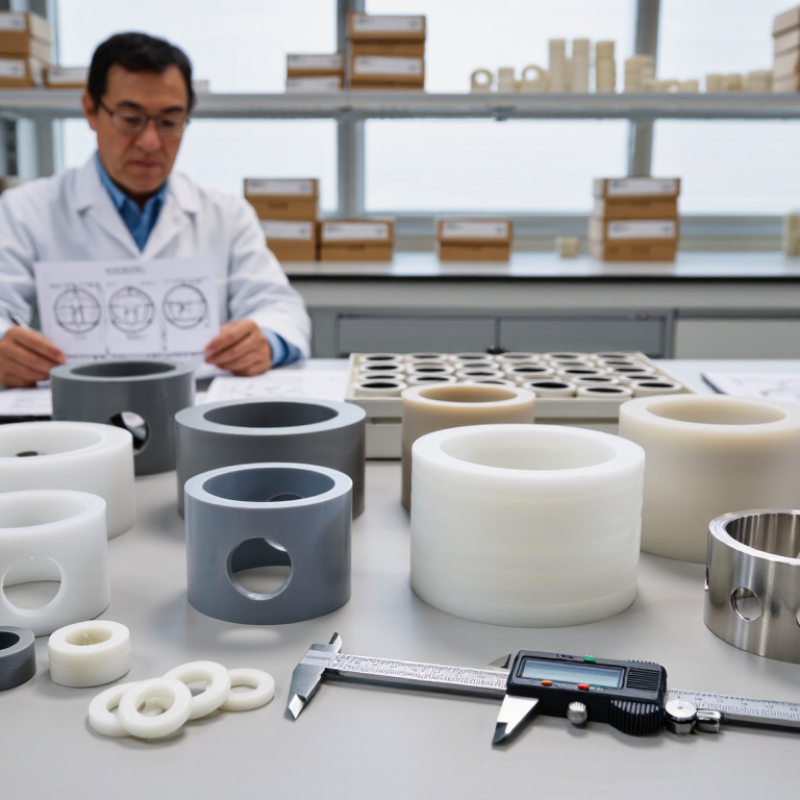
A practical quality check should include a sample from the actual production batch. Measure ring diameter, height, and wall thickness with suitable tools. Look for blocked openings, sharp flash, cracks, warping, or uneven surfaces. These defects can increase pressure drop and reduce gas-liquid contact. Request material certificates, dimensional records, and performance data when available. However, paperwork alone cannot prove packing quality.
Tips: Compare several samples, not just one. Check bulk density and packing factor against the specification. Ask how the supplier controls batch consistency. A simple drop test may reveal brittle ceramic pieces, but it is not a complete laboratory evaluation. Surface gloss can mislead. A dull plastic ring may still perform well. Conversely, attractive packing can hide weak walls or inaccurate dimensions. Small deviations are easy to overlook, yet they may affect tower efficiency at scale. Recheck assumptions with process data before approving the order.
Pall ring packing is used in packed towers where gases and liquids must contact efficiently. Across global markets, chemical plants use it for absorption, stripping, and scrubbing duties. Operators often select it for its open structure and relatively low pressure drop. That matters in tall towers. At the plant floor, the difference appears in stable airflow and fewer liquid hold-ups. Small design details still matter.
Petrochemical facilities use Pall rings in gas treatment, solvent recovery, and fractionation support systems. Fertilizer plants apply them in ammonia absorption and acid gas removal. Environmental facilities use them for odor control and industrial exhaust scrubbing. Wastewater plants may install them in biological towers or air stripping units, depending on the process. Manufacturing experience shows that ring size, wall thickness, and material must match tower conditions. Polypropylene suits many moderate-temperature services. Ceramic or metal options can handle harsher temperatures and chemical exposure. But chemical resistance is never universal.
Pharmaceutical, food-processing, and specialty chemical sites also use this packing in controlled gas-treatment systems. Their engineers often value cleanable surfaces and predictable liquid distribution. A reliable supplier verifies dimensions, void fraction, packing factor, and batch consistency before shipment. Samples should be inspected and compared with approved specifications. Yet field performance can disappoint when distributors are damaged or liquid spreaders are poorly designed. Pall rings are not a shortcut for weak process engineering. In global projects, honest selection sometimes means recommending a different packing type.
| Industry | Typical Applications | Common Process Media | Why Pall Ring Packing Is Used | Important Selection Considerations |
|---|---|---|---|---|
| Chemical Processing | Absorption, stripping, gas washing, and solvent recovery columns | Acid gases, alkaline solutions, solvents, process water, and reactive chemicals | The open structure supports gas–liquid contact while helping reduce pressure drop in packed towers. | Packing material must resist the specific chemicals, temperature, concentration, and mechanical loading conditions. |
| Petrochemical and Refining | Hydrocarbon fractionation support systems, sour-gas treatment, and light-end gas scrubbing | Hydrocarbon vapors, refinery gases, amine solutions, caustic solutions, and cooling water | High voidage can provide efficient mass transfer with relatively low resistance to vapor flow. | Design should account for hydrocarbon compatibility, fouling risk, temperature, liquid distribution, and fire-safety requirements. |
| Natural Gas Processing | Acid-gas removal, dehydration-related gas treatment, and contaminant scrubbing | Natural gas, hydrogen sulfide, carbon dioxide, amine solutions, and glycol-based liquids | Pall ring geometry promotes repeated contact between rising gas and descending liquid in absorption towers. | The packing and support system should be selected for gas velocity, solvent compatibility, pressure drop, and corrosion conditions. |
| Water and Wastewater Treatment | Biological trickling filters, aeration systems, stripping towers, and chemical scrubbing | Wastewater, air, process water, ammonia-bearing streams, and odor-causing gases | The large internal openings allow airflow and liquid drainage while providing surface area for contact or biofilm growth. | The design must address suspended solids, clogging, biofilm accumulation, hydraulic loading, and cleaning requirements. |
| Air Pollution and Odor Control | Wet scrubbers for hydrogen sulfide, ammonia, chlorine compounds, and volatile contaminants | Contaminated air, water, acidic or alkaline scrubbing liquids, and oxidizing solutions | Efficient gas–liquid contact helps transfer soluble pollutants from air into the circulating scrubbing liquid. | Select packing for chemical resistance, contaminant loading, liquid distribution quality, and resistance to plugging. |
| Metallurgy and Metal Surface Treatment | Pickling-fume scrubbing, process-gas absorption, and acid mist control | Acid fumes, alkaline gases, rinse water, and corrosive scrubbing solutions | Open packing passages can support gas treatment at lower pressure drop than many tighter packing configurations. | Material selection is critical because streams may contain strong acids, dissolved metals, heat, and abrasive particles. |
| Pharmaceutical and Biotechnology | Controlled gas absorption, solvent recovery, process-air treatment, and small-scale mass-transfer operations | Purified water, solvents, process gases, dilute acids, and alkaline solutions | Pall rings are available in materials suitable for applications requiring cleanable and chemically compatible internals. | Hygienic design, extractables, surface finish, cleaning validation, temperature, and regulatory requirements may influence the specification. |
| Food and Beverage Processing | Carbon dioxide treatment, gas washing, odor control, and selected solvent or water-treatment duties | Water, food-grade process gases, dilute cleaning solutions, and odor-bearing air | The packing can provide high contact efficiency in compact gas–liquid treatment equipment. | Use materials and construction practices appropriate for food-contact or sanitation requirements where applicable. |
| Pulp and Paper | Bleaching-gas scrubbing, chemical recovery support, odor control, and process-water treatment | Sulfur-containing gases, chlorine compounds, caustic solutions, acidic liquids, and wastewater | The open geometry can help manage gas flow while providing effective contact in corrosive scrubbing services. | Consider fiber carryover, suspended solids, scaling, chemical concentration, and the need for periodic washing. |
| Energy and Industrial Utilities | Flue-gas conditioning, cooling-tower chemical treatment, and boiler-water or process-gas scrubbing | Combustion gases, cooling water, alkaline solutions, acidic condensate, and process air | Low pressure-drop characteristics can be valuable in systems where fan or blower energy is an important operating factor. | Account for gas temperature, particulate loading, condensate chemistry, corrosion, and possible thermal deformation. |
| Mineral Processing | Leach-gas treatment, acid-mist control, solvent extraction support, and process-water scrubbing | Acidic or alkaline liquors, mineral-bearing solutions, process gases, and contaminated air | Pall rings provide a practical option for contacting corrosive gases and liquids in industrial packed towers. | Abrasion, suspended solids, scaling, chemical attack, and heavy-duty support-grid design should be evaluated. |
Applications and selection factors are general industry practices. Final packing specifications should be confirmed through process calculations, chemical-compatibility data, hydraulic loading, and equipment design requirements.
Selecting a reliable Chinese Pall ring supplier requires more than comparing export prices. Cefic’s Facts and Figures 2024 report places China at roughly 40% of global chemical sales. That scale creates strong manufacturing depth, but quality still varies between factories. Ask for resin grade, ring dimensions, wall thickness, void fraction, and operating temperature. A serious supplier should provide batch records and test samples. Small details matter.
I usually request samples from the same production line used for bulk orders. Measure diameter, weight, surface finish, and deformation after heating. Compare these results with the supplier’s technical sheet. Packed towers can exceed 95% pollutant removal under suitable design conditions, according to the U.S. EPA’s Air Pollution Control Cost Manual. However, packing alone cannot guarantee performance. Liquid distribution, gas velocity, fouling, and tower loading remain critical.
Check production capacity, inspection equipment, packaging methods, and response time. Request recent inspection reports, not only certificates. ISO 9001 registration is useful, but it does not replace product testing. A low quote can still be wrong. I once underestimated how much inconsistent dimensions could affect installation and pressure drop. That mistake deserves more attention. Buyers should also confirm material traceability, replacement availability, export documents, and realistic lead times before signing. Photos are helpful, but independent inspection is safer.
China offers mature production networks for plastic molding, ceramic forming, metal fabrication, and export packaging. These connected services can shorten production cycles and reduce costs. Not every supplier performs equally well.
Common options include polypropylene, ceramic, stainless steel, and corrosion-resistant alloys. Polypropylene suits many moderate-temperature applications. Ceramic and metal materials support harsher conditions. Chemical resistance is never universal.
Buyers should review tower diameter, operating temperature, liquid composition, and gas flow. Ring diameter and wall thickness affect pressure drop and liquid distribution. A small dimensional error can reduce performance. Measure twice.
Chemical plants use it for absorption, stripping, and gas scrubbing. Petrochemical facilities apply it in gas treatment and solvent recovery systems. Environmental plants may use it for odor control and exhaust treatment. Other users include fertilizer, pharmaceutical, food-processing, and wastewater facilities.
Suppliers should inspect dimensions, surface defects, and batch consistency. Useful tests may include crushing strength, void fraction, and chemical compatibility. Buyers should request samples and inspection records. Documents alone are not enough.
Provide tower size, operating temperature, liquid composition, gas conditions, and replacement details. Process information helps engineers avoid offering a generic product. Clear drawings and acceptance standards reduce misunderstandings. Vague requests create avoidable risk.
Ring geometry influences pressure drop, liquid hold-up, and gas-liquid contact. Poor liquid spreaders can create dry areas inside the tower. Damaged distributors may reduce efficiency even with good packing. Packing cannot fix weak process design.
Export teams may manage wooden cases, container loading, documents, and destination requirements. These details make international purchasing more predictable. Buyers should still confirm packaging strength and loading quantities. Low price can become expensive rework.
Pall Ring Packing is a type of tower packing designed to improve gas-liquid contact in separation, absorption, and scrubbing processes. Its open structure supports efficient mass transfer, low pressure drop, and good liquid distribution, making it suitable for demanding industrial applications. China has become a leading Pall Ring Packing supplier because of its broad manufacturing capacity, material availability, flexible production capabilities, and competitive pricing. Suppliers commonly offer products made from plastics, metals, or ceramics, allowing buyers to select options according to temperature, chemical resistance, mechanical strength, and operating conditions.
Global industries such as chemical processing, petrochemicals, environmental protection, water treatment, and gas purification use Pall Ring Packing in various packed towers. When selecting a reliable Chinese supplier, buyers should evaluate dimensional accuracy, material consistency, packing efficiency, quality control procedures, production capacity, packaging standards, and export experience. Clear technical communication, sample testing, transparent specifications, and dependable delivery arrangements can help international buyers choose products that provide stable performance and long-term value.

